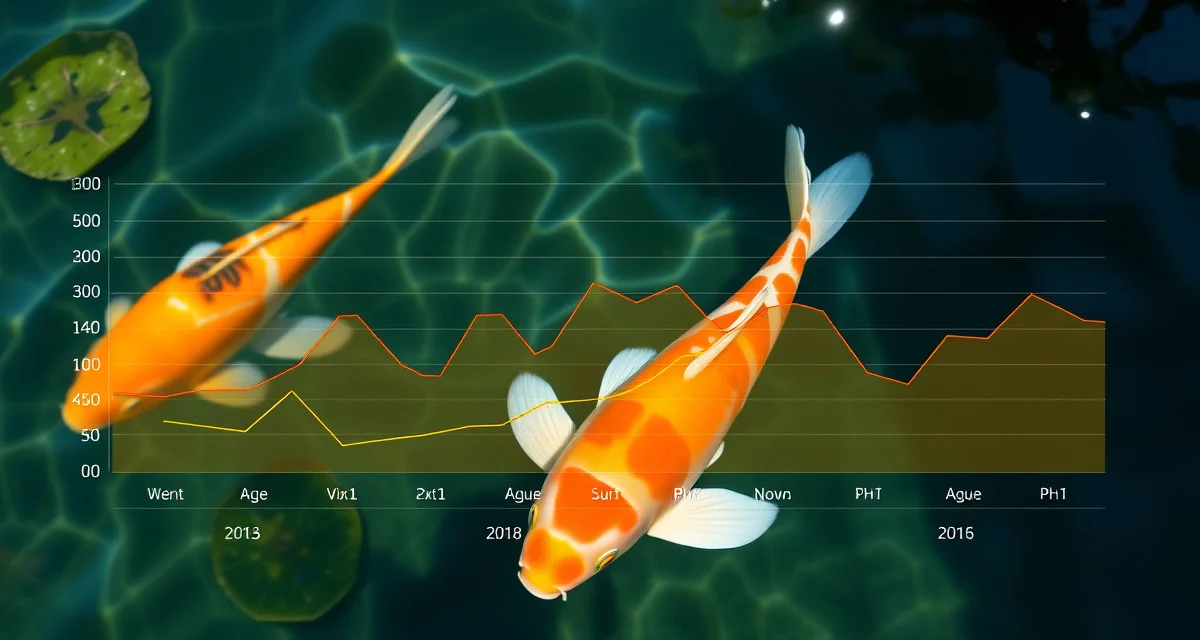
Seasonal Water Parameter Changes in Koi Ponds
Summer algae blooms can drive pH to 9.5 or higher during daylight hours. That's dangerous for koi, and it happens predictably every year in ponds with significant algae growth. The same mechanism that makes your pond look green also makes the water chemistry shift dramatically between morning and evening.
KoiQuanta's seasonal comparison charts reveal parameter trends across years. No competitor tracks seasonal parameter patterns for predictive management. Understanding what's coming before it arrives is the most effective way to protect your fish.
TL;DR
- An algae-laden pond that was at stable pH 7.8 all winter can start swinging from 7.5 at sunrise to 8.8 at 4 PM.
- Add aeration proactively when temperatures exceed 25°C consistently.
- From pH 7.5 at dawn to pH 9.5 in the afternoon isn't unusual in a green water pond.
- At pH 9.5, even low total ammonia concentrations present significant toxic fractions.
- Dissolved oxygen daily during heat events above 28°C.
- If you're still feeding normally at 12°C, you may produce more ammonia than your cooling filtration can process.
- pH swings become extreme in ponds with algae, often ranging 1.5-2 pH units from dawn to mid-afternoon, which dramatically affects ammonia toxicity at the afternoon peaks.
Winter: Minimal Activity, Stable Chemistry
In winter, koi pond water chemistry is at its most stable because almost nothing is happening biologically. Koi are dormant or near-dormant. Feeding has stopped or is minimal. Algae growth is suppressed.
Ammonia: Very low in established ponds during winter dormancy. Koi produce minimal waste when dormant, and biological filtration, though slowed, is adequate for the reduced load.
Nitrite: Usually at zero in established ponds if biological filtration is maintained adequately. Be aware that sudden temperature increases (winter thaw followed by cold snap) can disrupt filtration bacteria and cause brief spikes.
pH: Less fluctuation in winter because algae activity is suppressed. The morning-to-afternoon pH swing that's common in summer is minimal in winter. pH typically stays close to your source water baseline.
Dissolved oxygen: Winter water is cold, which means high oxygen saturation capacity. Unless ice covers the entire surface for extended periods, DO is rarely a concern in winter.
Key winter risks: Ice coverage blocking gas exchange (oxygen in, CO2 and ammonia out) is the primary winter chemical concern. A partial opening in ice is sufficient for this exchange in most climates.
Testing frequency: Monthly is adequate in winter dormancy for established ponds. Focus on pH and ammonia only. The koi seasonal management guide covers winter management in full.
Spring: The High-Risk Period
Spring brings the most dynamic and dangerous parameter changes of the year.
The biological filter lag: Biological filtration bacteria are inactive or at very low population levels after winter. As temperatures rise, koi metabolism wakes up before bacterial populations have rebuilt. The result is a period of several weeks where fish are producing ammonia faster than the biological filter can process it. Ammonia and nitrite spikes are common and can be dangerous.
Testing: Test daily in spring, at least until you've confirmed stable ammonia and nitrite levels across 7-10 consecutive tests.
pH dynamics: As spring algae blooms develop, the morning-to-afternoon pH swing begins again. An algae-laden pond that was at stable pH 7.8 all winter can start swinging from 7.5 at sunrise to 8.8 at 4 PM.
Dissolved oxygen: Less critical in spring while temperatures are still low, but monitor as temperatures warm. Early spring oxygen events are possible when warm spells push temperatures quickly.
KH and buffering: Spring is when KH-related pH crashes can happen if you haven't tested KH recently. Check your KH level after winter before the first significant spring algae bloom.
The spring disease connection: Ammonia elevation in early spring often precedes spring disease events. Stressed koi with suppressed immune function facing high ammonia are highly vulnerable to Aeromonas and other opportunistic pathogens.
Summer: High Demand, Peak Volatility
Summer is when every parameter becomes harder to manage simultaneously.
Dissolved oxygen: The critical summer parameter. Warm water holds less oxygen. Hot nights with algae respiring instead of photosynthesizing can deplete oxygen significantly by early morning. In heavily planted or algae-rich ponds, summer overnight DO crashes are the most acutely lethal chemistry event of the year.
Test DO in early morning (lowest point of the day) during heat events. Add aeration proactively when temperatures exceed 25°C consistently.
pH swings: Summer algae blooms drive the most extreme pH swings. From pH 7.5 at dawn to pH 9.5 in the afternoon isn't unusual in a green water pond. This matters enormously for ammonia toxicity. At pH 9.5, even low total ammonia concentrations present significant toxic fractions.
Ammonia: Higher fish metabolism in summer means more waste production. Higher feeding rates add to the load. Biological filtration runs faster, but if it can't keep pace with the increased load, ammonia builds.
Organic load management: Overfeeding in summer is the most common driver of summer koi pond water quality tracker problems. Uneaten food decomposes quickly in warm water, adding to ammonia and biological oxygen demand simultaneously. The koi feeding guide covers summer feeding protocol specifically.
Testing frequency: Ammonia and nitrite weekly at minimum. Dissolved oxygen daily during heat events above 28°C. pH morning and afternoon to understand your full daily range.
Autumn: The Transition Period
Autumn brings its own chemistry challenges as temperatures drop and biological activity shifts.
Falling temperatures slow biological filtration: As temperatures drop below 15°C, nitrifying bacteria slow. If you're still feeding normally at 12°C, you may produce more ammonia than your cooling filtration can process. This is the autumn ammonia trap: fish producing waste at summer rates while filtration capacity is declining.
Leaf fall and organic load: Falling leaves represent a significant organic load if they enter the pond. Decomposing leaves consume oxygen, produce organic acids (lowering pH), and add to ammonia load. Net your pond or skim leaves actively in autumn.
pH stability: As algae blooms die back, the dramatic daytime pH swings of summer decrease. pH becomes more stable in autumn, but KH depletion through summer may have reduced your buffering capacity. Test KH in autumn before winter, especially if you had heavy algae growth.
Biological filter preservation: Don't clean your biological filter media aggressively in autumn. The bacteria population you've built over summer is what you want to carry through winter. Gentle cleaning only.
Annual Pattern Analysis in KoiQuanta
After your first full year of logging, KoiQuanta's seasonal comparison charts show you how each parameter tracks through the months. After two or more years, patterns become clear.
You might discover:
- Your dissolved oxygen drops below 6 mg/L every year in the third week of July during your hottest temperatures
- Your ammonia spikes slightly every spring when temperatures first consistently reach 15°C
- Your pH drops below 7.5 every September as algae bloom dies off and the buffering demand changes
- Your KH needs supplementation every June to stay above 120 mg/L
Each of these patterns is actionable. Knowing your DO drops every late July means you add supplemental aeration in early July before the risk window opens, not during it. That's the specific value of multi-year trend data.
Frequently Asked Questions
How do koi pond parameters change in summer?
In summer, dissolved oxygen becomes the most critical safety parameter as warm water holds less of it while fish metabolism and oxygen demand peak. pH swings become extreme in ponds with algae, often ranging 1.5-2 pH units from dawn to mid-afternoon, which dramatically affects ammonia toxicity at the afternoon peaks. Ammonia production increases with higher fish metabolism and feeding rates. Biological filtration runs faster but can still lag if organic load is high. Summer management requires daily dissolved oxygen monitoring during heat events, reduced feeding to control organic load, and active management of algae to reduce pH extremes.
What parameters are most critical to monitor in spring?
Ammonia and nitrite are the most critical spring parameters to monitor. The biological filter lag that occurs as winter dormancy ends and fish metabolism accelerates before bacterial populations rebuild routinely causes ammonia and nitrite spikes in established ponds during early spring. These spikes are most likely when temperatures are 8-15°C and fish are becoming active but bacterial filtration hasn't yet fully caught up. Daily testing during the first 3-4 weeks of spring activity until you've confirmed stable parameters is the standard recommendation. pH is secondary in spring but should be monitored as algae blooms develop.
Why does pH fluctuate so much in my koi pond in summer?
Summer pH fluctuations are driven by algae and aquatic plant photosynthesis and respiration cycles. During daylight, photosynthesis removes CO2 from the water, which causes pH to rise. A busy algae population can remove enough CO2 to push pH from 7.5 to 9.0 or higher in the afternoon. Overnight, photosynthesis stops and respiration continues, producing CO2 that drives pH back down by morning. The more algae in your pond, the greater the swing. This cycle compounds the ammonia toxicity risk because high afternoon pH means a much higher toxic NH3 fraction from whatever ammonia is present.
What is Seasonal Water Parameter Changes in Koi Ponds?
[FAQ_ANSWER_PLACEHOLDER: This answer needs to be generated by AI with specific data, examples, and actionable advice relevant to Seasonal Water Parameter Changes in Koi Ponds. Target 50-150 words.]
How much does Seasonal Water Parameter Changes in Koi Ponds cost?
[FAQ_ANSWER_PLACEHOLDER: This answer needs to be generated by AI with specific data, examples, and actionable advice relevant to Seasonal Water Parameter Changes in Koi Ponds. Target 50-150 words.]
How does Seasonal Water Parameter Changes in Koi Ponds work?
[FAQ_ANSWER_PLACEHOLDER: This answer needs to be generated by AI with specific data, examples, and actionable advice relevant to Seasonal Water Parameter Changes in Koi Ponds. Target 50-150 words.]
What are the benefits of Seasonal Water Parameter Changes in Koi Ponds?
[FAQ_ANSWER_PLACEHOLDER: This answer needs to be generated by AI with specific data, examples, and actionable advice relevant to Seasonal Water Parameter Changes in Koi Ponds. Target 50-150 words.]
Who needs Seasonal Water Parameter Changes in Koi Ponds?
[FAQ_ANSWER_PLACEHOLDER: This answer needs to be generated by AI with specific data, examples, and actionable advice relevant to Seasonal Water Parameter Changes in Koi Ponds. Target 50-150 words.]
How long does Seasonal Water Parameter Changes in Koi Ponds take?
[FAQ_ANSWER_PLACEHOLDER: This answer needs to be generated by AI with specific data, examples, and actionable advice relevant to Seasonal Water Parameter Changes in Koi Ponds. Target 50-150 words.]
What should I look for when choosing Seasonal Water Parameter Changes in Koi Ponds?
[FAQ_ANSWER_PLACEHOLDER: This answer needs to be generated by AI with specific data, examples, and actionable advice relevant to Seasonal Water Parameter Changes in Koi Ponds. Target 50-150 words.]
Is Seasonal Water Parameter Changes in Koi Ponds worth it?
[FAQ_ANSWER_PLACEHOLDER: This answer needs to be generated by AI with specific data, examples, and actionable advice relevant to Seasonal Water Parameter Changes in Koi Ponds. Target 50-150 words.]
Related Articles
Sources
- Associated Koi Clubs of America (AKCA)
- Koi Organisation International (KOI)
- University of Florida IFAS Extension Aquaculture Program
- Fish Vet Group
- Water Quality Association