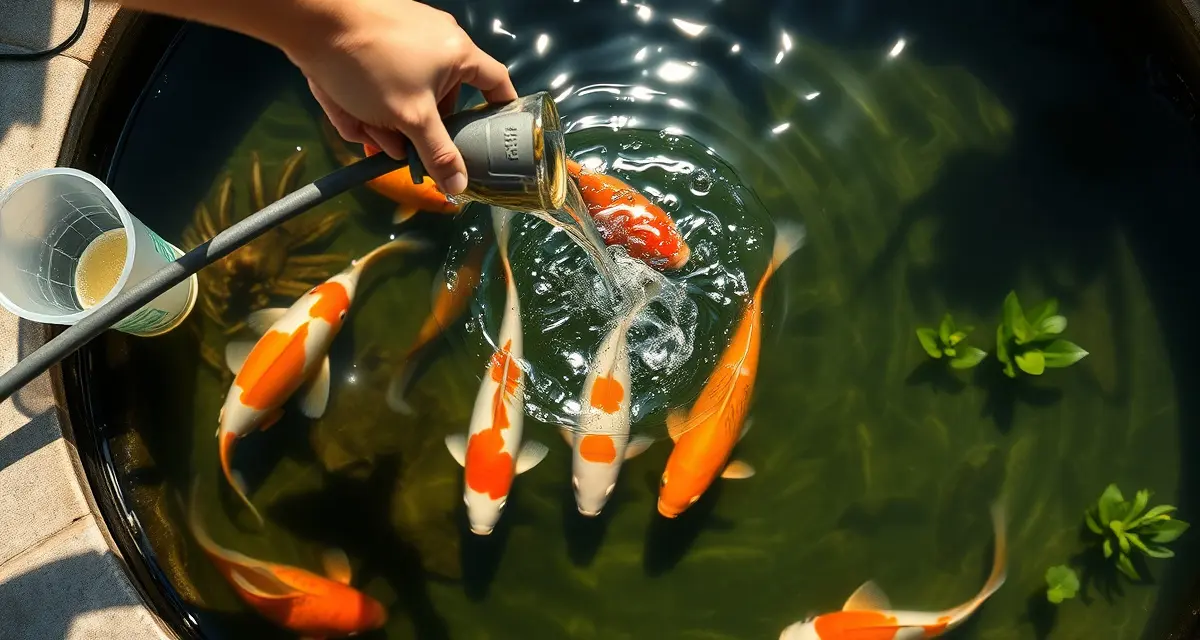
Koi Pond Water Changes: Frequency, Volume, and Method
A 10-20% weekly water change maintains nitrate below 40 mg/L in most koi ponds. That's the practical target to aim for, and it's the simplest effective water quality management strategy available. No amount of biological filtration eliminates the need for water changes -- nitrate accumulates in any pond as the end product of the nitrogen cycle, and the only way to reduce it is to remove water and replace it with fresh.
Everything else in water quality management -- filtration, plants, treatments -- works better alongside a consistent water change routine than without one.
TL;DR
- Nitrate is far less acutely toxic than ammonia or nitrite, but it builds up over time and causes chronic health problems at sustained levels above 40-60 mg/L.
- A heavily stocked pond may need twice-weekly water changes or larger volumes weekly to stay below the 40 mg/L nitrate threshold.
- Smaller changes (under 10%) don't export enough nitrate to meaningfully slow accumulation.
- Larger single changes (over 30%) can cause sudden water chemistry shifts that stress fish, particularly if your tap water chemistry differs substantially from pond chemistry.
- For a 3,000-gallon pond, 10% is 300 gallons, 20% is 600 gallons.
- Weekly 20% changes on a 3,000-gallon pond are quite manageable with a submersible pump and garden hose.
- Let replacement water sit (using a barrel or mixing system) or run it through a temperature adjustment to get it within 2-3°C of pond temperature before adding.
Why Regular Water Changes Matter
Nitrate is the final, stable product of the nitrogen cycle. Beneficial bacteria convert ammonia to nitrite, then nitrite to nitrate. Nitrate is far less acutely toxic than ammonia or nitrite, but it builds up over time and causes chronic health problems at sustained levels above 40-60 mg/L.
The effects of high nitrate accumulate gradually: reduced immune function, slower healing, increased susceptibility to disease, and stress responses that you might not recognize as nitrate-related because they're not dramatic enough to identify as emergencies. Koi living in ponds with chronically high nitrate aren't visibly sick -- they're just not as healthy as they could be.
Water changes also export other accumulated substances that your filter doesn't handle: dissolved organic compounds, hormones secreted by the fish themselves, compounds from medications, and any other substances that build up over time.
KoiQuanta logs water changes and correlates them with nitrate and ammonia trends, so you can see directly how your water change schedule affects parameter stability over time.
How Often to Change Water
The weekly 10-20% guideline covers most well-managed ponds. But the right frequency for your specific pond depends on:
Stocking density: More fish produce more nitrate. A heavily stocked pond may need twice-weekly water changes or larger volumes weekly to stay below the 40 mg/L nitrate threshold.
Filtration quality: Excellent biological filtration converts ammonia and nitrite efficiently but doesn't reduce nitrate. Adequate filtration combined with a good water change schedule keeps all parameters in check.
Feeding rate: Every gram of food eventually becomes nitrate. Ponds where feeding is heavy or where fish are large need more frequent water changes than lightly stocked ponds with conservative feeding.
Plant coverage: Aquatic plants consume nitrate, providing natural buffering. Ponds with dense aquatic plant growth may need less frequent water changes than equivalent ponds without plants.
The only way to know for certain is to test nitrate regularly and adjust your water change schedule based on how fast it climbs. Log tests and water changes in KoiQuanta's parameter tracker and the trend will show you exactly how your specific pond behaves. For guidance on nitrate monitoring specifically, see the koi nitrate guide.
How Much Water to Change
Changing 10-20% of total pond volume per session is the practical range for routine maintenance. Smaller changes (under 10%) don't export enough nitrate to meaningfully slow accumulation. Larger single changes (over 30%) can cause sudden water chemistry shifts that stress fish, particularly if your tap water chemistry differs substantially from pond chemistry.
For a 3,000-gallon pond, 10% is 300 gallons, 20% is 600 gallons. Weekly 20% changes on a 3,000-gallon pond are quite manageable with a submersible pump and garden hose.
If nitrate is climbing despite a regular water change schedule, increase frequency or volume rather than making one very large change. Consistency matters more than any single large intervention.
Water Change Technique
Match temperature before changing. Cold water added to a warm pond causes thermal shock. Let replacement water sit (using a barrel or mixing system) or run it through a temperature adjustment to get it within 2-3°C of pond temperature before adding. This matters more in summer, when pond water may be 22-25°C and tap water considerably cooler.
Dechlorinate tap water. Chlorine and chloramine kill beneficial bacteria in your filter and can stress fish directly. Add dechlorinator to the replacement water before it enters the pond. Standard sodium thiosulfate handles chlorine; look for a product that neutralizes chloramine (an ammonia-binder is needed) if your water utility uses chloramine. Check your local water report if you're unsure.
Remove from the bottom. Waste and detritus accumulate at the bottom of the pond. Using a pond vacuum or bottom drain to remove water from the lowest point exports more organic waste per gallon removed than siphoning from the surface. Ideally, water changes should double as vacuuming sessions.
Don't change during active treatment. Water changes dilute active medications. If you're mid-treatment, skip the routine water change unless there's a water quality emergency, and recalculate doses if you do need to change water during treatment. See koi water chemistry guide for the chemistry side of treatment interactions.
Seasonal Adjustments
Spring: Increase water change frequency in early spring when the filter is restarting from winter dormancy and may not be processing waste efficiently. Extra water changes provide buffer while the biofilter reestablishes.
Summer: Peak feeding season means peak waste production. Weekly water changes at 15-20% are usually necessary to manage nitrate in actively fed ponds during summer.
Autumn: Reduce frequency slightly as feeding reduces and fish metabolism slows. Continue monitoring nitrate -- it may climb more slowly but continues to accumulate.
Winter: Light or no feeding means low waste production. Many keepers reduce to bi-weekly water changes in winter or base changes entirely on nitrate test results rather than a fixed schedule.
Does Water Change Stress Koi?
Done correctly, a routine water change is not stressful to koi. The key is temperature matching and dechlorination -- fish that are suddenly exposed to a large temperature difference or chlorinated tap water will show stress responses.
Fish that appear stressed immediately after a water change are telling you that something about the water you added was different from what they were in -- usually temperature, pH, or chlorine. Refine your technique to address whatever the variable is.
Frequently Asked Questions
How often should I change koi pond water?
Most ponds benefit from a 10-20% water change weekly. The exact frequency depends on stocking density, filtration quality, and feeding rate -- all of which affect how fast nitrate climbs. The practical approach is to test nitrate weekly and adjust your water change schedule to keep it below 40 mg/L. Heavily stocked ponds or ponds with large, heavily-fed fish may need twice-weekly changes or larger volumes. KoiQuanta logs water changes alongside parameter readings so you can see exactly how your schedule affects nitrate trends.
How much water should I change in a koi pond?
10-20% of total pond volume per session is the practical range. This is enough to meaningfully reduce nitrate without causing sudden water chemistry shifts that stress fish. For emergency nitrate reduction, a 30-40% change is acceptable if done carefully with temperature-matched, dechlorinated water. Routine maintenance changes should stay in the 10-20% range to avoid the chemistry disruption that comes with large-volume changes.
Does water change stress koi?
Not when done correctly. The keys are matching temperature (replacement water within 2-3°C of pond temperature), dechlorinating tap water before it enters the pond, and adding water slowly enough that the pond chemistry changes gradually. Fish that appear stressed after a water change are usually responding to a temperature difference, chlorine exposure, or a notable pH mismatch between tap and pond water. If you're seeing post-change stress regularly, test your tap water parameters alongside your pond parameters to identify the variable.
What is Koi Pond Water Changes: Frequency, Volume, and Method?
[FAQ_ANSWER_PLACEHOLDER: This answer needs to be generated by AI with specific data, examples, and actionable advice relevant to Koi Pond Water Changes: Frequency, Volume, and Method. Target 50-150 words.]
How much does Koi Pond Water Changes: Frequency, Volume, and Method cost?
[FAQ_ANSWER_PLACEHOLDER: This answer needs to be generated by AI with specific data, examples, and actionable advice relevant to Koi Pond Water Changes: Frequency, Volume, and Method. Target 50-150 words.]
How does Koi Pond Water Changes: Frequency, Volume, and Method work?
[FAQ_ANSWER_PLACEHOLDER: This answer needs to be generated by AI with specific data, examples, and actionable advice relevant to Koi Pond Water Changes: Frequency, Volume, and Method. Target 50-150 words.]
What are the benefits of Koi Pond Water Changes: Frequency, Volume, and Method?
[FAQ_ANSWER_PLACEHOLDER: This answer needs to be generated by AI with specific data, examples, and actionable advice relevant to Koi Pond Water Changes: Frequency, Volume, and Method. Target 50-150 words.]
Who needs Koi Pond Water Changes: Frequency, Volume, and Method?
[FAQ_ANSWER_PLACEHOLDER: This answer needs to be generated by AI with specific data, examples, and actionable advice relevant to Koi Pond Water Changes: Frequency, Volume, and Method. Target 50-150 words.]
How long does Koi Pond Water Changes: Frequency, Volume, and Method take?
[FAQ_ANSWER_PLACEHOLDER: This answer needs to be generated by AI with specific data, examples, and actionable advice relevant to Koi Pond Water Changes: Frequency, Volume, and Method. Target 50-150 words.]
What should I look for when choosing Koi Pond Water Changes: Frequency, Volume, and Method?
[FAQ_ANSWER_PLACEHOLDER: This answer needs to be generated by AI with specific data, examples, and actionable advice relevant to Koi Pond Water Changes: Frequency, Volume, and Method. Target 50-150 words.]
Is Koi Pond Water Changes: Frequency, Volume, and Method worth it?
[FAQ_ANSWER_PLACEHOLDER: This answer needs to be generated by AI with specific data, examples, and actionable advice relevant to Koi Pond Water Changes: Frequency, Volume, and Method. Target 50-150 words.]
Related Articles
Sources
- Associated Koi Clubs of America (AKCA)
- Koi Organisation International (KOI)
- University of Florida IFAS Extension Aquaculture Program
- Fish Vet Group
- Water Quality Association