Koi Pond Water Chemistry: Complete Parameter Reference Guide
Water chemistry is responsible for more koi deaths than disease in established ponds. That's not a dramatic claim. It's what you see when you look at autopsy results and treatment histories. The fish looked sick, but the root cause was a pH crash overnight, an ammonia spike that went unnoticed for three days, or dissolved oxygen that quietly dropped while everyone was focused on feeding and netting.
This guide covers every major koi pond water chemistry parameter, what the numbers mean, how to test accurately, how to correct problems, and how parameters interact with each other to create problems that don't look like chemistry issues at first glance.
TL;DR
- When ammonia climbs above 0.25 ppm, gill tissue is damaged.
- When pH swings more than 0.5 units in 24 hours, it triggers acid-base stress.
- When dissolved oxygen drops below 6 mg/L, every metabolic process in the fish slows down.
- Ammonia exists in two forms: ionized ammonium (NH4+), which is relatively harmless, and un-ionized ammonia (NH3), which is toxic.
- At pH 8.0, a higher proportion of your total ammonia is in the toxic NH3 form than at pH 7.0.
- A stable 7.2 is better than a wildly fluctuating 7.5 to 8.3 cycle.
- Algae and plants consume CO2 during daylight (photosynthesis), which raises pH.
Why Water Chemistry Kills More Koi Than Pathogens
Most hobbyists worry about parasites and bacteria. And yes, both can be fatal. But in an established, well-managed pond, most fish losses trace back to water quality failures that weakened the fish before any pathogen ever got involved.
The immune system of a koi is directly tied to water quality. When ammonia climbs above 0.25 ppm, gill tissue is damaged. When pH swings more than 0.5 units in 24 hours, it triggers acid-base stress. When dissolved oxygen drops below 6 mg/L, every metabolic process in the fish slows down. These aren't just stressors. They're open doors for every opportunistic pathogen in your pond.
A koi that lives in stable, well-oxygenated, properly buffered water with zero ammonia and zero nitrite can fight off most pathogens on its own. A koi that lives in marginal water chemistry is always losing that fight before the battle starts.
The Core Parameters: What to Track and Why
Ammonia (NH3/NH4+)
Ideal range: 0 ppm. Any detectable ammonia is a problem.
Danger threshold: 0.25 ppm total ammonia, though toxicity depends heavily on pH and temperature.
Ammonia exists in two forms: ionized ammonium (NH4+), which is relatively harmless, and un-ionized ammonia (NH3), which is toxic. The ratio between them shifts with pH. At pH 8.0, a higher proportion of your total ammonia is in the toxic NH3 form than at pH 7.0. This means the same total ammonia reading is more dangerous in alkaline water.
Ammonia damages gill epithelium directly. Fish with ammonia-damaged gills are permanently more vulnerable to bacterial and parasitic infections, even after ammonia returns to zero. The damage doesn't fully reverse.
Sources of ammonia in koi ponds:
- Fish waste (primary source)
- Overfeeding and uneaten food decomposition
- Dead plant matter breaking down
- Dead or dying fish left in the pond
- New pond syndrome (insufficient biological filtration)
Testing: Use a quality liquid test kit. API and Salifert are reliable. Strip tests are not accurate enough for ammonia monitoring. Test at the same time each day for meaningful trend data. Ammonia naturally cycles with feeding times.
Correction: Immediate water changes, reduced feeding, check filter function. If ammonia spikes suddenly in an established pond, suspect a filter crash or dead fish. Track your ammonia over time using a tool like KoiQuanta's water quality tracker to catch rising trends before they become emergencies.
Nitrite (NO2-)
Ideal range: 0 ppm
Danger threshold: 0.5 ppm, which causes methemoglobinemia (brown blood disease)
Nitrite is the intermediate step in the nitrogen cycle. Beneficial bacteria (Nitrosomonas) convert ammonia to nitrite. A second bacterial group (Nitrobacter) then converts nitrite to nitrate. When the second group can't keep up with the first, nitrite accumulates.
Nitrite toxicity is sneaky. It competes with oxygen in fish blood, binding to hemoglobin and preventing oxygen transport. Fish with nitrite poisoning look exactly like oxygen-starved fish. Gasping at the surface, gilling rapidly, congregating near the waterfall. Many hobbyists add more aeration when the actual problem is nitrite. A quick test reveals the truth.
Nitrite spikes happen most commonly during:
- New pond cycling
- After medicating with treatments that crash the biofilter
- After a partial filter media replacement
- After a power outage that disrupts filter flow
- In spring when filter bacteria reactivate slower than fish metabolism
Correction: Salt at 0.1-0.3% concentration competes with nitrite uptake at the gill surface and provides real protection while the biofilter catches up. Water changes help but only temporarily without addressing the root cause.
Nitrate (NO3-)
Ideal range: Under 40 ppm for display ponds, under 20 ppm for breeding operations and young fish
Danger threshold: Above 80 ppm causes chronic stress; above 160 ppm is acutely harmful
Nitrate is the end product of the nitrogen cycle. Unlike ammonia and nitrite, it builds slowly and doesn't have a single obvious crisis point. But that's exactly what makes it dangerous. Accumulating nitrate creates chronic background stress that gradually suppresses immune function, reduces growth rates, and makes fish more susceptible to every other problem.
In a well-planted pond or one with regular water changes, nitrate stays low naturally. In heavily stocked display ponds with minimal water changes, nitrate can climb into problem territory over weeks or months without any obvious symptoms until the fish are already compromised.
Test nitrate monthly minimum. Track the trend. If it's consistently rising, you need more water changes, less feeding, or both.
pH
Ideal range: 7.0 to 8.5
Critical concern: Stability is more important than the exact value. A stable 7.2 is better than a wildly fluctuating 7.5 to 8.3 cycle.
pH in a koi pond follows a predictable daily cycle. Algae and plants consume CO2 during daylight (photosynthesis), which raises pH. At night, the opposite happens. CO2 accumulates, and pH drops. In heavily planted or algae-laden ponds, this swing can be 1.0 to 1.5 units or more across a single day.
Koi can adapt to a range of pH values given time. What they can't adapt to is rapid change. A swing of 0.5 units or more in 24 hours triggers acid-base stress, and that stress compounds with every other marginal condition in the pond.
Low carbonate hardness (KH) is the usual culprit behind pH instability. KH acts as a buffer. It absorbs pH changes before they happen. If your KH is below 100 ppm (6 dKH), you're vulnerable to pH crashes, especially overnight. Learn more about managing carbonate hardness in the complete koi pH guide.
Testing: Test pH at its extremes. Early morning for the daily low and late afternoon for the daily high. A single midday test tells you almost nothing about stability.
Correction: Low pH: add baking soda (sodium bicarbonate) to increase KH and buffer. High pH: partial water changes. Swinging pH: raise KH to at least 100-120 ppm.
Dissolved Oxygen (DO)
Ideal range: Above 8 mg/L
Danger threshold: Below 6 mg/L causes stress; below 4 mg/L causes mass mortality within hours
Oxygen is the parameter koi keepers most often ignore because you can't see it or smell it. But dissolved oxygen crashes silently, especially during summer nights, and they kill fast.
The capacity of water to hold dissolved oxygen decreases as temperature increases. A pond that maintains 10 mg/L in winter may only achieve 7 mg/L at 30°C, even with the same aeration. Heavy algae growth makes this worse, not better. Algae produces oxygen during the day but consumes it at night. A pond with a heavy algae bloom can swing from oxygen-rich in the afternoon to oxygen-depleted by 3am.
Early warning signs: fish hanging at the surface, congregating near waterfalls, or showing reduced appetite in the morning after a warm night.
Test DO with an electronic meter or a quality kit. Visual assessment alone is not reliable until fish are already in serious distress. Keep supplemental aeration available during summer.
Carbonate Hardness (KH)
Ideal range: 100-200 ppm (6-12 dKH)
Minimum safe level: 80 ppm
KH is your pond's buffering capacity. It's what prevents pH from crashing overnight or during rain events. Many water sources have naturally low KH, and it depletes over time in any pond due to biological activity.
Test KH weekly if your pH is unstable. Monthly if things are stable. Add sodium bicarbonate in small increments to raise KH. One teaspoon per 100 gallons raises KH by approximately 17 ppm.
General Hardness (GH)
Ideal range: 100-250 ppm
GH measures calcium and magnesium ions. It supports healthy mucus coat development, scale integrity, and general osmoregulation. Very soft water (GH under 70 ppm) makes koi more vulnerable to osmotic stress and can interfere with certain treatment protocols.
Temperature
Ideal range for growth and health: 18-24°C (65-75°F)
Safe range: 10-30°C
Risk zones: Below 10°C (immune suppression), above 30°C (oxygen depletion risk)
Temperature isn't a parameter you adjust. It's a parameter you understand. It drives feeding frequency, treatment dosing, biological filter activity, and disease risk windows. Track temperature consistently and use it to interpret everything else.
Parameter Interactions: Where It Gets Complicated
The real danger in koi water chemistry isn't any single bad number. It's combinations.
Ammonia + High pH: Alkaline water shifts ammonia toward the toxic un-ionized form. At pH 8.5, your ammonia reading is 3-4x more toxic than the same reading at pH 7.5. This is why pH control matters especially during ammonia spikes.
Low DO + High Temperature + Heavy Stocking: Each factor multiplies the others. 30°C water holds less oxygen. Heavy stocking means high oxygen demand. Add formalin treatment on top of that and you have a fish kill waiting to happen.
Low KH + Formalin Treatment: Formalin consumes alkalinity during treatment. Treating with formalin in water with already-low KH can crash pH mid-treatment, which is catastrophic.
Nitrite + Salt: Salt at 0.1-0.3% concentration competes with nitrite for gill uptake and provides meaningful protection. It won't fix the underlying nitrite problem, but it buys time while the biofilter recovers.
Temperature + Treatment Efficacy: Most parasite treatments (formalin, potassium permanganate) have temperature-dependent toxicity windows. A dose that's safe at 18°C may be dangerous at 28°C. Always adjust doses downward in warm water.
Testing Methods: Getting Reliable Data
Liquid Test Kits vs. Strips
Strip tests are better than nothing, but not by much for koi keeping. They're useful for a quick gross-level check, but the margin of error on strips for ammonia and nitrite is wide enough to miss genuinely dangerous levels.
Liquid test kits (API, Salifert, JBL) are the standard for hobbyists. They're accurate enough for most purposes when used correctly. The main user errors:
- Not waiting the full development time
- Reading in poor light
- Using expired reagents
- Not shaking reagent bottles before use
Electronic Meters
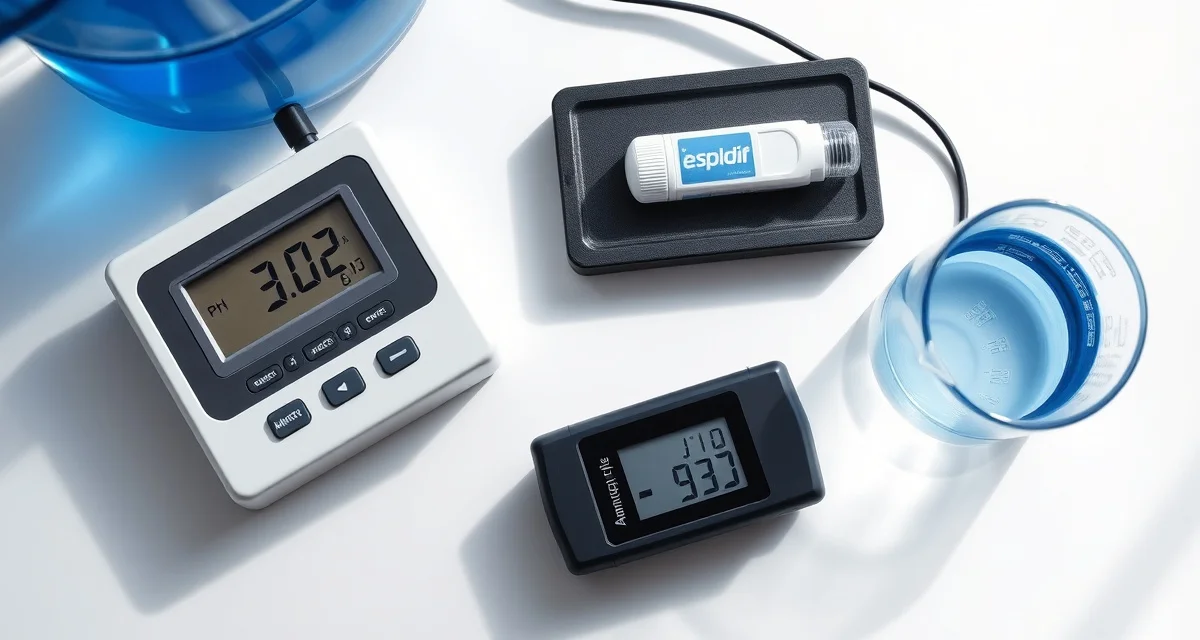
For dissolved oxygen and pH, electronic meters give you real-time continuous readings that liquid kits can't match. A decent pH pen runs $30-50 and is worth every penny for tracking daily pH swings. DO meters start around $80-100 for something reliable.
Calibrate regularly. A pH meter that hasn't been calibrated in six months is telling you a story, but not necessarily a true one.
Testing Frequency
This depends on where you are in the pond's life cycle:
- New pond / cycling: Ammonia and nitrite daily until both read zero for two consecutive weeks
- Established pond, stable season: Ammonia, nitrite, pH weekly; nitrate and KH monthly
- After treatment: Ammonia and nitrite every 48 hours for two weeks (treatments crash biofilters)
- Seasonal transitions (spring, fall): Full panel weekly during temperature transition periods
Log every test result. Not in your head. In something you can review. Pattern recognition across weeks and months is where you catch chronic problems before they become crises. KoiQuanta's dashboard plots every test against a timeline so you can see trends that individual readings hide.
Adjusting Parameters Safely
Raising KH and Stabilizing pH
Sodium bicarbonate (baking soda) is safe, cheap, and effective. Add it slowly. Pre-dissolve in pond water and distribute across the pond. Never dump it in one spot.
Raising KH by 50 ppm in a 1000-gallon pond requires approximately 500g of sodium bicarbonate. Do it in increments over 24-48 hours, testing between additions.
Lowering pH
Don't chase a lower pH number if your current pH is stable and above 7.0. The correction is usually worse than the condition. If you have genuinely high pH (consistently above 8.5), the most reliable fix is increasing water change frequency, managing algae, and ensuring good CO2 exchange.
Acid additions (muriatic acid, citric acid) can rapidly crash pH and consume KH. Use them only with precise dosing and constant monitoring.
Ammonia Emergency Response
- Immediately stop all feeding
- 25-30% water change right now
- Test source water for ammonia (treated tap water can contain chloramines that register as ammonia)
- Check filter function. Is it running? Is flow rate reduced?
- Look for dead fish
- Dose with ammonia-detoxifying product (Seachem Prime or equivalent) to bind toxic NH3 temporarily
Nitrite Emergency Response
- Add salt at 0.1% immediately (100g per 10 gallons, or roughly 1 tablespoon per 10 gallons)
- Stop feeding
- Partial water change. 20-30%
- Identify and fix the cause (filter crash, overstock, recent treatment)
Related Articles
- How to Buffer pH in a Koi Pond: Stable Chemistry Guide
- Case Study: How Trend Tracking Caught a Chemistry Problem Before Fish Died
FAQ
What is Koi Pond Water Chemistry: Complete Parameter Reference Guide?
Koi Pond Water Chemistry: Complete Parameter Reference Guide is a comprehensive reference article on KoiQuanta covering every major water chemistry parameter relevant to koi ponds. It explains what each measurement means, how to test accurately, how to correct imbalances, and critically, how parameters interact with each other. It addresses ammonia toxicity, pH stability, dissolved oxygen, and more — giving pond keepers the knowledge to diagnose problems before they become fatal.
How much does Koi Pond Water Chemistry: Complete Parameter Reference Guide cost?
The guide is free to read on KoiQuanta. There is no purchase, subscription, or registration required. It is published as an educational resource for koi keepers at all experience levels. You can access the full parameter reference, testing guidance, and correction methods at no cost directly on the site.
How does Koi Pond Water Chemistry: Complete Parameter Reference Guide work?
The guide works by breaking down each water chemistry parameter into plain language: what the safe range is, why it matters to koi health, how to test for it accurately, and how to correct it when readings are off. It also explains parameter interactions — for example, how pH level determines what proportion of total ammonia is in the toxic un-ionized NH3 form — so you can understand root causes, not just surface symptoms.
What are the benefits of Koi Pond Water Chemistry: Complete Parameter Reference Guide?
The guide helps you catch dangerous conditions before koi show visible symptoms, since water chemistry problems often kill fish before disease even appears. You'll understand why a stable pH of 7.2 outperforms a fluctuating 7.5–8.3 cycle, why ammonia above 0.25 ppm damages gill tissue, and how dissolved oxygen below 6 mg/L slows every metabolic process in the fish. That knowledge translates directly into healthier fish and fewer losses.
Who needs Koi Pond Water Chemistry: Complete Parameter Reference Guide?
Anyone keeping koi in a garden pond, water garden, or dedicated koi pond will benefit from this guide. It is particularly valuable for new pond keepers who have experienced unexplained fish losses, experienced hobbyists troubleshooting recurring problems, and anyone who has been treating what looks like disease without considering water chemistry as the underlying cause. It is also useful for anyone adding fish to an established pond.
How long does Koi Pond Water Chemistry: Complete Parameter Reference Guide take?
Reading the full guide takes approximately 20 to 40 minutes depending on how thoroughly you work through each parameter section. It is designed as a reference you return to rather than read once — bookmark it and consult specific sections when you get an unusual test result or are troubleshooting a problem. Applying the guidance is ongoing, as water chemistry requires regular monitoring as seasons, stocking levels, and feeding rates change.
What should I look for when choosing Koi Pond Water Chemistry: Complete Parameter Reference Guide?
Look for a guide that covers parameter interactions, not just isolated target ranges. Good water chemistry guidance explains how pH affects ammonia toxicity, how photosynthesis drives pH swings, and how dissolved oxygen interacts with biological filtration load. Also look for practical correction methods, not just ideal numbers. This guide covers all of those areas and is grounded in real autopsy and treatment history patterns rather than generic advice.
Is Koi Pond Water Chemistry: Complete Parameter Reference Guide worth it?
Yes. Water chemistry is responsible for more koi deaths than disease in established ponds, and most of those deaths are preventable with accurate testing and timely correction. Understanding why an ammonia spike is more dangerous at pH 8.0 than pH 7.0, or why overnight pH crashes happen, gives you actionable knowledge. For the cost of nothing but time, this guide can meaningfully extend the lives of fish that represent significant financial and emotional investment.
Sources
- Associated Koi Clubs of America (AKCA)
- Koi Organisation International (KOI)
- University of Florida IFAS Extension Aquaculture Program
- Fish Vet Group
- Water Quality Association