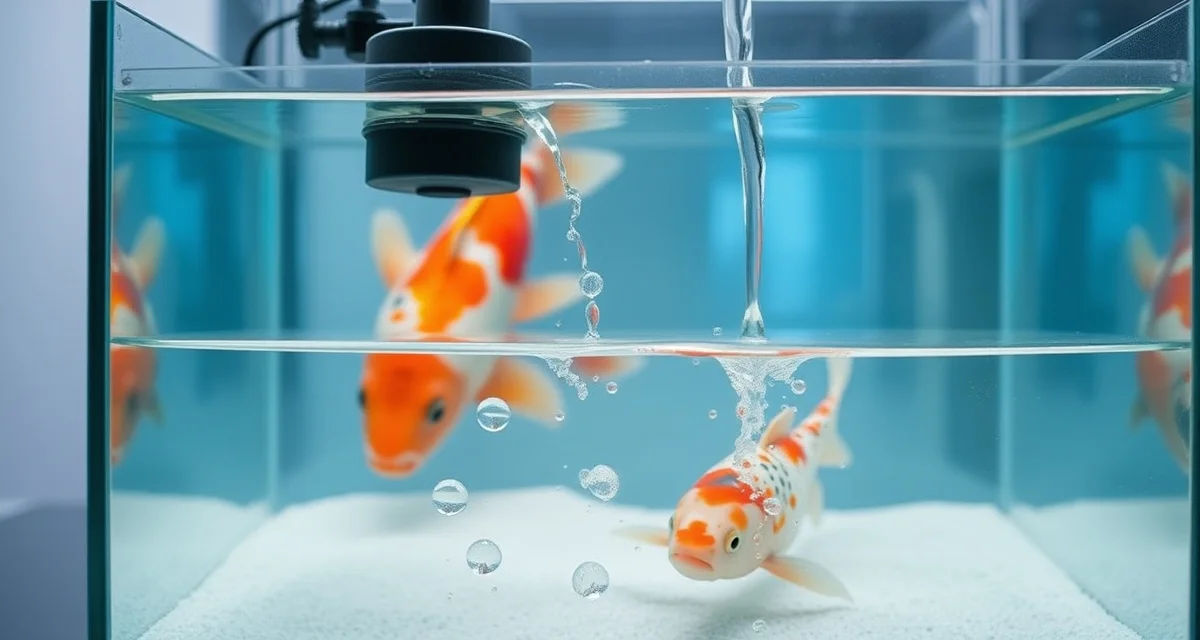
Water Changes During Koi Quarantine: Frequency, Volume, and Technique
Quarantine tanks don't have the buffer of a mature display pond. A 300-gallon bare-bottom quarantine tank with stressed, newly arrived fish can spike ammonia within 24 hours. Water changes aren't optional maintenance - they're a critical treatment tool.
But water changes in quarantine also carry risks. They dilute your medications. They can cause temperature swings. And done wrong, they add more stress to fish that are already stressed.
Here's how to manage koi pond water quality tracker through the full quarantine period.
TL;DR
- A 300-gallon bare-bottom quarantine tank with stressed, newly arrived fish can spike ammonia within 24 hours.
- Change 25-30% every 2-3 days as a baseline.
- Change 30-40% daily until the filter stabilizes.
- Add 1.9 lbs of non-iodized salt dissolved in a bucket of tank water to maintain concentration.
- Do water changes between treatment doses (not during active treatment) 2.
- Re-dose the proportion removed with each water change 3.
- Do a 40-50% water change immediately (temperature-matched, dechlorinated) 2.
Why Quarantine Tanks Need More Active Management
Your display pond has years of accumulated beneficial bacteria in substrate, filter media, and pond walls. It has plant uptake of nutrients. It has large water volume that dilutes waste products. It buffers ammonia spikes slowly.
A quarantine tank has:
- Limited biological filtration capacity (especially in the first weeks)
- Bare bottom (good for visibility, but no biological buffer from substrate)
- Higher fish stress = higher waste output
- Smaller water volume = faster parameter swings
- Possibly treatments that have compromised filter bacteria
The result: you need to check parameters daily and do water changes far more frequently than your display system requires.
Water Change Frequency by Quarantine Phase
Days 1-14: Most Active Phase
If your filter is well-established and seeded: test daily. Change 25-30% every 2-3 days as a baseline. More if ammonia or nitrite reads anything above zero.
If your filter is newly established or was compromised by treatment: test twice daily. Change 30-40% daily until the filter stabilizes. Yes, daily water changes are a lot of work. They're less work than losing fish.
Trigger water change immediately if:
- Ammonia above 0.5 ppm
- Nitrite above 0.25 ppm
- pH drops below 7.0
Days 15-42: Stabilization Phase
If parameters are stable and fish are healthy: test daily, water change 20-25% every 3-4 days.
Continue testing daily even if everything looks good. Quarantine tanks can destabilize quickly with changes in fish behavior, feeding, or after treatment dosing.
Water Change Technique in a Quarantine Tank
Temperature Matching
This is the most common mistake: adding cold tap water to a quarantine tank and shocking the fish.
Before every water change:
- Know your tank temperature (check your thermometer, not the heater setting)
- Pre-heat or pre-cool replacement water to within 1°F of tank temperature
- For large water changes (30%+), even a 2-3°F difference creates a noticeable shock
Use a separate container with a heater to pre-condition replacement water if you're doing this frequently.
Dechlorination
Municipal water contains chlorine or chloramine. Both are toxic to fish and will kill your filter bacteria. Add dechlorinator to replacement water before it enters the tank. Don't add it to the tank directly - mix it with the replacement water first.
Chloramine (common in many US municipal supplies) requires a higher dechlorinator dose than chlorine. Know what's in your water.
Salt Replacement
If you're maintaining a salted quarantine (0.3% or 0.5%), water changes remove salt. Replace it:
- Calculate volume removed
- Add salt at the appropriate dose for the water volume replaced
- Dissolve salt in a bucket before adding
A 25% water change on a 300-gallon 0.3% salinity tank removes 1.9 lbs of salt. Add 1.9 lbs of non-iodized salt dissolved in a bucket of tank water to maintain concentration.
Medication Replacement
If you're dosing medications (praziquantel, antibiotics, potassium permanganate), water changes affect concentration. Options:
- Do water changes between treatment doses (not during active treatment)
- Re-dose the proportion removed with each water change
- Complete the treatment course before doing large water changes
Understand the half-life and stability of each medication. Some (like malachite green) break down quickly in light. Others (like salt, praziquantel) are more stable.
Mechanical Siphoning
Use a gravel siphon or bare-bottom siphon to remove waste from the tank bottom during water changes. In a bare-bottom quarantine tank, fish waste, uneaten food, and dead cells accumulate visibly on the tank floor. Remove this material with each water change - it's a significant ammonia and bacterial source.
Siphon gently around active fish. Don't stress them more than necessary.
Handling Ammonia Spikes
Ammonia spikes are the most common water quality emergency in quarantine. They happen when:
- Fish load suddenly increased (overcrowding)
- Filter hasn't established fully
- A treatment killed filter bacteria
- Fish stress elevated waste output
- Uneaten food decomposed
Emergency Response to Ammonia Spike
Ammonia at 1 ppm or above in a quarantine tank: act now.
- Do a 40-50% water change immediately (temperature-matched, dechlorinated)
- Remove any uneaten food
- Test again after water change
- If still elevated, do another 30% change
- Feed nothing for 24 hours after a spike
- Identify and fix the cause before resuming normal protocol
Commercial ammonia detoxifiers (sodium thiosulfate-based products or zeolite) can provide short-term relief but don't solve the underlying problem. Use them to buy time while you address the root cause.
Preventing Spikes
- Don't overfeed - feed only what fish eat in 3-5 minutes, twice daily
- Remove uneaten food promptly
- Don't add new fish to an active quarantine (this is a protocol violation anyway - separate batches)
- Monitor filter health throughout treatment courses
- Consider zeolite as a supplemental ammonia binder during the initial quarantine phase
Water Source Quality
If your tap water has issues (high chloramine, low KH, pH extremes), quarantine management gets harder. Consider:
- Low KH municipal water: Add sodium bicarbonate (baking soda) to pre-treat replacement water. Bring KH to 100-150 ppm before adding to the quarantine tank.
- Low pH tap water: Treat with baking soda or commercially available pH buffers. Don't add acidic water to a quarantine tank - stressed fish need stable pH.
- High nitrate tap water: In some areas, tap water has 10-20 ppm nitrate. This is your baseline before any fish bioload. Account for it and do more frequent water changes.
Related Articles
- Do I Need to Retreat After a Water Change During Koi Treatment?
- How Often Should You Test Koi Pond Water? A Complete Schedule
FAQ
How often should I change water in a koi quarantine tank?
Minimum every 2-3 days during the first two weeks, with daily testing to catch problems between changes. If ammonia or nitrite reads anything above zero, do a water change immediately regardless of schedule. With a well-established filter, you may need fewer changes in weeks 3-6, but don't drop below 20% every 4 days. More is usually better in quarantine.
How much water should I change in a quarantine tank?
25-30% is a standard water change volume for maintenance. For emergency ammonia spikes, go to 40-50% immediately. Stay away from changes over 50% unless absolutely necessary - large changes can cause parameter swings that stress already-compromised fish, even when the replacement water is properly prepared.
Do water changes affect my quarantine treatments?
Yes. Every water change dilutes medications, salt, and anything else you've dosed. Understand how each treatment you're using is affected. Salt requires exact replacement of the removed volume. Praziquantel at standard bath doses needs re-dosing after a large water change if the course isn't complete. Some medications are pH-sensitive - water changes that alter pH can change treatment effectiveness. Log every water change with volume and any dosing adjustments you made.
What is Water Changes During Koi Quarantine: Frequency, Volume, and Technique?
Water changes during koi quarantine involve systematically replacing a portion of tank water to control ammonia, nitrite, and medication levels in an isolated holding environment. Unlike a mature pond, a bare-bottom quarantine tank lacks established beneficial bacteria, so waste accumulates rapidly. Regular water changes—typically 25-30% every 2-3 days as a baseline—are a critical management tool that keeps water quality safe for stressed, newly arrived fish throughout the quarantine period.
How much does Water Changes During Koi Quarantine: Frequency, Volume, and Technique cost?
Water changes during koi quarantine have no direct cost beyond your time, water, and dechlorinator. The main expense consideration is medication: every water change dilutes treatment doses, requiring you to re-dose the proportion removed. For example, a 30% water change means replacing 30% of your medication. Budget for extra salt (non-iodized) and any treatments you're running, factoring in top-up doses after each change.
How does Water Changes During Koi Quarantine: Frequency, Volume, and Technique work?
Quarantine water changes work by physically removing waste, ammonia, and pathogen load while refreshing dissolved oxygen. The process requires temperature-matched, dechlorinated replacement water added slowly to avoid thermal shock. Timing matters: perform changes between treatment doses, not during active medication windows. After each change, re-dose medications proportionally to the volume removed. In an unstabilized tank, daily 30-40% changes may be needed until the biofilter establishes.
What are the benefits of Water Changes During Koi Quarantine: Frequency, Volume, and Technique?
Regular water changes during quarantine stabilize ammonia and nitrite at safe levels, reducing physiological stress on already-compromised fish. They remove pathogen load and organic waste that can fuel disease progression. Controlled changes also let you manage medication concentration precisely—preventing both under-dosing (ineffective treatment) and overdosing (toxicity). Properly executed water changes give quarantined koi the best environment to recover, acclimate, and clear pathogens before entering your display pond.
Who needs Water Changes During Koi Quarantine: Frequency, Volume, and Technique?
Any koi keeper introducing new fish needs to understand quarantine water change protocols. This is especially critical for hobbyists with bare-bottom quarantine tanks, where ammonia can spike within 24 hours. Beginners often underestimate how quickly water quality degrades without an established biofilter. Experienced keepers running medication protocols also need this knowledge to avoid diluting treatments ineffectively. Essentially, anyone quarantining koi—which should be everyone bringing new fish home—needs this guidance.
Sources
- Associated Koi Clubs of America (AKCA)
- Koi Organisation International (KOI)
- University of Florida IFAS Extension Aquaculture Program
- Fish Vet Group
- Water Quality Association