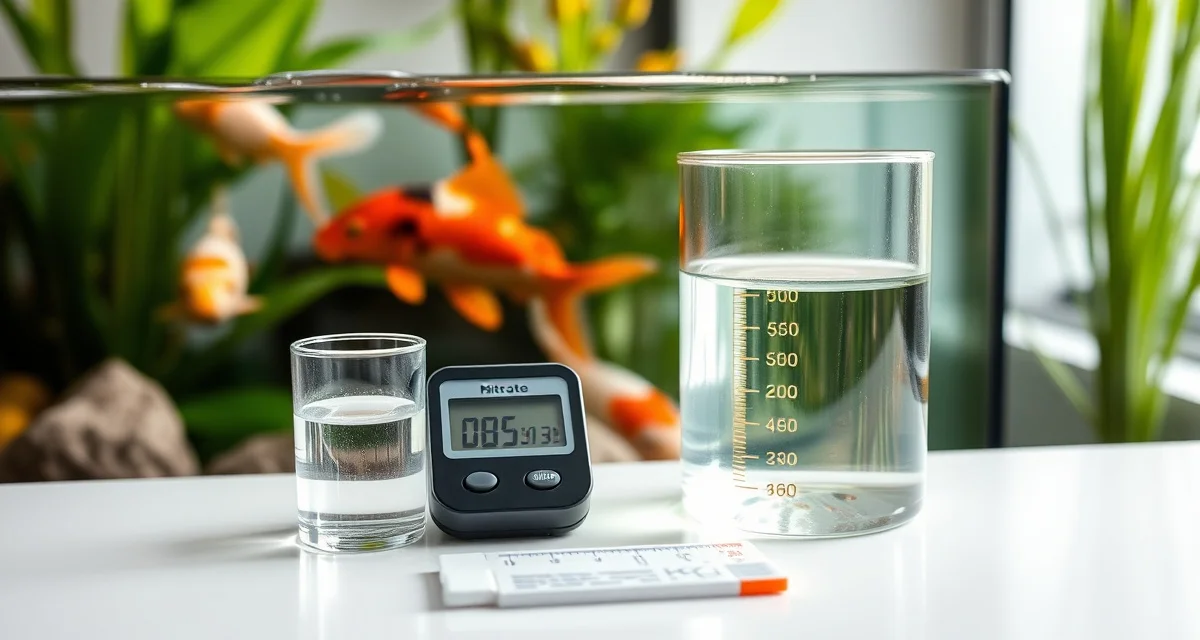
Nitrate in Koi Ponds: Acceptable Levels and Management
Nitrate is the endpoint of the nitrogen cycle. It's relatively benign compared to ammonia and nitrite - fish can tolerate far higher concentrations without acute toxicity. But "relatively benign" is not the same as "harmless," and the chronic effects of high nitrate on koi health are real and underappreciated.
TL;DR
- Fish living in chronic high nitrate (above 80 mg/L) show measurably reduced lymphocyte function, higher corticosteroid levels (indicating chronic stress), and higher disease incidence.
- A chronic 100+ mg/L reading explains a lot of non-specific "my fish just keep getting sick" scenarios.
- A heavily stocked koi pond at 1 inch per 10 gallons of water produces nitrate much faster than a lightly stocked display pond.
- A pond getting 10% water changes monthly accumulates nitrate far faster than a pond getting 20–30% weekly.
- If your pond runs at 80 mg/L before the change, you'll be at 60 mg/L after - then it climbs back toward 80 over the next week.
- To maintain a 40 mg/L target, you need either more frequent changes, larger changes, or less nitrate production (fewer fish, less feeding).
- Fish in 100+ mg/L nitrate are chronically stressed and won't grow or develop as well as fish in a clean, low-nitrate environment.
What Is Nitrate and Why Does It Accumulate?
In a cycled pond, bacteria convert ammonia to nitrite and then to nitrate. Nitrate is the finished product of this process. Unlike ammonia and nitrite, there's no bacterial group that naturally converts nitrate into something else in a typical koi pond environment.
This means nitrate only leaves the pond system through:
- Water changes (the primary removal method)
- Plant uptake (aquatic plants and algae use nitrate as a nitrogen fertilizer)
- Denitrification (anaerobic bacterial conversion of nitrate to nitrogen gas - possible in deep substrate layers, but not a reliable control mechanism)
In a heavily stocked koi pond without plants, nitrate rises continuously. A pond that isn't having water changes - or not enough of them - will see nitrate climb month after month until it reaches levels that suppress immune function.
What Level Is Too High?
Unlike ammonia and nitrite, the target for nitrate isn't zero. Zero is unachievable in a functioning biological system without massive water changes or heavy plant growth.
Acceptable range: under 40 mg/L
Caution: 40–80 mg/L (not immediately harmful, but immune suppression begins)
Problem: above 80 mg/L (chronic immune suppression, higher disease rates, potential direct harm)
Emergency threshold: above 200 mg/L (acute stress, particularly for small or juvenile fish)
The immune suppression effect is the primary long-term concern. Fish living in chronic high nitrate (above 80 mg/L) show measurably reduced lymphocyte function, higher corticosteroid levels (indicating chronic stress), and higher disease incidence. This doesn't look like anything specific - you just notice that fish in high-nitrate ponds get sick more often, ulcers take longer to heal, and new fish introductions have higher disease rates.
Signs of Chronic High Nitrate
Because nitrate doesn't cause acute toxicity at moderate levels, the signs are chronic and non-specific:
- Fish are generally disease-prone - recurring bacterial infections, slow ulcer healing
- Algae blooms are persistent (algae thrives on elevated nitrate)
- Fish growth is slower than expected
- Fish look generally "dull" - color less vivid, less active feeding
- Frequent disease events that don't seem to have a specific trigger
If this describes your pond, test nitrate. A chronic 100+ mg/L reading explains a lot of non-specific "my fish just keep getting sick" scenarios.
Why Nitrate Rises Faster Than Expected
Several factors accelerate nitrate accumulation:
High fish density. More fish means more waste, more ammonia converted, more nitrate produced. A heavily stocked koi pond at 1 inch per 10 gallons of water produces nitrate much faster than a lightly stocked display pond.
Heavy feeding. Every unit of protein fed becomes ammonia, then nitrite, then nitrate. Overfeeding is a nitrate accelerant.
Infrequent water changes. Water changes are the primary nitrate removal mechanism. A pond getting 10% water changes monthly accumulates nitrate far faster than a pond getting 20–30% weekly.
No plant coverage. A koi pond with no aquatic plants has no biological nitrate uptake. A pond with heavy plant growth (water hyacinth, water lettuce, hornwort) can have significantly lower nitrate levels because the plants are continuously consuming it.
Deep substrate. Substrate (gravel, soil) accumulates organic material that slowly releases nutrients including nitrate precursors. Bare-bottom ponds tend to have lower nitrate than heavily planted or substrate-heavy ponds, all else being equal.
Managing Nitrate
Water Changes - The Foundation
This is the most reliable and scalable nitrate management tool.
For a heavily stocked koi pond:
- 20–30% water change weekly is appropriate
- Less frequent (monthly) changes require larger volumes per change to prevent nitrate accumulation
The math: a 25% water change reduces nitrate by 25%. If your pond runs at 80 mg/L before the change, you'll be at 60 mg/L after - then it climbs back toward 80 over the next week. To maintain a 40 mg/L target, you need either more frequent changes, larger changes, or less nitrate production (fewer fish, less feeding).
KoiQuanta's nitrate chart makes this visible over time. A nitrate trend that's gradually rising despite regular water changes tells you the change schedule needs to increase. Catching this gradual creep before it becomes a problem is exactly the kind of observation that standalone test kits can't provide without a tracking system.
Plant Growth
Marginal and floating plants in or around the pond consume nitrate directly. The most effective for nitrate control:
- Water hyacinth (Eichhornia crassipes): Extremely rapid nutrient uptake. One of the best nitrate consumers available. Note: invasive in some US states - check regulations.
- Water lettuce (Pistia stratiotes): Similar to water hyacinth in nutrient uptake. Also invasive in some areas.
- Hornwort (Ceratophyllum demersum): Submerged plant with good nitrate consumption. Also oxygenates water.
- Marginal plants (iris, rushes, reeds): Planted in a filter bog or marginal zone, these plants pull nutrients from pond water flowing through their root zone.
A well-planted koi pond can maintain measurably lower nitrate than an equivalent bare pond. But plants alone typically can't compensate for heavy stocking - they work best in combination with water changes.
Vegetable Filter / Bog Filter
A vegetable filter (or bog filter) is a plant-filled area where pond water circulates through plant root systems. The plants absorb nitrate (and other nutrients) directly, effectively functioning as a biological nitrate removal system. Well-designed vegetable filters can significantly reduce nitrate in heavily stocked koi ponds.
This is a design-level solution rather than a management tool - it requires infrastructure - but it's worth mentioning for keepers dealing with persistent high nitrate.
Feed Adjustment
Since all protein fed becomes nitrate eventually, feeding less protein or switching to lower-protein foods during warmer months (when feeding is highest) reduces nitrate production. This is a supporting measure, not a primary control.
Nitrate and Japanese Import Fish
For fish imported from Japan - particularly high-value tosai being grown on - the health implications of chronic high nitrate are especially relevant. These fish are supposed to grow rapidly and develop their patterns optimally. Fish in 100+ mg/L nitrate are chronically stressed and won't grow or develop as well as fish in a clean, low-nitrate environment.
If you're investing in quality fish, invest in the koi pond water quality tracker system to keep nitrate under 40 mg/L. Water changes are cheap. Poor fish development and disease treatment are not.
Related Articles
- Calcium Hardness in Koi Ponds: Testing and Management Guide
- What Is the Correct Salt Percentage for Koi Ponds? Complete Guide
- Air Pumps for Koi Ponds: Sizing and Selection
FAQ
What is a safe nitrate level for koi?
Under 40 mg/L is the accepted target for optimal koi health. Between 40–80 mg/L is manageable but begins to affect immune function with chronic exposure. Above 80 mg/L, chronic immune suppression becomes a real factor - fish kept long-term in high nitrate are more disease-prone and slower to heal from infection. Above 200 mg/L, acute stress is possible particularly for young or small fish.
How do I reduce nitrate in my koi pond?
Water changes are the primary tool - each 25% water change removes 25% of the nitrate present. For a heavily stocked pond, 20–30% weekly water changes are often necessary to keep nitrate below 40 mg/L. Supplemental approaches: adding heavily growing aquatic plants (water hyacinth, water lettuce, hornwort), installing a vegetable/bog filter that circulates water through plant root systems, and reducing feed input.
Does high nitrate cause disease in koi?
Not directly in the way ammonia or nitrite do, but chronically elevated nitrate (above 80 mg/L) suppresses immune function through sustained corticosteroid elevation, reduces lymphocyte activity, and makes fish measurably more susceptible to bacterial infections, parasites, and slow healing from wounds. The effect is chronic and non-specific - fish just seem disease-prone without a clear trigger. Testing nitrate in a pond with recurring unexplained health problems is an important diagnostic step.
What is Nitrate in Koi Ponds: Acceptable Levels and Management?
Nitrate is the final byproduct of the nitrogen cycle in a koi pond, produced when beneficial bacteria break down ammonia and nitrite. Unlike those compounds, nitrate is relatively non-toxic at low levels, but it accumulates over time and becomes harmful when concentrations rise above 80 mg/L. Managing nitrate means understanding how stocking density, feeding habits, and water change frequency all influence how quickly it builds up in your pond.
How much does Nitrate in Koi Ponds: Acceptable Levels and Management cost?
Managing nitrate in a koi pond has no direct purchase cost — it's a water quality practice, not a product. The main investment is in routine water changes, which require water, time, and occasionally a dechlorinator. Additional costs may include test kits to monitor nitrate levels accurately. Some hobbyists invest in aquatic plants or specialized filter media that help absorb nitrate, but these are optional enhancements rather than necessities for basic nitrate control.
How does Nitrate in Koi Ponds: Acceptable Levels and Management work?
Nitrate accumulates as ammonia from fish waste is converted by nitrifying bacteria — first to nitrite, then to nitrate. Unlike ammonia and nitrite, nitrate isn't removed by the biological filter; it can only be diluted through water changes or absorbed by aquatic plants. The rate of accumulation depends on fish load and feeding frequency. A heavily stocked pond with infrequent water changes will see nitrate climb rapidly, while a lightly stocked pond with regular changes stays far more stable.
What are the benefits of Nitrate in Koi Ponds: Acceptable Levels and Management?
Keeping nitrate below 40 mg/L reduces chronic stress in koi, supporting stronger immune function and healthier lymphocyte activity. Fish in low-nitrate environments show lower corticosteroid levels, better growth rates, and improved color development. Reducing nitrate also lowers the frequency of unexplained illness — a common sign of chronic high-nitrate exposure. Regular monitoring and consistent water changes create a more stable pond environment where koi can thrive long-term rather than just survive.
Who needs Nitrate in Koi Ponds: Acceptable Levels and Management?
Any koi keeper dealing with recurring unexplained illness, stunted fish growth, or poor color development should investigate nitrate levels. Hobbyists with heavily stocked ponds, those who feed heavily, or anyone doing only small or infrequent water changes are especially at risk of nitrate creep. Even experienced pond keepers can overlook nitrate since fish don't show immediate distress the way they do with ammonia spikes — making routine testing essential for anyone serious about koi health.
Sources
- Associated Koi Clubs of America (AKCA)
- Koi Organisation International (KOI)
- University of Florida IFAS Extension Aquaculture Program
- Fish Vet Group
- Water Quality Association