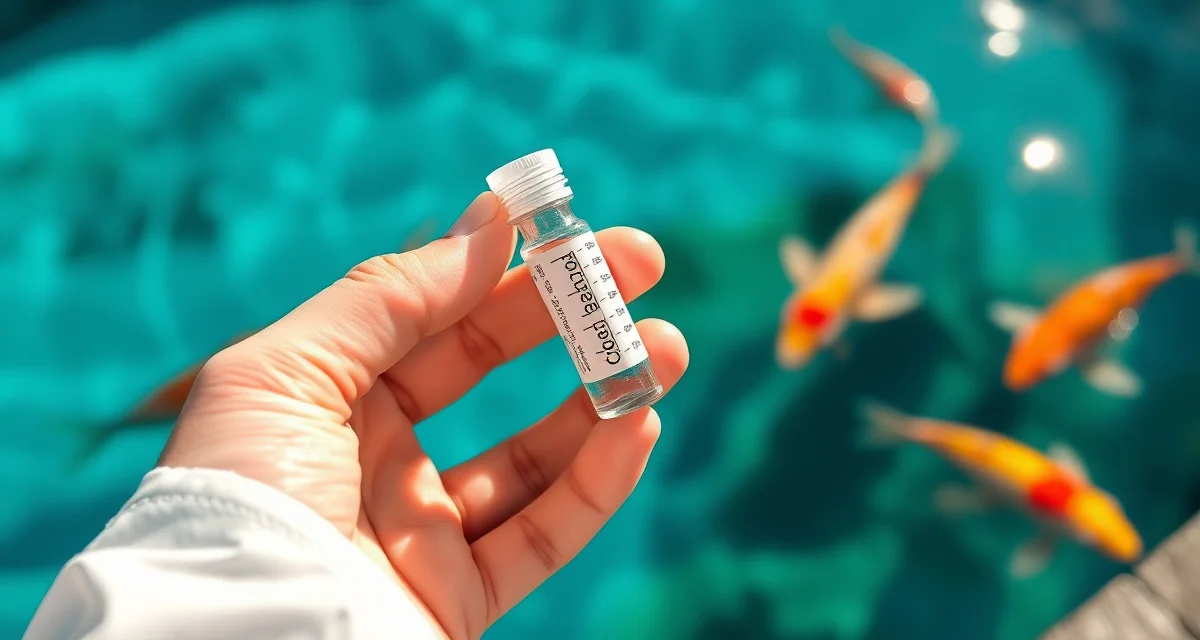
Best Koi Pond Test Kits: Accuracy, Ease of Use, and What to Buy
Liquid reagent test kits are 3-5x more accurate than test strips for ammonia and pH in koi pond water, making them the recommended choice for serious hobbyists. This isn't a marketing claim - it's a documented accuracy difference that comes from the fundamental chemistry of how each test type works. Test strips use dry reagent pads that detect color change approximately. Liquid reagent tests use precisely measured drops of liquid reagent that react with your water sample more accurately and more reproducibly.
For a koi pond where the difference between 0 and 0.25 ppm ammonia is meaningful for management decisions, test strip imprecision at that range isn't acceptable. This guide covers what to buy, what to avoid, and how to use KoiQuanta's trend tracker to transform raw test results into actionable management insights.
TL;DR
- For a koi pond where the difference between 0 and 0.25 ppm ammonia is meaningful for management decisions, test strip imprecision at that range isn't acceptable.
- Precision is typically ±0.1 ppm for ammonia and nitrite at the ranges that matter for koi pond management.
- A standalone ammonia reading of 0.25 ppm tells you there's some ammonia.
- The same reading logged in KoiQuanta, where you can see that last week it was 0.1 ppm and the week before that it was 0, tells you ammonia is rising - and that's the actionable piece of information.
- For pH specifically, a calibrated digital pH meter is more accurate and consistent than any chemical test - the Apera PH60 or Milwaukee MW100 are popular mid-range options for pond use.
- The ±0.5 ppm imprecision typical of ammonia test strips means that a strip reading of "0" could represent actual ammonia anywhere from 0 to 0.5 ppm.
Understanding Test Kit Types
Liquid Reagent Test Kits
The standard in serious aquarium and pond keeping. A water sample is drawn into a test vial, liquid reagents are added drop-by-drop, and the resulting color is compared to a printed color chart.
Accuracy: High. Precision is typically ±0.1 ppm for ammonia and nitrite at the ranges that matter for koi pond management.
Limitations: Color comparison is subjective, particularly under different lighting conditions. Reagents degrade over time - store reagents properly and replace annually. The color chart comparison requires practice to read accurately.
Best brands: API Pond Test Kit, Salifert freshwater test kits, Hanna liquid reagents. The API Master Freshwater Kit covers the core parameters (ammonia, nitrite, nitrate, pH) at an accessible price point.
Test Strips
Single-use strips with multiple test pad zones that change color when immersed in pond water. Convenient but imprecise.
Accuracy: Low to moderate. Test strips are useful for a rough orientation - "is ammonia approximately zero or is there something there?" - but not for the precision needed when managing disease events or cycling ponds.
When acceptable: For a quick daily check on a very stable, mature pond where you're confirming continued stability rather than actively managing a problem.
Not acceptable for: Active disease treatment monitoring, cycling ponds, quarantine management, or any situation where precise parameter readings drive management decisions.
Digital Meters
Electronic meters that measure specific parameters via probe. Highly accurate for the specific parameters they measure.
Best applications: pH meters (more accurate and easier to read than chemical tests for pH), dissolved oxygen meters (far superior to chemical DO tests, which are less reliable at the low-DO range where management decisions matter most), and conductivity meters (useful for tracking TDS and salt concentration).
Limitations: Require calibration and maintenance. Probes have service lives. More expensive than test kits. Don't replace kits for ammonia, nitrite, and nitrate (chemical tests for these remain standard).
The Core Test Kit Recommendation
For a serious koi hobbyist, the minimum test kit investment covers:
API Pond Master Test Kit or equivalent liquid reagent kit: Covers ammonia, nitrite, nitrate, and pH. This is the foundation of your testing program.
Carbonate hardness (KH) test kit: Essential for understanding your pond's buffering capacity and predicting pH stability. KH is not included in most "master" kits and needs to be purchased separately.
Dissolved oxygen meter or test kit: Digital DO meter is the better choice for accuracy - the Hanna HI9146 or equivalent is the instrument most commonly used by serious hobbyists. A chemical DO kit is better than nothing if the meter is out of budget.
Optional additions as budget allows: phosphate test kit, general hardness (GH) test kit, ORP/redox meter for advanced parameter monitoring.
Using Your Test Results in KoiQuanta
The difference between a test result and a useful data point is context. A standalone ammonia reading of 0.25 ppm tells you there's some ammonia. The same reading logged in KoiQuanta, where you can see that last week it was 0.1 ppm and the week before that it was 0, tells you ammonia is rising - and that's the actionable piece of information.
KoiQuanta's test result trend library interprets each parameter reading in the context of your pond's history and gives actionable next steps. When ammonia reaches 0.25 ppm in a pond that was running at zero, KoiQuanta flags it and suggests investigating the cause - increased feeding, reduced water changes, seasonal biofilter stress, or the early signs of a filter problem.
Your water quality tracker is the KoiQuanta feature that stores and analyzes your test history. The how to test koi pond water guide covers the procedural details of accurate test execution.
Frequently Asked Questions
What is the most accurate koi pond test kit?
For chemical test kits, liquid reagent tests from API, Salifert, and Hanna are the most accurate widely available options. For pH specifically, a calibrated digital pH meter is more accurate and consistent than any chemical test - the Apera PH60 or Milwaukee MW100 are popular mid-range options for pond use. For dissolved oxygen, a digital polarographic or optical DO meter is substantially more accurate than chemical DO tests, particularly at the lower DO ranges where management decisions are most critical. For ammonia and nitrite, liquid reagent tests remain the standard - there are no widely available digital alternatives at accessible price points that match liquid reagent kit accuracy.
Are koi pond test strips good enough?
For quick orientation checks on a stable, mature pond, test strips provide some value. For any situation where precise readings matter - active disease treatment, cycling ponds, quarantine management, or troubleshooting a problem - test strips are not adequate. The ±0.5 ppm imprecision typical of ammonia test strips means that a strip reading of "0" could represent actual ammonia anywhere from 0 to 0.5 ppm. In a cycling pond or during disease management, that range is the difference between safe and dangerous. Use test strips as a quick daily check only if you also have liquid reagent tests available for any reading that shows anything other than clearly normal.
Do I need to test all parameters or can I start with the basics?
Start with the basics and add parameters as your management practice matures. The essential four for any koi pond: ammonia, nitrite, pH, and temperature. Add carbonate hardness (KH) once you understand the nitrogen cycle, because KH is fundamental to pH stability. Add nitrate to your regular rotation within the first few months - nitrate accumulation drives the water change schedule. Add dissolved oxygen testing, ideally with a digital meter, if you're in a warm climate or keep a heavily stocked pond. Phosphate, TDS, ORP, and other parameters add diagnostic value for specific situations but aren't essential for basic healthy pond management.
What is Best Koi Pond Test Kits: Accuracy, Ease of Use, and What to Buy?
This guide helps koi keepers choose the most accurate and practical water test kits for their pond. It explains why liquid reagent kits outperform test strips by 3-5x in accuracy, covers which parameters matter most — ammonia, nitrite, nitrate, and pH — and recommends specific products. It also introduces KoiQuanta's trend tracker, which lets you log results over time and turn individual readings into actionable water quality insights rather than isolated data points.
How much does Best Koi Pond Test Kits: Accuracy, Ease of Use, and What to Buy cost?
Liquid reagent test kits typically range from $10–$40 depending on the brand and parameters tested. Multi-parameter kits like the API Freshwater Master Test Kit offer good value. Test strips are cheaper upfront but less accurate, making them a false economy for serious koi keepers. KoiQuanta's trend tracking feature is available through the platform and adds significant value by contextualizing your test results over time without requiring additional equipment purchases.
How does Best Koi Pond Test Kits: Accuracy, Ease of Use, and What to Buy work?
Liquid reagent kits work by adding precisely measured drops of liquid reagent to a small water sample in a test tube. The reagent reacts chemically with the target compound — ammonia, nitrite, or pH — and produces a color change. You compare that color to a reference chart to get your reading. Because the reagent volume is controlled and the reaction is more complete than dry pad chemistry, results are significantly more accurate and reproducible than test strips.
What are the benefits of Best Koi Pond Test Kits: Accuracy, Ease of Use, and What to Buy?
Accurate test kits give koi keepers earlier warning of dangerous water conditions, with precision typically around ±0.1 ppm for ammonia and nitrite at the ranges that matter. That level of detail allows you to act before fish are stressed rather than after. When results are logged in KoiQuanta, individual readings gain context — a 0.25 ppm ammonia reading means something very different if it was 0.1 ppm last week versus 0.5 ppm last week.
Who needs Best Koi Pond Test Kits: Accuracy, Ease of Use, and What to Buy?
Any koi keeper who wants to maintain healthy water quality needs a reliable test kit, but they are especially important for ponds that are newly cycled, heavily stocked, or recovering from a problem. If you are making decisions about water changes, filter adjustments, or treatments, imprecise results from test strips can lead to under- or over-reaction. Serious hobbyists and anyone treating sick fish particularly need the accuracy that liquid reagent kits provide.
How long does Best Koi Pond Test Kits: Accuracy, Ease of Use, and What to Buy take?
Each individual liquid reagent test takes about 5 minutes from filling the test tube to reading the result. A full parameter check covering ammonia, nitrite, nitrate, and pH takes 15–20 minutes. Testing frequency depends on your pond's situation — established ponds may need weekly checks, while new setups or problem ponds may require daily testing. Logging results in KoiQuanta adds only a minute or two but delivers long-term trend data that makes future decisions much faster.
What should I look for when choosing Best Koi Pond Test Kits: Accuracy, Ease of Use, and What to Buy?
Look for a kit that covers the four core parameters: ammonia, nitrite, nitrate, and pH. Prioritize liquid reagent format over test strips for accuracy. Check that the ammonia test can distinguish between 0 and 0.25 ppm — many strips cannot. Ensure the kit includes enough reagent for repeated testing over several months. Compatibility with a logging system like KoiQuanta is worth considering so individual readings accumulate into trend data rather than being forgotten between tests.
Is Best Koi Pond Test Kits: Accuracy, Ease of Use, and What to Buy worth it?
Yes. The accuracy difference between liquid reagent kits and test strips is not marginal — it is 3-5x more precise at the ranges that matter for koi health. For a fish species sensitive to ammonia and nitrite at sub-0.5 ppm levels, that precision directly affects your ability to intervene before harm occurs. Combined with trend logging in KoiQuanta, a good test kit shifts your pond management from reactive guesswork to informed, pattern-based decision making.
Related Articles
- What Koi Pond Liner Should I Use for Long-Term Fish Health?
- How to Buffer pH in a Koi Pond: Stable Chemistry Guide
Sources
- Associated Koi Clubs of America (AKCA)
- Koi Organisation International (KOI)
- University of Florida IFAS Extension Aquaculture Program
- Fish Vet Group
- Water Quality Association