Koi Pond Pump Sizing: Flow Rate and Head Pressure Guide
The target turnover rate for a koi pond is 1-2x pond volume per hour through filtration. This single number is the foundation of koi pond pump sizing. A 3000-gallon pond needs a pump capable of moving 3000-6000 gallons per hour through the complete filtration system. At the actual operating head pressure, not the theoretical maximum the pump is rated for in a showroom test.
That last distinction matters more than most people realize. Head pressure changes everything.
TL;DR
- A 3000-gallon pond needs a pump capable of moving 3000-6000 gallons per hour through the complete filtration system.
- It's why the pump you see flowing 4000 GPH in the store may only deliver 2200 GPH in your pond setup.
- Head pressure comes from: - Vertical lift: Every foot of elevation water is pumped upward adds roughly 0.43 psi (about 0.87 feet of head).
- Pumping water 6 feet up to a waterfall or filter adds real resistance.
- A well-loaded drum filter or biofilter chamber can add 1-3 feet of head pressure.
- Measure vertical lift from pond surface to highest point water travels 2.
- Add 1 foot of head for every 10 feet of horizontal pipe run 3.
What Turnover Rate Means and Why It Matters
"Turnover rate" is how many times per hour the total pond volume passes through the filtration system. It determines:
- How frequently waste is removed from the water
- How thoroughly beneficial bacteria in the biofilter can process ammonia
- Whether your biological filtration can handle the fish load you're keeping
For koi ponds with moderate to heavy stocking:
- Minimum: 1x turnover per hour
- Recommended: 1.5-2x per hour
- Heavily stocked ponds: Up to 3x per hour through biological filtration
Lightly stocked, well-planted ponds can get by with lower turnover, but for serious koi keeping, where koi pond water quality tracker must stay pristine for health and color, target the higher end.
Note: "Through filtration" means through the complete system, including mechanical filter, biological filter, UV (if used), and back to the pond. The pump must deliver this flow rate at the actual head pressure of your system, not at zero head.
Understanding Head Pressure
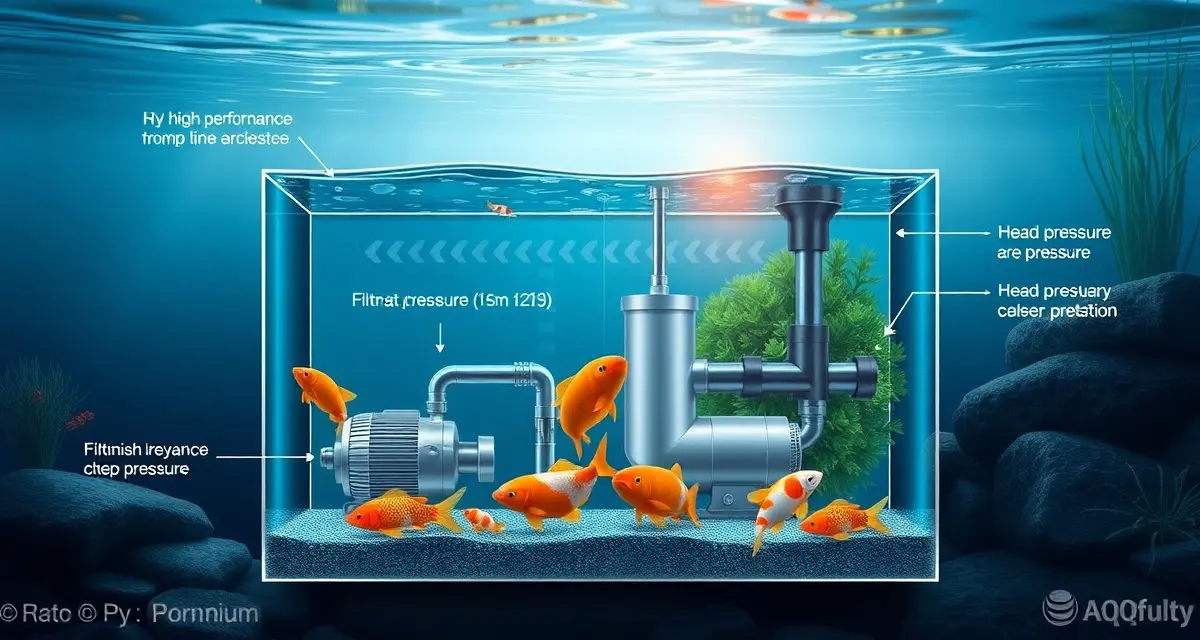
Head pressure is the resistance the pump fights to move water through your system. It's why the pump you see flowing 4000 GPH in the store may only deliver 2200 GPH in your pond setup.
Head pressure comes from:
- Vertical lift: Every foot of elevation water is pumped upward adds roughly 0.43 psi (about 0.87 feet of head). Pumping water 6 feet up to a waterfall or filter adds real resistance.
- Pipe friction: Water flowing through pipes generates friction. Longer pipes, smaller diameter pipes, and more bends all add head pressure.
- Filter resistance: Water flowing through filter media faces resistance. A well-loaded drum filter or biofilter chamber can add 1-3 feet of head pressure.
Most quality pump manufacturers provide performance curves showing flow rate at various head pressures. Always size a pump based on flow rate at your estimated head pressure, not maximum flow.
How to estimate your head pressure:
- Measure vertical lift from pond surface to highest point water travels
- Add 1 foot of head for every 10 feet of horizontal pipe run
- Add 1-2 feet per 90-degree elbow in the pipe
- Add 1-3 feet for filter resistance
- Sum everything for total estimated head
Then look at the pump curve at that head pressure to find the actual delivery flow rate.
Calculating the Right Pump Size
Step-by-Step Calculation
Step 1: Determine pond volume
- Rectangular pond: Length x Width x Average Depth x 7.48 (gallons per cubic foot)
- Or use the koi pond setup guide volume calculation guidelines
Step 2: Calculate required flow rate at the filter
- Multiply pond volume by target turnover (1.5x minimum)
- 3000-gallon pond at 1.5x turnover = 4500 GPH required at the filter
Step 3: Estimate head pressure
- Vertical lift + pipe friction + filter resistance
- Example: 4-foot waterfall + 20 feet of pipe + filter = approximately 7-9 feet of head
Step 4: Find a pump that delivers the required GPH at that head
- Check the pump's performance curve at 7-9 feet of head
- Choose a pump that delivers 4500 GPH (in our example) at that head pressure, not at zero head
Always buy slightly more pump than you need. Pipe deposits, filter loading, and seasonal variations all increase head pressure over time. A pump running at 70-80% of rated capacity lasts longer and provides buffer for system changes.
Pump Type Comparison
Submersible Pumps
Pros:
- Simple installation. Sits in the pond or sump
- Quiet operation (water dampens sound)
- Low risk of running dry (always submerged)
- Less expensive for smaller sizes
Cons:
- Harder to service. Must enter or drain pond to access
- Heat dissipation into pond water (minor factor in most climates)
- Higher energy consumption than external pumps in some configurations
Best for: Ponds under 5000 gallons, simpler setups, hobbyists who prioritize convenience
External (Out-of-Pond) Pumps
Pros:
- Easy to service without entering the pond
- More energy-efficient for large volume applications
- Better suited to larger flow rates
- Don't add heat to pond water
Cons:
- Must be primed and protected from running dry
- Requires weatherproof housing
- More complex plumbing
- Typically higher upfront cost
Best for: Ponds over 5000 gallons, high-head applications, serious hobbyists with filtration rooms
Energy-Efficient (EC Motor) Pumps
Variable-speed EC motor pumps are increasingly popular in koi keeping because they can run at reduced speed during winter (when less turnover is needed) and full speed in summer. Energy savings over the season can be considerable for larger pumps.
KoiQuanta's equipment profiles store pump specifications so you can correlate pump performance data with water quality incidents. If water quality starts declining, you can check whether your pump has been running at reduced flow (clogged filter, pre-filter blockage).
Plumbing Basics for Pump Performance
Pipe sizing: Undersized pipes are the most common cause of flow rate loss. Use at minimum:
- 1.5-inch pipe for pumps up to 3000 GPH
- 2-inch pipe for 3000-6000 GPH
- 2.5 to 3-inch pipe for 6000+ GPH
Larger pipe = less friction = more flow at the same pump power.
Minimize bends: Every 90-degree elbow reduces flow by the equivalent of several feet of pipe. Use 45-degree sweeps where possible. Keep the pipe run as direct as practical.
Pipe length: Try to keep total pipe length under 50 feet. For longer runs, size up one pipe diameter.
Gate valves vs. ball valves: Use gate valves for flow control. They can be partially closed for fine adjustment without the turbulence of partially closed ball valves. Never throttle a pump by restricting the outlet pipe. Always add a bypass or throttle on the input side if you need to reduce flow.
Pump Sizing for Specific Setups
Drum Filter Systems
Drum filters have manufacturer-specified maximum flow rates. Never exceed the drum filter's rated capacity. Waste bypasses the drum and directly enters your biofilter. Match the pump to the drum filter's capacity, not the other way around.
Bottom Drain Systems
Bottom drain systems require that the pump draws from the drain effectively. Bottom drains need sufficient flow to prevent settlement of solids at the drain. Typically a drain covers approximately 25 square feet of pond floor, and flow rate through each drain should be sufficient to move solids to it.
For a 3000-gallon pond with 2 bottom drains:
- Each drain should draw approximately 1500 GPH (half the minimum turnover rate)
Waterfall Returns
If your return is via a waterfall, the pump must provide both the required filtration turnover AND enough residual flow to make the waterfall look right. Some keepers use a separate smaller pump for the waterfall display and a main pump dedicated to filtration. This lets each pump be optimized for its job.
Related Articles
- How to Buffer pH in a Koi Pond: Stable Chemistry Guide
- What Is the Correct Salt Percentage for Koi Ponds? Complete Guide
FAQ
How do I calculate the pump size for my koi pond?
Multiply your pond volume by 1.5 to get the minimum required GPH through filtration. Then estimate your system head pressure (vertical lift + pipe friction + filter resistance in feet of head). Look up the pump's performance curve at that head pressure to find the actual delivery flow rate. Choose a pump that delivers at least your required GPH at your estimated head pressure. Always buy slightly more capacity than the minimum. Head pressure increases over time as filters load and pipes accumulate deposits.
What is head pressure and how does it affect pump selection?
Head pressure is the total resistance a pump must overcome to move water through your system. It includes vertical lift (pumping water upward), pipe friction losses, and filter resistance. A pump rated at 4000 GPH typically delivers that rate only at zero head, against no resistance. In a real pond setup with a waterfall, filter chambers, and plumbing, the same pump may only deliver 2000-2500 GPH. Always size pumps based on the flow rate they deliver at your system's actual head pressure, which is shown on the pump's performance curve.
How many gallons per hour does a koi pond pump need?
The target is 1.5-2x your pond volume per hour through the complete filtration system. A 1000-gallon pond needs 1500-2000 GPH at operating head pressure. A 3000-gallon pond needs 4500-6000 GPH. A 5000-gallon pond needs 7500-10,000 GPH, often requiring two pumps or a large external pump. These are minimums for healthy pond management with moderate stocking. Heavily stocked display ponds with high fish density may need 2-3x turnover to maintain water quality.
What is Koi Pond Pump Sizing: Flow Rate and Head Pressure Guide?
Koi Pond Pump Sizing: Flow Rate and Head Pressure Guide is a practical reference for selecting the right pump for your koi pond. It explains how to calculate the flow rate your pond requires—typically 1-2x total volume per hour through filtration—and how head pressure from vertical lift, pipe length, and filter resistance reduces real-world pump output below the rated maximum. Understanding both factors ensures your filtration system runs effectively and your koi stay healthy.
How much does Koi Pond Pump Sizing: Flow Rate and Head Pressure Guide cost?
This guide is free educational content available on KoiQuanta. There is no purchase required. The costs associated with the topic itself vary based on your pond size and setup—pumps capable of moving 3,000–6,000 GPH for a 3,000-gallon pond can range from around $80 for basic models to several hundred dollars for energy-efficient or high-head pumps. Filtration components like drum filters and biofilter chambers add additional cost depending on the system you choose.
How does Koi Pond Pump Sizing: Flow Rate and Head Pressure Guide work?
The guide works by walking you through a step-by-step sizing process. You start with your pond volume, determine the required turnover rate, then calculate total head pressure by measuring vertical lift, adding allowances for horizontal pipe runs, and accounting for filter resistance. You then match those real-world operating conditions to a pump's performance curve—not its advertised maximum—so you select a pump that actually delivers the flow your filtration system needs under load.
What are the benefits of Koi Pond Pump Sizing: Flow Rate and Head Pressure Guide?
Using this guide helps you avoid the most common and costly pump-sizing mistake: buying a pump based on its rated GPH rather than its actual output at your system's head pressure. Proper sizing means consistent water turnover, healthier biological filtration, stable water quality, and better outcomes for your koi. It also helps you avoid over-spending on an oversized pump or under-delivering with one too small to keep up with waste load.
Who needs Koi Pond Pump Sizing: Flow Rate and Head Pressure Guide?
Anyone planning, building, or upgrading a koi pond filtration system will benefit from this guide. It is especially useful for hobbyists setting up their first pond who are unfamiliar with head pressure, experienced keepers who are adding a waterfall or upgrading to a drum filter, and anyone troubleshooting poor water quality that may stem from insufficient turnover rate. If you are selecting or replacing a pump for a koi pond, this guide applies directly to your situation.
Sources
- Associated Koi Clubs of America (AKCA)
- Koi Organisation International (KOI)
- University of Florida IFAS Extension Aquaculture Program
- Fish Vet Group
- Water Quality Association