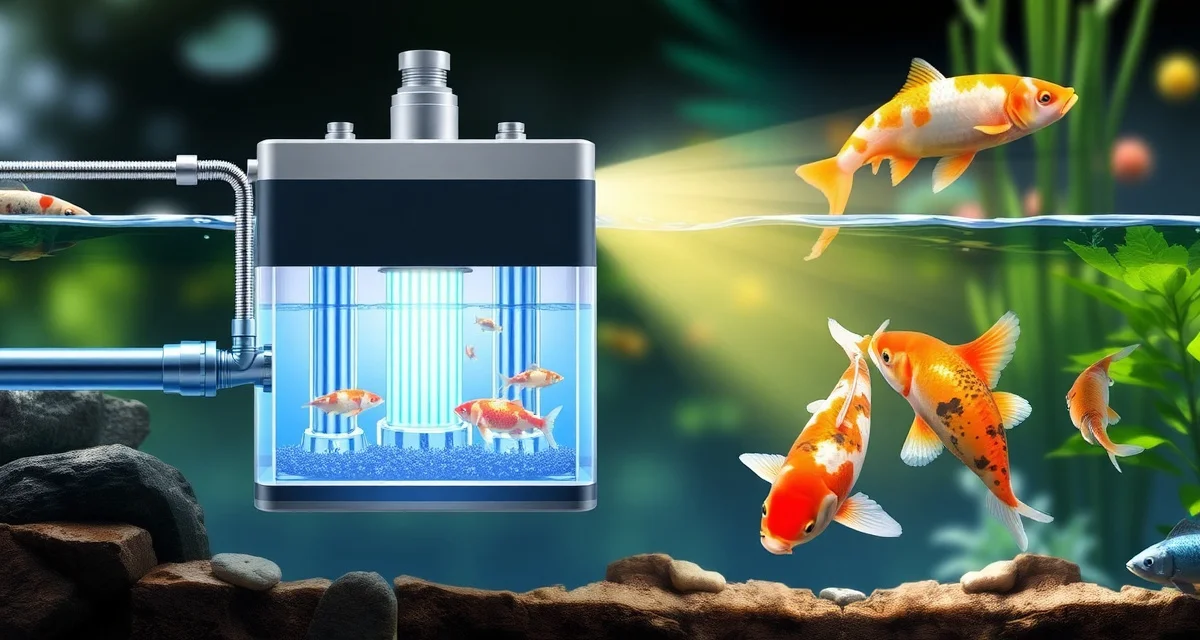
UV Sterilizer for Koi Ponds: Sizing and Operation
UV bulb output drops before visible failure, and most are replaced too late. The bulb still glows. It looks functional. But UV-C output declines over the bulb's life and can drop to a fraction of its original effectiveness before the bulb stops producing visible light. In practice, this means a UV sterilizer that cleared green water in spring is letting algae through by fall. Not because something broke, but because the bulb isn't what it was.
Understanding how to size a koi pond UV sterilizer correctly and when to replace the bulb is the difference between a UV that works and one that gives you false confidence while doing nothing.
TL;DR
- But at 25% of original UV-C output, it's providing a fraction of the dose needed for effective sterilization.
- Turn off the UV before any chemical treatment and leave it off for 24-48 hours after treatment is complete.
- Calculate the turnover rate: for green water control, you want the full pond volume to pass through the UV every 2-3 hours.
- A 3000-gallon pond needs a UV rated for 1000-1500 GPH at your target flow rate.
- Replace UV bulbs every 6-9 months of continuous operation, or at the start of each season if you run the unit seasonally.
- The bulb continues to emit visible light well past this point, but UV-C output, the wavelength that actually kills pathogens, drops considerably by 6-9 months.
What a UV Sterilizer Does (and Doesn't Do)
A UV sterilizer exposes water passing through it to ultraviolet-C (UV-C) light at 254nm wavelength. At sufficient dose (UV intensity x exposure time), this destroys free-floating microorganisms by damaging their DNA, preventing reproduction.
What UV sterilizers do:
- Control green water (single-cell algae passing through as free-swimming cells)
- Reduce free-floating bacteria in the water column
- Help manage free-swimming parasitic theronts (notably ich free-swimmers at close-range high-intensity UV)
- Reduce overall pathogen load in the water column
What UV sterilizers don't do:
- Kill algae attached to pond surfaces (string algae, blanket weed)
- Treat fish directly (pathogens living in or on fish are not exposed to UV)
- Replace biological or mechanical filtration
- Eliminate parasites encysted in substrate or on fish
UV sterilization is a health management tool, not a disease cure. It reduces the load of free-floating pathogens, which reduces infection pressure and keeps water visually clear. Combined with proper filtration, it's valuable. As a standalone substitute for good pond management, it does nothing.
How to Size a UV Sterilizer for Your Koi Pond
Sizing is the most common mistake with UV units. An undersized UV sterilizer is a waste of money. The water flows through too quickly for adequate UV exposure.
The Core Concept: Turnover and Exposure Time
UV efficacy depends on two things:
- UV-C intensity: How much UV light hits the water (measured in mW/cm²)
- Exposure time: How long water stays in the UV chamber (determined by flow rate)
Dose = Intensity x Time
Undersizing means either insufficient intensity or too short an exposure time (too high a flow rate). Both result in inadequate pathogen kill rates.
UV Sizing Formula
For green water control (algae sterilization):
- The pond volume should turn over through the UV unit every 2-3 hours
- A 3000-gallon pond needs UV sized for 1000-1500 gallons per hour flow rate
- Match UV wattage to the manufacturer's rated capacity at that flow rate
For sterilization (pathogen reduction):
- Flow rate needs to be slower. 4-8 hour turnover
- Lower flow rates give longer exposure and higher kill rates
- For disease management priority, choose the lower end of recommended flow rates
Practical Sizing Table
| Pond Volume | Minimum UV Wattage | Target Flow Rate |
|---|---|---|
| Under 1000 gallons | 18-25W | 350-500 GPH |
| 1000-2000 gallons | 25-40W | 500-800 GPH |
| 2000-4000 gallons | 40-55W | 800-1500 GPH |
| 4000-7000 gallons | 55-80W | 1500-2500 GPH |
| Over 7000 gallons | Multiple units or commercial UV | Calculate individually |
These are guidelines. Use manufacturer specifications for the specific unit you're buying because UV chamber design, sleeve quality, and ballast efficiency vary between brands.
Flow Rate and Head Pressure
The flow rate through your UV unit should be controlled by a valve or by matching your pump to the UV's rated range. Running water through a UV faster than rated reduces efficacy. Some keepers put the UV on a separate smaller pump rather than in line with the main circulation pump, giving precise flow control.
Note that the stated GPH rating on a UV sterilizer is for the recommended flow rate, not the maximum the unit can physically pass water. Don't exceed the rated flow rate for your pathogen control goal.
Installation Position
UV sterilizers should be installed after mechanical filtration (to reduce the suspended particle load that blocks UV light) and ideally after biological filtration. Position in the return line before water re-enters the pond.
Never install UV before biological filtration. UV kills bacteria indiscriminately. Put it before your biofilter and you'll destroy the beneficial bacteria your filter depends on.
Protect from direct sunlight. UV units contain materials that degrade in external UV exposure. Keep the unit shaded or indoors if possible.
Maintain horizontal or vertical as specified. Some UV units must be installed in a specific orientation for the lamp and sleeve to function correctly. Check the manufacturer's recommendation.
UV Bulb Replacement: The Critical Maintenance Item
This is where most koi keepers fail with UV sterilizers.
UV-C output from a fluorescent bulb degrades from day one of use. The degradation rate varies by bulb quality, but a reasonable estimate is:
- After 6 months of continuous use: approximately 60-70% of original UV-C output
- After 9 months: approximately 40-50%
- After 12 months: 25-35% or less
The bulb is still visibly glowing at all these points. It hasn't "failed" in the conventional sense. But at 25% of original UV-C output, it's providing a fraction of the dose needed for effective sterilization.
Replacement Schedule
Replace UV bulbs every 6-9 months of continuous operation. If you run your UV seasonally (spring through fall only), replace at the start of each season.
KoiQuanta's equipment log tracks UV bulb age and generates replacement reminders based on your log entry date, so you're not relying on memory to catch this.
Mark the installation date on the bulb or on the unit with a marker. This is the simplest possible reminder system and takes 10 seconds.
Signs the Bulb Needs Replacement Before Schedule
- Green water returns in a pond that was previously clear with UV running
- Increased algae in the pond despite UV being in line
- A new disease outbreak despite UV being operational
These could indicate bulb degradation or could indicate other problems. But bulb age is always the first thing to check.
Sleeve Cleaning
The quartz sleeve around the UV bulb (the tube that separates the bulb from the water) must be kept clean. Mineral deposits and biological film on the sleeve reduce UV transmission to the water. Clean the sleeve with a dilute acid solution (white vinegar works) when you change the bulb or if you notice water is clouding despite UV being operational.
UV and Chemical Treatments
Never add chemical treatments (potassium permanganate, salt, formalin, or other medications) through a UV sterilizer while the UV is operating.
Chemicals that pass through a UV unit are irradiated and may form harmful breakdown products. More practically, the UV will break down some medications before they can work. Turn off the UV before any chemical treatment and leave it off for 24-48 hours after treatment is complete.
For setup guidance that integrates UV sterilization into your overall pond system, see the koi pond setup guide. For filtration system design context, the koi pond filtration guide covers the full system.
Related Articles
- Chlorine and Chloramine Removal for Koi Ponds: Complete Guide
- Aquatic Plants in Koi Ponds: What Helps and What to Avoid
FAQ
How do I size a UV sterilizer for my koi pond?
Calculate the turnover rate: for green water control, you want the full pond volume to pass through the UV every 2-3 hours. A 3000-gallon pond needs a UV rated for 1000-1500 GPH at your target flow rate. Check the UV manufacturer's specifications at that flow rate, not just the maximum wattage but the rated capacity at the specific flow rate you plan to run. Running water through a UV faster than rated reduces efficacy. When in doubt, size up rather than down.
Does a UV sterilizer kill koi parasites?
UV sterilizers can kill free-swimming parasitic theronts (the infective stage of protozoan parasites like ich) as they pass through the water column. However, UV doesn't touch parasites attached to fish, encysted in the pond bottom, or protected inside organic matter. It reduces free-swimming pathogen load, which reduces re-infection pressure, but it's a complement to treatment rather than a replacement. For active parasite infections, UV alone is insufficient. You need appropriate chemical treatment alongside UV operation.
How often do I replace a UV bulb in a koi pond?
Replace UV bulbs every 6-9 months of continuous operation, or at the start of each season if you run the unit seasonally. The bulb continues to emit visible light well past this point, but UV-C output, the wavelength that actually kills pathogens, drops considerably by 6-9 months. Running a bulb past this period gives you false confidence while providing increasingly little protection. Mark the installation date on the unit and track it in your maintenance log. This single maintenance step is the most commonly skipped and the most consequential.
What is UV Sterilizer for Koi Ponds: Sizing and Operation?
A UV sterilizer for koi ponds is a water treatment device that uses ultraviolet light to neutralize algae, bacteria, and pathogens as water passes through it. Proper sizing means matching the unit's flow rate to your pond volume — you want full turnover every 2-3 hours for green water control. A 3,000-gallon pond requires a UV rated for 1,000-1,500 GPH. Bulb replacement every 6-9 months is critical, as UV-C output degrades long before the bulb stops glowing.
How much does UV Sterilizer for Koi Ponds: Sizing and Operation cost?
UV sterilizers range from around $30-$50 for basic units on small ponds to $200-$600 or more for high-output units suited to large koi ponds. Ongoing costs include bulb replacement every 6-9 months, typically $15-$60 per bulb depending on wattage and brand. Running costs are modest — most units draw 25-55 watts. The real expense of skipping proper sizing or timely bulb replacement is ineffective sterilization and the algae, disease, or water quality problems that follow.
How does UV Sterilizer for Koi Ponds: Sizing and Operation work?
Water is pumped from your pond through a sealed chamber housing a UV-C bulb. As water flows past the bulb, UV-C radiation at around 254 nanometers disrupts the DNA of algae cells, bacteria, and parasites, preventing reproduction. Effectiveness depends on flow rate — water moving too fast reduces exposure time and lowers the UV dose delivered. The bulb must also be producing sufficient UV-C output, which declines steadily over its lifespan even while it continues to emit visible light.
What are the benefits of UV Sterilizer for Koi Ponds: Sizing and Operation?
A properly sized and maintained UV sterilizer keeps pond water clear by controlling green water algae, reduces harmful bacteria and some parasites, and supports overall fish health. It works as a passive layer of protection running continuously alongside your filter. Unlike chemical treatments, it requires no pond downtime and doesn't affect beneficial bacteria in your biofilter. The key benefit is consistent, low-maintenance water clarity — provided you replace bulbs on schedule and match flow rate to pond volume.
Who needs UV Sterilizer for Koi Ponds: Sizing and Operation?
Any koi keeper dealing with persistent green water, recurring bacterial outbreaks, or high fish stocking density benefits from a UV sterilizer. It's especially useful for ponds with limited natural filtration, full sun exposure, or koi that have shown susceptibility to ulcers and infections. Hobbyists running new ponds where biological filtration hasn't fully established also benefit. If you've had a UV unit for more than one season without replacing the bulb, you likely need one — or at minimum, a new bulb — regardless of whether the unit appears to be working.
Sources
- Associated Koi Clubs of America (AKCA)
- Koi Organisation International (KOI)
- University of Florida IFAS Extension Aquaculture Program
- Fish Vet Group
- Water Quality Association