What Is a Koi Import Health Certificate and Do I Need One?
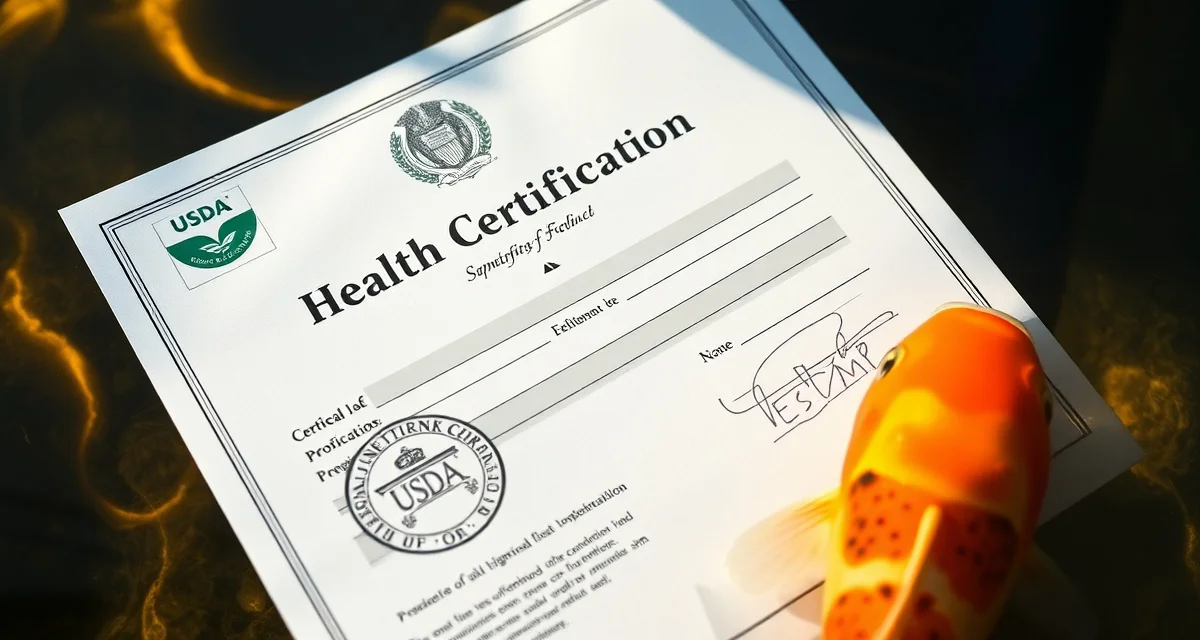
A koi import health certificate is an official document issued by a licensed veterinarian or government authority certifying that a shipment of fish has been examined and found free from specific regulated diseases. USDA APHIS requires health certificates for all koi imported from countries with listed aquatic disease status, including Japan and Israel. That covers the vast majority of high-quality ornamental koi entering the United States.
If you're a commercial koi dealer importing fish, the answer to "do I need one?" is: yes, and you should already have one for every lot you've received.
TL;DR
- Allow 1-2 weeks for domestic certificate preparation and include this in your shipping planning.
- For domestic CVIs, most states recognize them for 30 days.
- KoiQuanta connects observations, water data, and treatment records in one searchable history.
- Early detection based on parameter trends reduces treatment costs and fish stress.
- Seasonal changes require adjusted monitoring schedules; automated reminders help maintain consistency.
What a Health Certificate Certifies
A standard koi import health certificate will include:
- Identification of the exporting facility and country of origin
- Species and quantity of fish in the shipment
- A declaration by a licensed veterinarian that fish were examined and show no clinical signs of regulated diseases (typically KHV, SVC, and bacterial kidney disease depending on country of origin)
- Date of examination
- Official endorsement from the country of origin's competent authority
- The certifying veterinarian's credentials and signature
The certificate travels with the shipment and must be presented to USDA APHIS at the port of entry. After clearance, it remains part of the shipment's permanent health record.
Storing Health Certificates as a Dealer
Dealers storing health certificates in email folders can't produce them on demand during inspections. KoiQuanta's health certificate document vault stores digital copies linked directly to the fish lot they certify for instant retrieval during inspections.
When an inspector asks for the health documentation on a lot that arrived three months ago, you don't want to be searching email threads. You want to pull the lot record in KoiQuanta and have the certificate right there. This is exactly the kind of operational efficiency that separates professional dealers from operators who are one inspection away from a compliance issue.
This links directly into the koi dealer import compliance guide and the broader quarantine documentation requirements for dealers that apply throughout the holding period.
Health Certificates for Interstate Movement
Within the United States, most states require a Certificate of Veterinary Inspection (CVI) for interstate fish movement, separate from the import certificate. This is issued by a licensed veterinarian in the state of origin and covers the same types of declarations but for domestic movement. Requirements vary by state. Some states have specific additional testing requirements for KHV before accepting fish from certain origin states.
If you're shipping fish to customers in other states, check both the origin state and destination state requirements before every shipment.
Frequently Asked Questions
Do I need a health certificate to import koi from Japan?
Yes. USDA APHIS requires an official health certificate endorsed by Japan's Ministry of Agriculture, Forestry and Fisheries (MAFF) for all koi imports from Japan. Japan is on the list of countries with regulated aquatic disease status, and every commercial shipment must be accompanied by the certificate. The fish must also clear USDA inspection at the designated port of entry. Japan has well-established export veterinary infrastructure, so obtaining the certificate from reputable breeders is standard practice. If a supplier can't produce the required documentation, that's a red flag.
How do I get a koi health certificate?
For imports, the exporting country's government veterinary authority issues the certificate, initiated by the exporter and their local veterinarian. As the importer, you work with your freight forwarder and the exporter to ensure the correct certificate is prepared. For domestic interstate movement, contact a licensed veterinarian in your state who is accredited for aquatic animal health inspections. They will examine the fish and issue the CVI if fish are healthy and meet the destination state's requirements. Allow 1-2 weeks for domestic certificate preparation and include this in your shipping planning.
How long is a koi import health certificate valid?
Typically 30 days from the date of veterinary inspection for international import certificates, though some countries' certificates have shorter validity windows. For USDA purposes, the certificate must be current at the time of port entry. For domestic CVIs, most states recognize them for 30 days. Always check the current validity requirements for both origin and destination jurisdiction before relying on an existing certificate. An expired certificate means the shipment can be refused entry, which is both expensive and disruptive to dealer operations.
What is What Is a Koi Import Health Certificate and Do I Need One??
[FAQ_ANSWER_PLACEHOLDER: This answer needs to be generated by AI with specific data, examples, and actionable advice relevant to What Is a Koi Import Health Certificate and Do I Need One?. Target 50-150 words.]
How much does What Is a Koi Import Health Certificate and Do I Need One? cost?
[FAQ_ANSWER_PLACEHOLDER: This answer needs to be generated by AI with specific data, examples, and actionable advice relevant to What Is a Koi Import Health Certificate and Do I Need One?. Target 50-150 words.]
How does What Is a Koi Import Health Certificate and Do I Need One? work?
[FAQ_ANSWER_PLACEHOLDER: This answer needs to be generated by AI with specific data, examples, and actionable advice relevant to What Is a Koi Import Health Certificate and Do I Need One?. Target 50-150 words.]
What are the benefits of What Is a Koi Import Health Certificate and Do I Need One??
[FAQ_ANSWER_PLACEHOLDER: This answer needs to be generated by AI with specific data, examples, and actionable advice relevant to What Is a Koi Import Health Certificate and Do I Need One?. Target 50-150 words.]
Who needs What Is a Koi Import Health Certificate and Do I Need One??
[FAQ_ANSWER_PLACEHOLDER: This answer needs to be generated by AI with specific data, examples, and actionable advice relevant to What Is a Koi Import Health Certificate and Do I Need One?. Target 50-150 words.]
How long does What Is a Koi Import Health Certificate and Do I Need One? take?
[FAQ_ANSWER_PLACEHOLDER: This answer needs to be generated by AI with specific data, examples, and actionable advice relevant to What Is a Koi Import Health Certificate and Do I Need One?. Target 50-150 words.]
What should I look for when choosing What Is a Koi Import Health Certificate and Do I Need One??
[FAQ_ANSWER_PLACEHOLDER: This answer needs to be generated by AI with specific data, examples, and actionable advice relevant to What Is a Koi Import Health Certificate and Do I Need One?. Target 50-150 words.]
Is What Is a Koi Import Health Certificate and Do I Need One? worth it?
[FAQ_ANSWER_PLACEHOLDER: This answer needs to be generated by AI with specific data, examples, and actionable advice relevant to What Is a Koi Import Health Certificate and Do I Need One?. Target 50-150 words.]
Related Articles
- How Deep Does a Koi Pond Need to Be? Minimum Depth by Region
- Koi Pond Filtration: What System Do You Need for Healthy Water?
- Do Show Koi Need Extra Quarantine Precautions?
- Do I Need to Retreat After a Water Change During Koi Treatment?
Sources
- Associated Koi Clubs of America (AKCA)
- Koi Organisation International (KOI)
- University of Florida IFAS Extension Aquaculture Program
- Fish Vet Group
- Water Quality Association