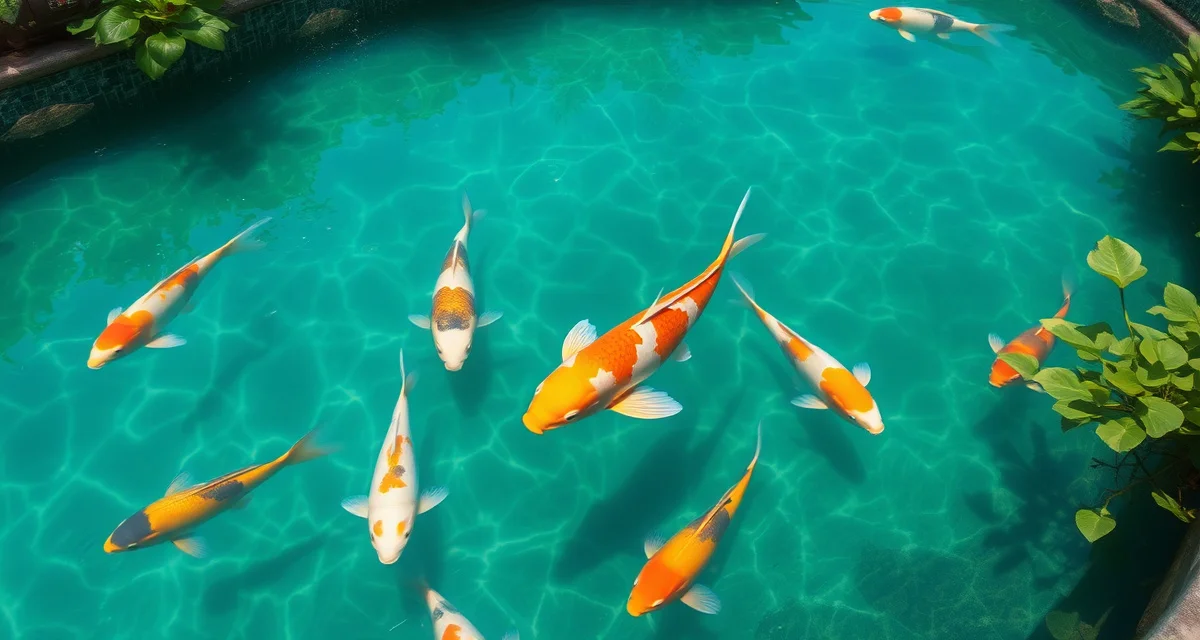
New Koi Pond Owner Guide: First Year Essentials
Over 60% of new koi keepers lose fish in the first six months from preventable causes. That's not a reason to be discouraged -- it's a reason to read this guide before those mistakes happen to you. The causes of first-year fish loss are well-documented and well-understood: new pond syndrome, skipped quarantine, cold-water feeding, and failing to catch disease signs early enough to treat effectively.
Every one of those causes is preventable with the right information and a little preparation.
TL;DR
- For the fish you'll have in 3-5 years when they've grown, 3,000 gallons is a much more practical starting target.
- Without this, ammonia from your first fish will spike to toxic levels within 24-72 hours.
- This is a separate container -- a stock tank, a large rubber tub, or a dedicated aquarium of at least 100 gallons per fish -- with filtration, aeration, and heating.
- The pond has been cycling for at least 4-6 weeks 2.
- Ammonia reads zero on three consecutive test days 3.
- Nitrite reads zero on three consecutive test days 4.
- Nitrate is detectable (showing the cycle is complete) 5.
Before You Get Fish: The Groundwork
Step 1: Make sure your pond is properly sized. The absolute minimum for koi is 1,000 gallons, and this is genuinely the floor -- not a comfortable starting point. For the fish you'll have in 3-5 years when they've grown, 3,000 gallons is a much more practical starting target. If your existing pond is smaller, plan for what size fish you can keep long-term rather than assuming you'll "figure it out later." Overcrowded ponds create koi pond water quality tracker problems that are hard to solve.
Step 2: Make sure filtration is working. A koi pond filter needs to run for 4-6 weeks before adding fish to develop the bacterial colony (the nitrogen cycle). Without this, ammonia from your first fish will spike to toxic levels within 24-72 hours. Running a new filter is not optional -- it's the difference between fish that survive and fish that don't.
Step 3: Set up your quarantine tank. Before buying a single fish, have a quarantine tank ready. This is a separate container -- a stock tank, a large rubber tub, or a dedicated aquarium of at least 100 gallons per fish -- with filtration, aeration, and heating. If you don't have quarantine capacity when you find fish you want to buy, you face a choice between skipping quarantine (high risk) and not buying the fish. Having the setup ready eliminates that dilemma.
KoiQuanta's new keeper mode provides step-by-step protocol guidance through first-year milestones, prompting you at each stage with what needs to happen and why.
Understanding the Nitrogen Cycle (The Non-Negotiable Foundation)
Before you add fish, you need to understand what you're setting up. This knowledge will explain every water quality problem you encounter in the first year.
Fish produce ammonia as a metabolic waste product. Ammonia is toxic to fish at low concentrations. Beneficial bacteria (primarily Nitrosomonas species) convert ammonia to nitrite. A second group of bacteria (Nitrospira and Nitrobacter) convert nitrite to nitrate. Nitrate is relatively harmless at low concentrations and is removed by regular water changes.
This full conversion process is the nitrogen cycle. It requires weeks to establish because you're building bacteria populations from scratch.
Signs of a cycling pond (problem):
- Ammonia detectable (above 0.1 mg/L)
- Nitrite detectable (above 0.1 mg/L)
- Fish gasping at the surface or showing stress signs
Signs of a cycled pond (ready for fish):
- Ammonia: zero
- Nitrite: zero
- Nitrate: detectable (this shows the cycle is working)
Testing every 2-3 days during the cycling process is essential. For new pond cycling guidance, see the koi new pond cycling guide and the koi ammonia guide for what to do if ammonia climbs after fish are added.
When Is It Safe to Add Koi to a New Pond?
Your pond is ready to add koi when:
- The pond has been cycling for at least 4-6 weeks
- Ammonia reads zero on three consecutive test days
- Nitrite reads zero on three consecutive test days
- Nitrate is detectable (showing the cycle is complete)
- pH is in the 7.0-8.5 range and stable
- Water temperature is in the appropriate range for koi (above 10°C for safety)
Don't rush this. Fish added to a pond where the cycle isn't complete face ammonia poisoning before any disease can even appear. Adding fish that have just gone through 30 days of quarantine to a pond that kills them with ammonia wastes the quarantine effort and your investment.
Quarantine: The Rule That Saves Ponds
Every new koi needs 30 days of quarantine in a separate tank before going into your pond. No exceptions.
This is the rule that experienced koi keepers follow without question because the consequences of not following it are real and severe. A single fish with koi herpesvirus (KHV) introduced to an established pond can kill every fish in it within days. A fish carrying flukes introduces a parasite load that will require months of treatment to clear. Fish with Aeromonas ulcer disease can shed bacteria into the pond that trigger infections in other fish.
30 days of quarantine in a separate, cycled tank gives you time to:
- Observe the fish for disease signs that don't show up immediately
- Run prophylactic parasite treatment (Praziquantel for flukes is standard)
- Confirm the fish is eating, swimming normally, and behaving normally
- Have time to treat any problems before they affect your main pond
For the full quarantine protocol, the new koi quarantine protocol provides the day-by-day framework.
Water Testing: What to Test and How Often
Get a liquid test kit, not strip tests. Strips are inaccurate enough to be misleading, and a misread ammonia or nitrite test can mean the difference between acting on a developing problem and thinking everything's fine.
Essential tests for new pond owners:
- Ammonia
- Nitrite
- Nitrate
- pH
- KH (carbonate hardness)
During cycling: test every 2-3 days.
After cycling with fish added: test weekly at minimum; daily if you see any health problems.
For how to test correctly and what to do with results, the koi water testing guide walks through the process step by step.
Feeding: Start Conservative
New koi keepers consistently overfeed. It's natural -- feeding your fish is the most direct interaction you have with them, and they learn to beg enthusiastically at the water's edge.
The 5-minute rule: feed what your fish can eat completely in 5 minutes, then stop. Remove any uneaten food. This is your anchor for feeding quantity.
The temperature rule: stop feeding when water temperature drops below 10°C. Never compromise on this. Koi digestive systems shut down in cold water, and food fed below 10°C causes fatal gut fermentation. Many first-year fish losses happen in autumn when keepers continue feeding through September and October because the fish look active and are coming to the surface. Check the temperature, not the fish behavior.
What to Do When Something Looks Wrong
Koi disease caught early is almost always more treatable than disease caught late. Build a daily observation habit from the start.
Spend 5 minutes watching your fish every day. Get to know what "normal" looks like for your specific fish. Then you'll immediately notice when something is different.
Concerning signs that warrant immediate attention:
- Any fish that's separated from the group or not coming to feed when others are
- Fish sitting on the bottom (not just resting briefly -- sitting still for extended periods)
- Fins held tight against the body (clamped)
- Rapid rubbing against the pond bottom or sides (flashing)
- Visible sores, spots, or unusual texture changes
- Fish at the surface gasping (oxygen emergency or gill problem)
When you see these signs, test water quality first. Many disease signs are actually water quality problems in disguise. If water quality is fine, then you're looking at an infectious disease and need to identify what you're dealing with.
The koi water quality emergency guide covers rapid response for suspected water quality crises. The koi disease identification guide guides you through symptom analysis.
Your First-Year Milestones
Weeks 1-4: Cycle the pond without fish. Test every 2-3 days. Establish your baseline.
Week 4-6: When cycling is confirmed complete, introduce your first quarantined fish to the main pond. Start with fewer fish than you eventually want -- you can add more after the pond proves stable.
Months 1-3: Build the observation habit. Test water weekly. Feed conservatively. Don't add more fish until you're confident the pond chemistry is stable with your initial stock.
Spring of first year: The highest-risk disease period. Elevate observation and testing frequency. Run prophylactic Praziquantel for flukes as water warms above 12°C. Watch carefully for early disease signs.
Autumn of first year: Transition feeding to wheat germ food as temperatures drop. Stop feeding below 10°C. Prepare for winter appropriately for your climate.
End of first year: If you make it through a full year-round cycle without major losses, you've developed the core skills and routines that make subsequent years considerably easier.
Frequently Asked Questions
What should a new koi pond owner do first?
Set up your pond and get the filtration cycling before you buy any fish. The nitrogen cycle takes 4-6 weeks to establish, and fish added before it's complete face ammonia poisoning. Simultaneously, set up your quarantine tank so it's ready when you find fish you want to buy. Get a liquid test kit and learn the parameters you'll be testing. The first month or two is preparation time -- resisting the urge to rush into buying fish before your pond is ready is one of the most important decisions a new owner can make.
How do I cycle a new koi pond?
Run your filter with an ammonia source -- household ammonia (pure, no surfactants or scents) dosed to 2-3 mg/L in the pond water works well. Test ammonia and nitrite every 2-3 days. Bacteria will appear spontaneously from the environment and begin converting ammonia to nitrite (weeks 1-2), then nitrite to nitrate (weeks 3-5). The cycle is complete when both ammonia and nitrite read zero on three consecutive test days while nitrate is detectable. This typically takes 4-6 weeks. KoiQuanta's new pond wizard tracks cycling progress with parameter entry prompts.
When is it safe to add koi to a new pond?
When ammonia and nitrite both read zero on three consecutive test days and nitrate is detectable, the nitrogen cycle is established and it's safe to add fish. Also confirm pH is stable in the 7.0-8.5 range and water temperature is above 10°C. Don't rush based on calendar time alone -- some ponds cycle in 4 weeks, some take 6-8 weeks. The test results, not the number of weeks elapsed, are the reliable indicator that the pond is ready.
What is New Koi Pond Owner Guide: First Year Essentials?
[FAQ_ANSWER_PLACEHOLDER: This answer needs to be generated by AI with specific data, examples, and actionable advice relevant to New Koi Pond Owner Guide: First Year Essentials. Target 50-150 words.]
How much does New Koi Pond Owner Guide: First Year Essentials cost?
[FAQ_ANSWER_PLACEHOLDER: This answer needs to be generated by AI with specific data, examples, and actionable advice relevant to New Koi Pond Owner Guide: First Year Essentials. Target 50-150 words.]
How does New Koi Pond Owner Guide: First Year Essentials work?
[FAQ_ANSWER_PLACEHOLDER: This answer needs to be generated by AI with specific data, examples, and actionable advice relevant to New Koi Pond Owner Guide: First Year Essentials. Target 50-150 words.]
What are the benefits of New Koi Pond Owner Guide: First Year Essentials?
[FAQ_ANSWER_PLACEHOLDER: This answer needs to be generated by AI with specific data, examples, and actionable advice relevant to New Koi Pond Owner Guide: First Year Essentials. Target 50-150 words.]
Who needs New Koi Pond Owner Guide: First Year Essentials?
[FAQ_ANSWER_PLACEHOLDER: This answer needs to be generated by AI with specific data, examples, and actionable advice relevant to New Koi Pond Owner Guide: First Year Essentials. Target 50-150 words.]
How long does New Koi Pond Owner Guide: First Year Essentials take?
[FAQ_ANSWER_PLACEHOLDER: This answer needs to be generated by AI with specific data, examples, and actionable advice relevant to New Koi Pond Owner Guide: First Year Essentials. Target 50-150 words.]
What should I look for when choosing New Koi Pond Owner Guide: First Year Essentials?
[FAQ_ANSWER_PLACEHOLDER: This answer needs to be generated by AI with specific data, examples, and actionable advice relevant to New Koi Pond Owner Guide: First Year Essentials. Target 50-150 words.]
Is New Koi Pond Owner Guide: First Year Essentials worth it?
[FAQ_ANSWER_PLACEHOLDER: This answer needs to be generated by AI with specific data, examples, and actionable advice relevant to New Koi Pond Owner Guide: First Year Essentials. Target 50-150 words.]
Sources
- Associated Koi Clubs of America (AKCA)
- Koi Organisation International (KOI)
- University of Florida IFAS Extension Aquaculture Program
- Fish Vet Group
- Water Quality Association