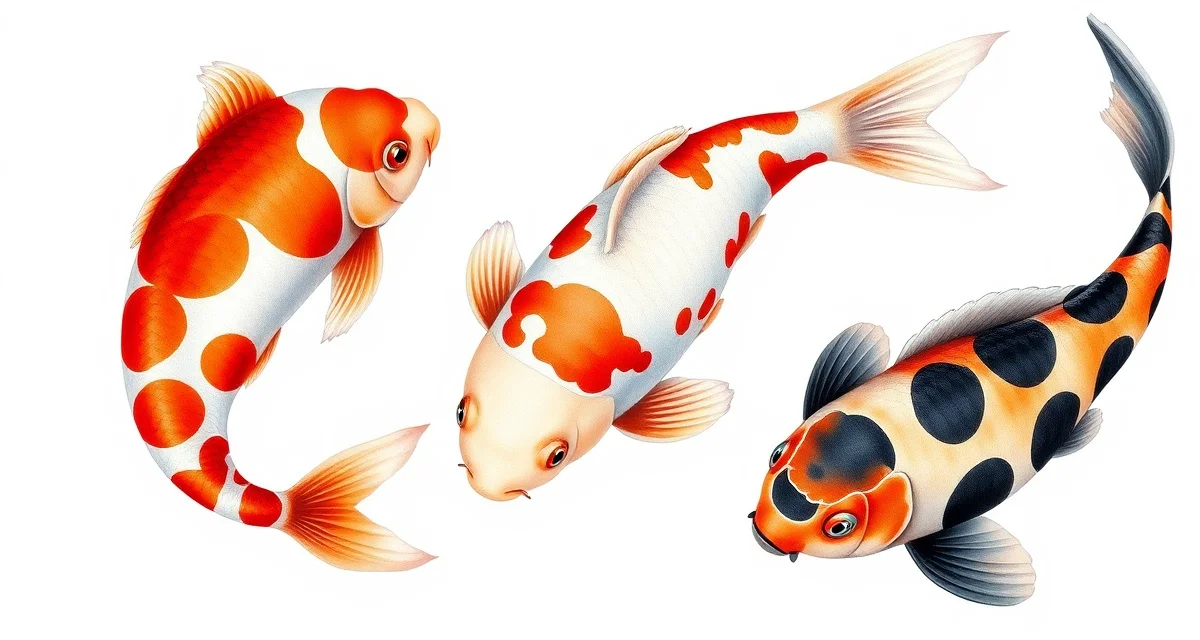
Koi Genetics: Color and Pattern Inheritance Basics
The Kohaku pattern genes are well-characterized, and breeders can predict hi distribution in offspring with reasonable accuracy. This isn't magic or intuition. It's applied genetics, and understanding even the basics converts breeding from guesswork into informed decision-making.
You don't need a degree in genetics to use these principles. What you need is an understanding of the key pigment systems, how dominant and recessive inheritance works, and what to expect from specific crosses.
TL;DR
- Consistent water quality monitoring is the most effective way to prevent problems with koi genetics.
- Tracking trends over time reveals issues before they become visible in fish behavior.
- KoiQuanta connects observations, water data, and treatment records in one searchable history.
- Early detection based on parameter trends reduces treatment costs and fish stress.
- Seasonal changes require adjusted monitoring schedules; automated reminders help maintain consistency.
The Pigment System Foundation
Koi color is produced by three types of chromatophores (pigment cells):
- Melanophores produce black and brown pigments (melanin-based). This gives sumi.
- Xanthophores produce yellow, orange, and red pigments. This gives hi (red) and ki (yellow).
- Iridophores produce the reflective, metallic sheen. This gives the gin (silver) and kin (gold) of metallic varieties.
Most koi varieties are defined by which pigment types are present, where they express, and how the underlying white skin (shiroji) interrupts or frames them. The interplay between melanophores and xanthophores across a background of reflective or non-reflective tissue creates the enormous variety of patterns we recognize as koi varieties.
Mendelian Inheritance in Koi
Koi genetics follows standard Mendelian inheritance for many traits. The basic principles:
Dominant traits appear in an offspring if the gene is present in even one copy (heterozygous). If a parent carries one dominant allele and one recessive, roughly half the offspring will express the dominant trait.
Recessive traits require two copies of the gene to express. Both parents must carry at least one copy for any offspring to display the trait. A fish showing a recessive trait is homozygous recessive, while fish that carry the gene without showing it are "carriers."
Codominance and incomplete dominance appear in some koi traits, where heterozygous fish show an intermediate phenotype between the two homozygous forms.
Kohaku Genetics: The Foundation Pattern
Kohaku (red hi pattern on white shiroji background) is the foundational koi variety and the one most systematically studied genetically.
The hi expression in Kohaku is controlled by several interacting gene loci. The distribution and edges of hi patches are influenced by both genetic programming and environmental factors like temperature and nutrition. The "stable" hi (that doesn't fade, expand, or shift significantly with age) that breeders prize is a genetic quality that can be selected for over generations.
A key principle: hi expression genes and the sumi suppression genes (which prevent black from appearing over the red in Kohaku) act together. This is why Kohaku x Kohaku crosses don't produce Sanke. You need to introduce sumi genetics from a Sanke or Showa parent.
Crossing high-quality Kohaku parents consistently produces a high proportion of Kohaku offspring with similar hi quality, because the parental fish have been selected to be reasonably homozygous at these loci. This is what breeders mean when they say a particular Kohaku "throws well."
Sanke: Adding Sumi to Kohaku
Sanke (Taisho Sanshoku) adds black sumi spots over the Kohaku pattern. The sumi in Sanke is controlled by different genetic pathways than the sumi in Showa.
Sanke sumi appears as discrete spots or patterns on the white and occasionally on the red, but characteristically does not appear on the head. It's often described as "sitting on" the pattern rather than being integrated into the underlying structure.
Crossing Kohaku x Sanke produces both varieties in roughly equal proportions, plus some fish with qualities of both. A Kohaku female crossed with a Sanke male is a common pairing for producing both high-quality Kohaku and Sanke, as the offspring benefit from the sumi genetics of the Sanke parent improving both varieties' depth and stability.
Showa: Integrated Sumi
Showa (Showa Sanshoku) also carries three colors (red, black, and white), but the underlying structure is fundamentally different from Sanke. In Showa, the sumi forms the base structural pattern, with hi and shiroji appearing within the sumi framework. Characteristic Showa sumi wraps around the body, appears on the head, and often extends into the pectoral fins.
The Showa-Kohaku cross is interesting from a breeding perspective. Offspring include Kohaku, Sanke, and Showa phenotypes, plus transitions between them. Breeders working with Showa lines often cross back to high-quality Kohaku to improve shiroji quality and pattern crispness.
Why Koi Change Color as They Grow
Color change with age is one of the most dramatic aspects of koi genetics, and it explains why young koi can't always be evaluated with the same criteria as adults.
Hi stability and migration is the primary concern. Hi patches in young koi frequently shrink, migrate, or change intensity as the fish matures. The "fukurin" (scale reticulation that makes hi patterns crisper and more three-dimensional) develops progressively through the tosai and nisai years. Fish that appear to have excellent pattern at tosai age may develop hi migration or shrinkage issues in subsequent years.
Sumi development in Showa and Sanke is often incomplete at young ages. The deep, stable sumi that experienced breeders call "lacquer sumi" (a rich, three-dimensional quality) develops progressively over two to four years. Fish selected at six months old may have dramatically different sumi quality at four years old, for better or worse.
Temperature effects are real and interact with genetic potential. Hi intensity typically improves in cooler water and may wash out in warm water in fish without inherent hi stability. Breeders test their selections across temperature seasons partly for this reason.
Recording Parentage in KoiQuanta
KoiQuanta's breeder profiles support parent pair documentation linked to fry batch records. This creates the institutional memory that allows pattern analysis across multiple breeding seasons.
If you cross a specific female Kohaku with a specific male Sanke and produce excellent offspring, that pairing is worth repeating. If the offspring were disappointing despite the parents' quality, documentation helps you understand why and make different decisions in the next breeding season.
The koi genetics variety selection guide covers variety-specific genetics for more complex varieties. The koi fry raising guide covers the practical husbandry that gives your genetic potential the best chance to express itself.
Frequently Asked Questions
How does koi color genetics work?
Koi color is produced by three types of pigment cells: melanophores (black/brown), xanthophores (yellow/red), and iridophores (metallic sheen). The combination of which pigment types are expressed, where they express on the body, and how they interact with white background skin determines the variety and pattern. These traits are controlled by multiple interacting gene loci following standard Mendelian principles, with some traits dominant, some recessive, and some showing codominant or environment-influenced expression. Selective breeding over generations has produced varieties where the genetic tendency toward specific patterns is relatively predictable.
What does crossing a Kohaku with a Sanke produce?
A Kohaku x Sanke cross typically produces a mix of Kohaku offspring (without sumi), Sanke offspring (with discrete sumi on the white and red), and some fish showing transitional characteristics. The proportion of each variety in the offspring depends on the specific genetics of the individual parent fish, not just their variety. Some Kohaku females crossed with specific Sanke males reliably produce a high proportion of quality fish from both varieties - these are proven pairings that experienced breeders return to repeatedly.
Why do koi change color as they grow?
Koi patterns are genetically programmed but develop progressively through a fish's life. Hi patches may stabilize, shrink, migrate, or intensify over the tosai through yonsai years. Sumi patterns, particularly in Showa, often develop slowly and reach their adult depth and clarity over two to four years. Environmental factors like water temperature, nutrition, and UV exposure all influence color expression on top of the genetic baseline. This is why experienced koi selectors evaluate fish with an understanding of what they're likely to become, not just what they look like at the moment of selection.
What is Koi Genetics: Color and Pattern Inheritance Basics?
Koi Genetics: Color and Pattern Inheritance Basics is an educational guide explaining how koi fish develop their colors and patterns through genetic inheritance. It covers the three chromatophore cell types responsible for pigmentation—melanophores (black/brown), xanthophores (red/yellow), and iridophores (metallic sheen)—and explains how dominant and recessive gene interactions determine offspring appearance. The guide helps breeders move beyond guesswork and make informed decisions when selecting breeding pairs.
How much does Koi Genetics: Color and Pattern Inheritance Basics cost?
This is a free educational article published on KoiQuanta. There is no cost to read or apply the genetics principles described. KoiQuanta's broader platform offers tools for tracking breeding outcomes, water quality, and fish health records, with subscription options available separately. Understanding koi genetics itself requires no purchase—just time spent learning the core concepts and applying them during your breeding program.
How does Koi Genetics: Color and Pattern Inheritance Basics work?
The guide works by breaking down koi color genetics into approachable concepts. It explains how pigment-producing cells determine color, how Mendelian inheritance principles apply to specific varieties like Kohaku, and how to predict likely offspring outcomes from known parent genetics. By understanding which traits are dominant or recessive, breeders can anticipate hi distribution, sumi placement, and pattern characteristics before a spawn even happens.
What are the benefits of Koi Genetics: Color and Pattern Inheritance Basics?
Understanding koi genetics transforms breeding from a lottery into a strategic process. Key benefits include more predictable offspring coloration, better breeding pair selection, reduced culling rates through informed expectations, and the ability to selectively strengthen desirable traits across generations. Breeders who apply genetic principles consistently produce higher-quality fish, save resources by avoiding poor pairings, and develop a deeper appreciation for the biological complexity behind their koi collection.
Who needs Koi Genetics: Color and Pattern Inheritance Basics?
This knowledge is valuable for hobbyist breeders wanting to improve spawn quality, serious koi enthusiasts selecting fish for show potential, and pond keepers curious about why their koi look the way they do. You don't need a biology background—the guide is written for practical application. Anyone managing a breeding program or simply wanting to understand color development in their existing fish will find the content directly useful.
How long does Koi Genetics: Color and Pattern Inheritance Basics take?
Reading and understanding the basics takes one to two hours. Applying genetic principles to an actual breeding program is an ongoing process that unfolds across multiple spawning seasons. Predicting outcomes improves with each generation as you document parent and offspring traits. Patience is essential—genetic expression in koi can be influenced by age, water conditions, and development, so some traits only become fully visible as fish mature over one to three years.
What should I look for when choosing Koi Genetics: Color and Pattern Inheritance Basics?
Look for resources that cover the specific pigment systems relevant to the varieties you breed, explain both dominant and recessive inheritance clearly, and provide practical guidance on cross predictions rather than just theory. The best guides connect genetics to real breeding decisions—pair selection, expected ratios, and pattern evaluation. KoiQuanta's article is variety-specific and actionable, which is more useful than generic genetics content not tailored to nishikigoi.
Is Koi Genetics: Color and Pattern Inheritance Basics worth it?
Yes, for anyone serious about breeding or improving their collection, understanding koi genetics is absolutely worth the investment of time. The principles covered—chromatophore biology, inheritance patterns, and cross prediction—directly improve the quality and consistency of your spawns. Rather than hoping for good fish, you breed toward them with informed expectations. Combined with KoiQuanta's tracking tools for water data and breeding records, the knowledge compounds into measurably better outcomes season over season.
Related Articles
- Why Is My Koi Losing Color: Causes and Solutions
- Koi Management Software for Sanke Owners: Log Health and Pattern Progress
Sources
- Associated Koi Clubs of America (AKCA)
- Koi Organisation International (KOI)
- University of Florida IFAS Extension Aquaculture Program
- Fish Vet Group
- Water Quality Association