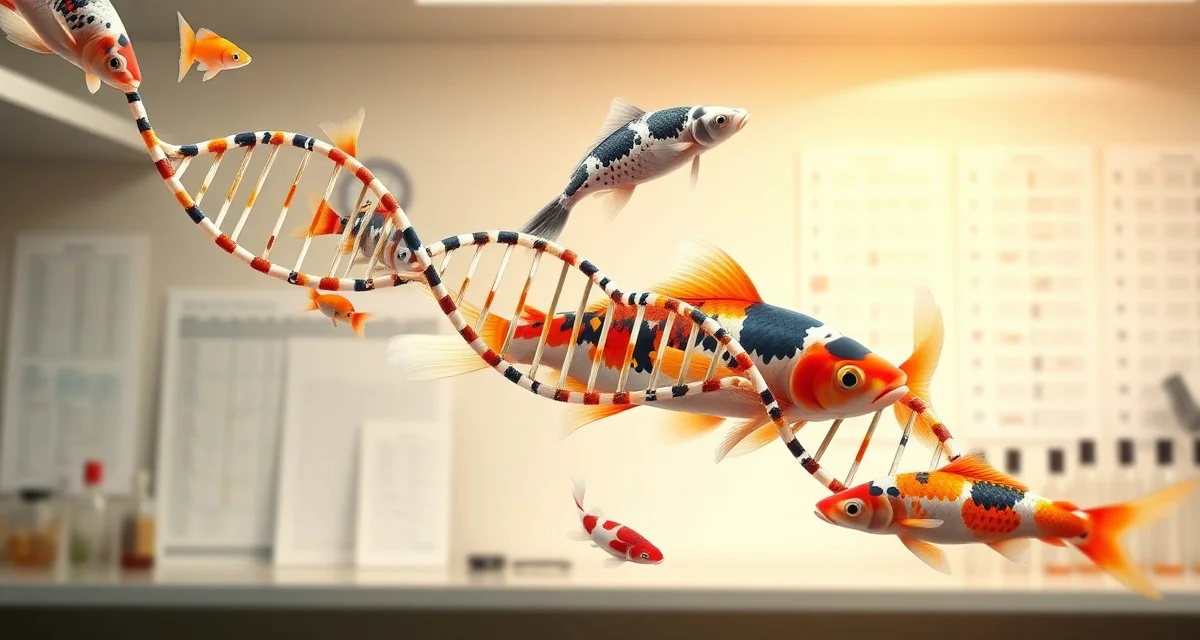
Koi Genetics and Variety Selection for Breeders
Top koi breeders maintain multi-generational breeding records to predict offspring quality. Not because genetics makes koi breeding an exact science. It doesn't. But because pattern recognition across multiple generations is the only way to improve consistency and understand what any particular pairing is likely to produce.
Understanding koi genetics variety selection doesn't require a biology degree. It requires understanding a handful of principles about how color and pattern traits are inherited, and then applying those principles systematically through records and observation.
TL;DR
- Only breed from fish that have demonstrated pattern stability over 2-3+ years, as some juvenile fish that look promising can change noticeably.
- Tracking trends over time reveals issues before they become visible in fish behavior.
- KoiQuanta connects observations, water data, and treatment records in one searchable history.
- Early detection based on parameter trends reduces treatment costs and fish stress.
- Seasonal changes require adjusted monitoring schedules; automated reminders help maintain consistency.
Why Koi Genetics Are More Complex Than You Think
Koi are a selectively bred domesticated form of the common carp (Cyprinus carpio). Breeding for color and pattern has been ongoing for centuries in Japan. The result is a fish with an exceptionally complex genome for color expression.
Most visible koi traits are polygenic, controlled by multiple genes acting together. This is different from simple Mendelian genetics where a single gene determines a single trait. When traits are polygenic:
- Offspring show a continuous range of expression, not simple dominant/recessive outcomes
- Predicting specific offspring pattern is impossible; predicting the distribution of quality in a large cohort is achievable
- Environmental factors (koi pond water quality tracker, diet, temperature) influence how genetic potential actually expresses in ways that vary fish to fish
This is why two excellent Kohaku parents don't produce 100% excellent Kohaku offspring. They produce a distribution of offspring, some excellent, many mediocre, some with variety-inappropriate traits. The breeder's job is to select the best from each generation and continue building toward consistency.
The Major Genetic Traits in Koi
Base Color
All koi start from a carp base, olive-green to bronze. Selective breeding has produced genetic modifications that:
- Suppress melanin (black/brown pigment) to create white or light base color
- Concentrate or spread specific pigment cells (chromatophores)
- Create metallic-reflective scale characteristics (Ogon-type)
- Produce color-specific pigment patterns (Hi for red, sumi for black, shiroji for white)
Base color traits are generally more heritable than pattern. A pairing of two white-based fish is more likely to produce white-based offspring than a color-based fish crossed to a white-based fish.
Hi (Red/Orange Pigment)
Hi (pronounced "hee") quality is one of the most important and most variable traits in koi breeding. Good hi has:
- Deep, uniform red-orange color
- Clear, well-defined edges
- No stepping or fading at the center (kiwa quality)
- Stable development that doesn't change dramatically with age or season
Hi is influenced by both genetics and environment. Water quality, diet (specifically carotenoid content), and water temperature all affect hi expression. A fish with genetically excellent hi potential can display poor hi in poor conditions. This makes evaluating breeding stock genuinely difficult. You need to see them in ideal conditions before drawing conclusions about their genetic quality.
Sumi (Black Pigment)
Sumi is more environmentally stable than hi but still variable in expression. The timing of sumi development is particularly relevant:
- In Showa, sumi often "settles" over 2-4 years, changing the pattern dramatically during that time
- In Sanke, sumi should be stable and well-defined
- Young fish with heavy sumi may develop cleaner patterns as they mature; equally, sumi can increase with age
Breeders who track individual fish across seasons in KoiQuanta can correlate early sumi observations with eventual adult pattern, building a reference for how their specific lines develop.
Metallic Quality
The metallic trait in Ogon, Hikarimuji (single-color metallic), and Hikari Utsuri (metallic with black) varieties is generally highly heritable. Crossing a metallic Ogon to a non-metallic Kohaku produces metallic offspring (Kikusui or similar) in a predictable proportion. Metallic crossed to metallic produces high-proportion metallic offspring.
The quality of the metallic sheen, whether it's deep mirror-like luster or dull and inconsistent, is more variable and follows polygenic inheritance patterns.
Scale Type
- Regular scales: Standard for most varieties
- Doitsu (German mirror scale pattern): Scales reduced to a single lateral line and dorsal row; highly heritable when both parents carry doitsu genetics
- Ginrin (reflective scale surface): The sparkling scale effect; heritable but expression quality varies
Doitsu crossed to Doitsu produces near-100% Doitsu offspring. Doitsu crossed to scaled produces variable proportions of Doitsu and scaled offspring. Ginrin to Ginrin produces high proportions of Ginrin, but expression quality varies.
How to Predict Koi Offspring Variety
"Predict" is a strong word for koi genetics. What you can realistically do is understand the likely distribution of outcomes from a pairing.
Same-Variety Pairings
Crossing two fish of the same variety (Kohaku x Kohaku, Sanke x Sanke) produces the highest proportion of that variety's offspring, but still not 100%. Recessive traits hiding in both parents can express in offspring, producing non-variety fish.
Cross-Variety Pairings
Crossing varieties produces predictable categories of mixed results. Some crosses are well-understood in the koi breeding community:
- Kohaku x Sanke: Produces Kohaku, Sanke, and some black-based offspring
- Sanke x Showa: Produces the full Gosanke range with variable sumi patterns
- Kohaku x Ogon (metallic): Produces Kikusui (metallic Kohaku type) in proportion
- Goromo x Kohaku: May produce Goromo offspring if Goromo traits are carried well
- Asagi x Kohaku: Can produce Shusui (Doitsu Asagi type) when Doitsu parents involved
For most cross-variety pairings, experienced breeders have observed typical outcome distributions over many spawning generations. This accumulated community knowledge is the practical substitute for precise genetic prediction.
The Role of Multi-Generational Records
This is where serious breeders separate themselves from hobbyists who just spawn whatever fish they have. When you track which pairings produced which offspring, over multiple generations, patterns emerge:
- Which females consistently throw good hi expression
- Which males produce offspring with better sumi stability
- Which lines reliably produce variety-true offspring vs. high variation
- Which crosses produce more small or large offspring
KoiQuanta's fish profiles include variety, parentage, and breeder notes, creating the foundation for this kind of multi-generational data. Without systematic records, you're breeding on guesswork. With them, you're building a picture.
Variety Selection for Your Breeding Program
Not all varieties are equally suitable for all breeding programs. Choose varieties that align with your goals, facilities, and skill level.
Starting Varieties for Serious Hobbyist Breeders
Kohaku: The foundation variety. If you can't produce good Kohaku, you can't produce good anything. Kohaku shows off every flaw, poor hi, unclean shiroji, bad kiwa, with nowhere to hide. Starting with Kohaku builds the eye for quality that transfers to all other varieties.
Sanke: Adds sumi to the Kohaku framework. Slightly more complex, but the quality assessment skills build on Kohaku evaluation.
Asagi/Shusui: Fascinating variety for breeders interested in the Doitsu genetics. Asagi crossed to Doitsu produces Shusui. The scale network and hi development are highly distinctive and rewarding to work with.
What Varieties Breed True
"Breeding true" means offspring reliably display the variety characteristics:
- Ogon/Hikarimuji: The metallic single-color varieties breed relatively true. Metallic crossed to metallic produces metallic offspring.
- Doitsu varieties: Doitsu trait breeds reliably. Doitsu x Doitsu = high proportion Doitsu.
- Kohaku: Does not breed 100% true. Sumi (black) often appears from hidden genetics. Culling is essential.
- Sanke, Showa: High variation in offspring. Skilled selection needed at culling.
- Goromo: Notoriously variable in offspring expression. Difficult variety for consistent production.
Selection Criteria for Breeding Stock
Select breeding fish for:
- Body shape: Long, torpedo-shaped body without lumps or curves. Wide shoulders. Good depth. The body is the first thing judges look at.
- Variety-specific pattern: In the ideal range for the variety, not too heavy or too light
- Hi quality: Deep, uniform, no fading centers
- Sumi quality (Sanke, Showa): Well-defined, stable, variety-appropriate distribution
- Shiroji quality: Pure white, no yellow cast
- Scale quality: Tight, uniform, undamaged
- Overall health and vitality: Only breed from healthy, vigorous fish
Avoid breeding from fish with:
- Skeletal deformities (even minor ones are heritable)
- Consistently poor hi expression despite good conditions
- Genetic defects expressed in previous offspring
Recording Breeding Outcomes
Every pairing should be recorded with:
- Parent identity (variety, lineage if known)
- Spawn date and conditions
- Approximate yield at first cull
- Percentage retained at first cull and criteria
- Variety breakdown of surviving cohort at 3 months
This data, accumulated across seasons, becomes your most valuable breeding tool. You'll identify your best producing females, understand which crosses produce your highest quality yield, and make progressively better selection decisions. Refer to the koi fry raising guide for fry management details that connect directly to breeding outcomes.
Related Articles
- Best Medications for Koi Quarantine: Evidence-Based Selection-best-medications)
- Air Pumps for Koi Ponds: Sizing and Selection
FAQ
How do I predict koi offspring variety?
You can't predict specific offspring, but you can understand the likely distribution. Same-variety pairings produce the highest proportion of that variety's offspring but still generate variation due to hidden recessive traits. Cross-variety pairings produce predictable mixes. Kohaku x Sanke produces Kohaku and Sanke offspring in varying proportions. The most reliable predictor is historical data from the specific parents and their related lines. Keep detailed records of every pairing and its offspring quality over multiple seasons.
What varieties breed true in koi?
Metallic single-color varieties (Ogon, Hikarimuji) breed relatively true for the metallic trait. Doitsu genetics also breed reliably. The Gosanke varieties (Kohaku, Sanke, Showa) do not breed entirely true. They produce variation in offspring, which is why culling is a core part of quality koi production. Goromo is one of the most variable. Predicting offspring pattern from Goromo pairings is particularly difficult even for experienced breeders.
How do I select koi for breeding?
Select for body shape first. Long, torpedo-shaped body with good width and depth. Then evaluate variety-specific pattern quality, hi expression depth and uniformity, sumi stability (in black-bearing varieties), and overall health and vitality. Only breed from fish that have demonstrated pattern stability over 2-3+ years, as some juvenile fish that look promising can change noticeably. Avoid any fish with heritable defects. Skeletal abnormalities and genetic deformities appear reliably in offspring.
What is Koi Genetics and Variety Selection for Breeders?
Koi genetics and variety selection for breeders is the practice of understanding how color, pattern, and trait inheritance works in koi (Cyprinus carpio) to make informed breeding pair decisions. It involves maintaining multi-generational records, recognizing hereditary patterns, and selecting fish with demonstrated pattern stability over 2-3 years. Rather than an exact science, it's a systematic approach to improving consistency and predicting what a given pairing is likely to produce across successive generations.
How much does Koi Genetics and Variety Selection for Breeders cost?
Koi genetics and variety selection as a practice has no direct cost — it's a knowledge-based approach using observation and record-keeping. Costs arise from the tools and fish involved: quality broodstock, pond setup, and record-keeping software like KoiQuanta. Investing in organized breeding records and water monitoring systems pays off by reducing unpredictable spawning outcomes, lowering treatment costs through early detection, and producing higher-quality fry with more consistent pattern development over time.
How does Koi Genetics and Variety Selection for Breeders work?
Koi genetics and variety selection works by applying core inheritance principles to breeding decisions. Breeders track color and pattern traits across multiple generations, only selecting fish that show stability over 2-3 years. By identifying trends in offspring quality and maintaining detailed records of each pairing, breeders can recognize which combinations reliably produce desirable traits — and which introduce instability — allowing continuous, evidence-based improvement of their breeding program over time.
What are the benefits of Koi Genetics and Variety Selection for Breeders?
The primary benefits include greater consistency in offspring quality, reduced guesswork in pairing decisions, and earlier identification of hereditary issues before they compound across generations. Systematic record-keeping reveals pattern trends invisible in any single spawn. Combined with water parameter monitoring and treatment history, breeders can also link environmental stressors to color or pattern changes, making it easier to separate genetic expression from husbandry variables — ultimately producing healthier, more predictable, and more valuable fish.
Who needs Koi Genetics and Variety Selection for Breeders?
Serious koi breeders looking to improve fry quality and consistency across generations will benefit most. This includes hobbyists scaling into selective breeding, small-scale commercial producers, and anyone interested in developing or preserving specific variety lines. If you're making intentional pairing decisions rather than random spawning, understanding genetic inheritance and maintaining structured breeding records is essential. It's also valuable for breeders working with rare or complex varieties where pattern predictability directly affects the market value of offspring.
Sources
- Associated Koi Clubs of America (AKCA)
- Koi Organisation International (KOI)
- University of Florida IFAS Extension Aquaculture Program
- Fish Vet Group
- Water Quality Association