Koi Club Directory: Find a Koi Club in Your Area
Active koi club membership correlates with better fish health outcomes among hobbyists. That's not a coincidence -- clubs give you access to experienced keepers who've already solved the problems you're encountering, vetted sources for quality fish and medications, and the collective knowledge of a local community that understands the specific water chemistry, climate, and disease pressures in your region.
Here's a regional breakdown of active koi clubs across the United States, along with what to look for when evaluating a club near you.
TL;DR
- Essential for Arizona keepers navigating extreme summer heat management -- members have developed region-specific strategies for keeping koi alive when water temperatures threaten to exceed 40°C.
- Florida members deal with 12-month disease pressure unlike northern keepers, making club knowledge about continuous parasite and disease management particularly valuable.
- KoiQuanta connects observations, water data, and treatment records in one searchable history.
- Early detection based on parameter trends reduces treatment costs and fish stress.
- Seasonal changes require adjusted monitoring schedules; automated reminders help maintain consistency.
National Organizations
Before local clubs, it's worth knowing the national organizations that set standards and sanction shows:
Associated Koi Clubs of America (AKCA): The primary national koi organization in the US. Sanctions koi shows, sets judging standards, and provides a directory of affiliated clubs. Most serious koi clubs in the US maintain AKCA affiliation. Find the national club directory at akca.org.
Koi USA: The member publication of AKCA. Not a club itself, but a resource that most club members receive.
ZNA (Zen Nihon Airinkai): The Japanese national koi association with chapters worldwide, including several in the US. ZNA chapters tend to focus on traditional Japanese koi standards and varieties. Notable for high-level fish and access to Japanese breeder networks.
Regional Directory
West Coast
Southern California Koi Club: One of the largest and most active clubs in the country, reflecting Southern California's concentration of koi dealers and importers. Runs regular shows and has strong connections to Japanese breeders.
Northern California Koi Society: Bay Area-based club with active membership and regular events. Northern California's climate supports excellent year-round koi keeping.
Pacific Northwest Koi Club (Oregon/Washington): Active club covering the Pacific Northwest region. Particularly relevant for members dealing with the rainfall-driven pH and KH management challenges specific to that region.
Arizona Koi and Water Garden Society: Covers the Phoenix metro area. Essential for Arizona keepers navigating extreme summer heat management -- members have developed region-specific strategies for keeping koi alive when water temperatures threaten to exceed 40°C.
Midwest
Greater Chicago Koi Club: Active Midwest club running regular shows. The Midwest's bi-seasonal challenge (hard winters and hot summers) makes local knowledge particularly valuable.
Michigan Koi Association: Covers Michigan with particular focus on cold-climate management and spring transition protocols.
Ohio Koi and Water Garden Association: Well-established club in the Midwest with regular shows and events.
Minnesota Koi Club: Small but dedicated club of cold-climate koi keepers. Membership here gives you access to people who've figured out how to keep koi alive through genuinely brutal winters.
Southwest
Texas Koi and Water Garden Society: Texas-based with strong membership in the Dallas-Fort Worth and Houston metro areas. Focus on heat management and the specific challenges of Texas summer extremes.
New Mexico Koi Club: Smaller club serving the Southwest with knowledge of high-altitude and arid-climate pond management.
Southeast
Florida Koi Fanciers: Active club for Florida's year-round koi keeping environment. Florida members deal with 12-month disease pressure unlike northern keepers, making club knowledge about continuous parasite and disease management particularly valuable.
Georgia Koi Society: Southeast club running shows and events throughout the warmer months.
Carolina Koi Club: Covers North and South Carolina with a mix of climate-zone challenges.
Northeast and Mid-Atlantic
Northeast Koi Club: Serves the greater New York/New Jersey/Connecticut area. Runs well-attended shows and maintains connections to East Coast dealers and importers.
Pennsylvania Koi Society: Mid-Atlantic club with strong show program.
New England Koi Club: Covers Massachusetts and New England with focus on cold-climate management for the region's challenging winters.
Capital Koi Club (DC/Virginia/Maryland): Active club in the mid-Atlantic corridor.
South-Central
Arkansas Koi Keepers: Smaller regional club with active local community.
Louisiana Pond Association: Southeast club with focus on warm-climate management.
What to Look For in a Koi Club
Not all clubs are equally active, and the value you get from membership depends heavily on the club's activity level.
Signs of a healthy, active club:
- Regular meetings (monthly or bi-monthly) with educational programming
- Annual or semi-annual koi show
- Active online presence or forum
- Connections to quality fish sources and trusted vendors
- Members willing to help with disease diagnosis and treatment questions
Questions to ask before joining:
- When was the last club show?
- Do members organize group buys or have preferred vendor relationships?
- Is there an active online community (forum, Facebook group) between meetings?
- What level of koi keeping do members typically engage in?
KoiQuanta integrates with club event calendars for show quarantine planning -- when you log a show event in KoiQuanta, it automatically sets up an extended quarantine protocol for fish returning from shows, where exposure to hundreds of fish from different sources creates elevated disease risk. For more on preparing fish for shows and managing post-show quarantine, see the koi show preparation guide. For guidance on sourcing quality fish through club networks, the koi buying guide covers the evaluation process.
The Value of Local Knowledge
Local clubs offer something that no national resource can: knowledge of what's actually happening in your regional water chemistry and disease environment. A member in Phoenix who's been keeping koi through 10 summers knows what dissolved oxygen thresholds to watch during heat events, which local dealers have proven reliable, and which disease has been circulating in the regional fish supply.
That local knowledge is difficult to replicate from a national guide or online forum. It's specific, current, and comes from people who've dealt with the same conditions you're facing.
Frequently Asked Questions
Where can I find a koi club near me?
Start with the AKCA website (akca.org), which maintains a directory of affiliated clubs organized by region. Searching "[your state] koi club" typically surfaces active regional organizations quickly. Facebook groups and local pond store bulletin boards are also effective -- many clubs post meeting announcements at local koi dealers. If there's no active club in your immediate area, the nearest major city's club may offer online membership or distant membership with access to their digital resources.
What do koi clubs offer members?
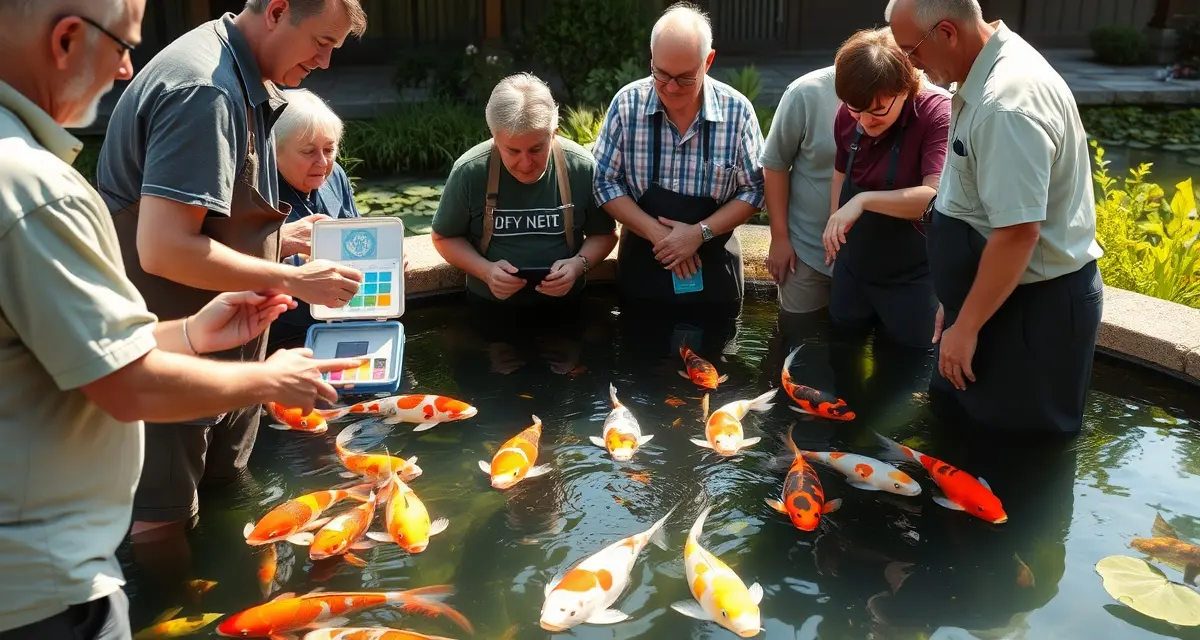
Active koi clubs provide regular educational meetings with experienced speakers, organized koi shows where you can see high-quality fish and get judging feedback on your own, group buying opportunities for fish and supplies, connections to vetted local dealers and importers, and community troubleshooting for disease and water quality problems. Many clubs also offer access to shared equipment (like quality test kits or microscopes for parasite diagnosis) and provide a community of people invested in helping each other succeed.
Are koi clubs worth joining?
For most koi keepers, yes -- the knowledge access alone justifies the typically modest membership fee. The data on health outcomes is clear: hobbyists who are connected to experienced local communities have better fish survival rates than isolated keepers. The single biggest value is access to people who've already solved the problems you're going to encounter. If you're just starting out, a single conversation with an experienced club member about pond setup can save you from mistakes that would cost far more than the membership fee.
What is Koi Club Directory: Find a Koi Club in Your Area?
[FAQ_ANSWER_PLACEHOLDER: This answer needs to be generated by AI with specific data, examples, and actionable advice relevant to Koi Club Directory: Find a Koi Club in Your Area. Target 50-150 words.]
How much does Koi Club Directory: Find a Koi Club in Your Area cost?
[FAQ_ANSWER_PLACEHOLDER: This answer needs to be generated by AI with specific data, examples, and actionable advice relevant to Koi Club Directory: Find a Koi Club in Your Area. Target 50-150 words.]
How does Koi Club Directory: Find a Koi Club in Your Area work?
[FAQ_ANSWER_PLACEHOLDER: This answer needs to be generated by AI with specific data, examples, and actionable advice relevant to Koi Club Directory: Find a Koi Club in Your Area. Target 50-150 words.]
What are the benefits of Koi Club Directory: Find a Koi Club in Your Area?
[FAQ_ANSWER_PLACEHOLDER: This answer needs to be generated by AI with specific data, examples, and actionable advice relevant to Koi Club Directory: Find a Koi Club in Your Area. Target 50-150 words.]
Who needs Koi Club Directory: Find a Koi Club in Your Area?
[FAQ_ANSWER_PLACEHOLDER: This answer needs to be generated by AI with specific data, examples, and actionable advice relevant to Koi Club Directory: Find a Koi Club in Your Area. Target 50-150 words.]
How long does Koi Club Directory: Find a Koi Club in Your Area take?
[FAQ_ANSWER_PLACEHOLDER: This answer needs to be generated by AI with specific data, examples, and actionable advice relevant to Koi Club Directory: Find a Koi Club in Your Area. Target 50-150 words.]
What should I look for when choosing Koi Club Directory: Find a Koi Club in Your Area?
[FAQ_ANSWER_PLACEHOLDER: This answer needs to be generated by AI with specific data, examples, and actionable advice relevant to Koi Club Directory: Find a Koi Club in Your Area. Target 50-150 words.]
Is Koi Club Directory: Find a Koi Club in Your Area worth it?
[FAQ_ANSWER_PLACEHOLDER: This answer needs to be generated by AI with specific data, examples, and actionable advice relevant to Koi Club Directory: Find a Koi Club in Your Area. Target 50-150 words.]
Sources
- Associated Koi Clubs of America (AKCA)
- Koi Organisation International (KOI)
- University of Florida IFAS Extension Aquaculture Program
- Fish Vet Group
- Water Quality Association