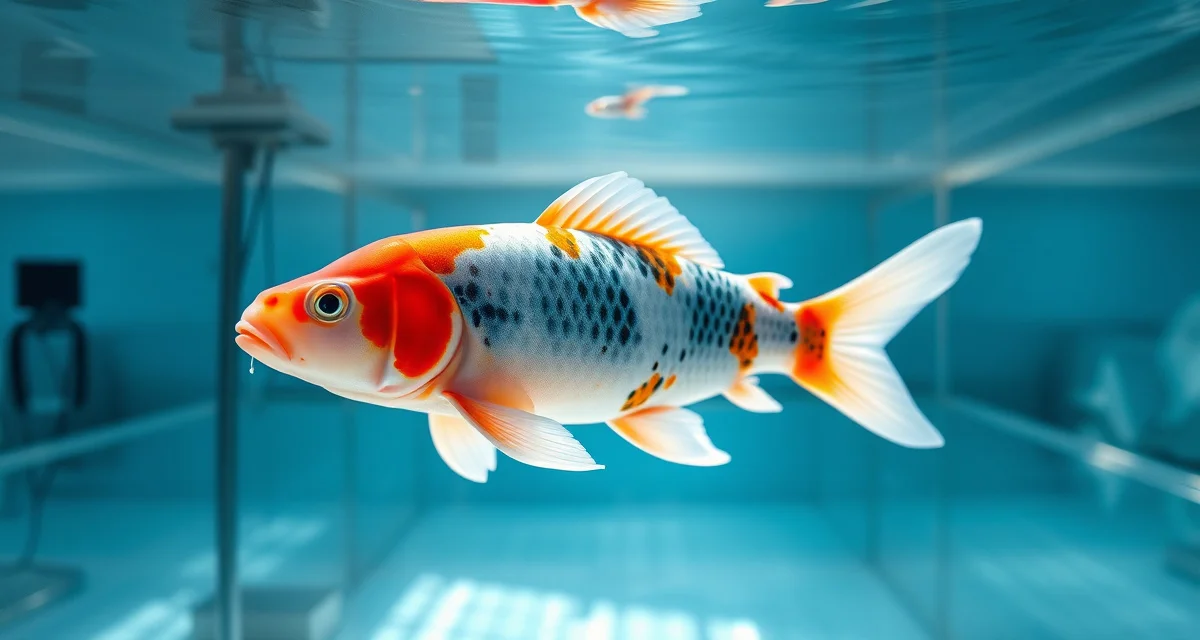
Koi Show Preparation: Health and Presentation Guide
The koi show circuit is one of the best things about the hobby. It's also the most reliable way to introduce disease into a private collection.
Fish returned from shows are the most common source of disease introduction in collections that would otherwise run clean. This isn't a reason to avoid shows - it's a reason to manage them correctly. With proper preparation and, critically, proper post-show quarantine, the risk is manageable.
Here's the complete show lifecycle: preparation, transport, the show itself, and return protocol.
TL;DR
- Taper it down before transport so the fish aren't in 0.3% salt during transport (osmotic stress during transport is better avoided).
- The health consideration is separate from aesthetics: a beautiful Kohaku that's been treated for Aeromonas in the past 6 weeks hasn't had time to recover full health and stress resilience.
- Best practice: don't enter fish within 30 days of completing any disease treatment.
- Add salt to transport water: 0.3% for transport helps osmoregulation under stress.
- The 65–68°F quarantine temperature for post-show fish serves the same purpose as for Japanese imports - it keeps the fish in the KHV expression window during the observation period.
- Begin 2 weeks before the show with a full health inspection, skin scrape to confirm no parasites, and water parameter verification.
- Reduce feeding 24 hours before transport.
Pre-Show Health Screening
Don't enter fish that aren't healthy. This sounds obvious - it isn't always followed.
At least two weeks before the show:
Full health inspection:
- Close examination of every fish you're considering entering
- Skin scrape if you haven't done one recently - confirm no fluke or parasite burden
- Check fin condition, scale integrity, skin quality
- Any fish with active disease signs, recent treatment, or recovery in progress stays home
Water parameter confirmation:
- Ammonia: 0 mg/L
- Nitrite: 0 mg/L
- pH: stable at 7.4–7.8
- DO: 7+ mg/L
Fish going to a show should be in the best possible health before they leave. Stressed fish exposed to show pathogens will be far more susceptible.
Pre-show salt dose calculator (optional but recommended):
A prophylactic salt treatment at 0.3% for 2 weeks before the show supports immune function and reduces parasite burden. Taper it down before transport so the fish aren't in 0.3% salt during transport (osmotic stress during transport is better avoided).
Feed management:
Reduce feeding 24 hours before transport to reduce waste production in the transport container. Don't starve the fish - just one less meal the day before.
Selecting Fish for Show
For Gosanke (Kohaku, Sanke, Showa) shows, pattern clarity, skin quality, and body shape are the evaluation criteria. The health consideration is separate from aesthetics: a beautiful Kohaku that's been treated for Aeromonas in the past 6 weeks hasn't had time to recover full health and stress resilience.
Best practice: don't enter fish within 30 days of completing any disease treatment. Their immune systems and stress resilience may not be back to full strength.
Transport
Container Selection
Show transport containers depend on fish size and transport duration:
Short transport (under 3 hours): Oxygenated transport bags in insulated boxes are standard. Bag each fish separately for valuable fish; multiple fish per bag only for small fish of equal size from the same pond.
Long transport (over 3 hours): Coolers with battery-powered aeration, or transport tanks with active aeration. The oxygen depletion risk in standard bags over long distances is real.
Temperature management: Insulation is essential. Temperature swings in transit are stress events. In summer, ice packs around the container (not in the water) help; in winter, heat packs keep temperature up.
Water Preparation for Transport
Use your own pond water for transport - it's already at the right parameters and the fish are acclimatized to it. Don't use show water for transport.
Add salt to transport water: 0.3% for transport helps osmoregulation under stress.
Don't feed before boxing - uneaten food in transport bags depletes oxygen and spikes ammonia.
At the Show
Shows are beyond your control once your fish are there. What you can manage:
Minimize handling during setup. Koi shows require fish to be moved from transport bags to show tanks. Do this carefully and quickly. Minimize time out of water if fish need to be moved for inspection.
Monitor your fish daily during the show. You have the right to check on your fish. Look for any behavioral changes, fin clamping, respiratory stress, or visible abnormalities that develop during the show.
Know the show's water management. Shows use various water systems - some run fresh water through to each tank, some recirculate through central filtration. Ask the show organizers about the water system. Shared water systems mean shared disease risk across all fish at the show.
Post-Show Quarantine: Non-Negotiable
Every fish that returns from a show goes into quarantine. Not "back to the pond if they look fine." Into quarantine.
The show environment mixed your fish with fish from dozens of other operations. Regardless of how carefully the show was managed, your fish were exposed to:
- Water potentially shared with hundreds of other fish
- Handling by multiple people
- Stress from transport and unfamiliar environment
- Pathogens present in other fish that showed no clinical signs
Minimum post-show quarantine: 30 days
The 30-day window covers:
- KHV incubation (if any show fish were carrying KHV)
- Parasite lifecycle observation
- Recovery from transport and show stress before immune function assessment
Post-Show Protocol
Day 1–2: Recovery and observation
- Fresh, clean water at 65–68°F
- 0.3% salt
- No feeding for 24–48 hours
- Minimal disturbance
Day 3–5: First praziquantel dose
Shows expose fish to unknown parasite loads. A prophylactic praziquantel course is standard for every fish returning from a show.
Day 12–14: Second praziquantel dose
Catches eggs that hatched after the first treatment.
Throughout: Daily observation
Watch for any sign of KHV (respiratory stress, gill necrosis, excessive mucus, skin necrosis), bacterial infection (ulcers, fin erosion, redness), or parasitic behavior (flashing, rubbing).
Day 30+: Discharge criteria
Same discharge criteria as any quarantine - zero disease signs for 14 consecutive days, all treatments completed, parameters stable, normal feeding and behavior.
Documenting Show History
A fish's show history is part of its value and provenance record. In KoiQuanta, show events log in the individual fish profile:
- Show name, date, location
- Awards received
- Health status at departure and return
- Post-show quarantine record
For valuable Gosanke, a documented show history - including show-return quarantine records - is part of the fish's documented history when it's eventually sold or transferred.
KHV at Shows: The Specific Risk
KHV concerns at koi shows are not hypothetical. There have been documented transmission events at major shows. The show water management and the mixing of fish from facilities with different KHV histories create a genuine risk.
The 65–68°F quarantine temperature for post-show fish serves the same purpose as for Japanese imports - it keeps the fish in the KHV expression window during the observation period. A fish that was exposed to KHV at a show will show clinical signs at this temperature if infected, rather than appearing healthy while carrying the virus.
If a fish develops what looks like KHV symptoms during post-show quarantine (gill necrosis, skin necrosis, excessive mucus, rapid mortality), contact your state veterinarian. KHV is a notifiable disease in many jurisdictions.
Related Articles
- Autumn Koi Quarantine and Health Preparation Protocol
- Entering Koi in a Show: Step-by-Step Application Guide
FAQ
How do I prepare koi for a show?
Begin 2 weeks before the show with a full health inspection, skin scrape to confirm no parasites, and water parameter verification. Only enter fish in genuinely good health - no recent disease treatment or recovery. Reduce feeding 24 hours before transport. Use your own pond water for transport with 0.3% salt, and appropriate thermal insulation for the transport duration.
What health checks should I do before a koi show?
Full visual inspection of all candidate fish, including fin condition, scale integrity, skin quality, and swimming behavior. A gill scrape or skin scrape to confirm no fluke burden. Water quality confirmation (ammonia 0, nitrite 0, pH stable). Any fish with abnormal behavior, visible lesions, or any recent treatment should stay home. Shows are stressful - send only fish in genuinely health.
How do I treat koi after returning from a show?
Every show-returned fish goes into 30-day post-show quarantine in a separate tank from existing pond fish. Run 0.3% salt throughout. Administer prophylactic praziquantel on day 3–5 and again on day 12–14. Maintain daily observation at 65–68°F with specific attention to KHV signs (gill and skin necrosis, respiratory stress). Only discharge to the display pond after 30 days with 14 consecutive clean days meeting all discharge criteria.
What is Koi Show Preparation: Health and Presentation Guide?
Koi Show Preparation: Health and Presentation Guide is a comprehensive resource covering the full lifecycle of entering koi in competitive shows — from pre-show health inspections and transport protocols to managing the show environment and executing a safe return quarantine. It addresses both the aesthetic side of presentation and the critical disease management practices that protect your collection before and after events.
How much does Koi Show Preparation: Health and Presentation Guide cost?
This is an editorial guide published on KoiQuanta, not a product or service, so there is no cost. The information is freely available on the site. The only costs associated with koi show preparation are practical ones: health treatments, transport equipment, salt for transport water, and any entry fees charged by the show organiser.
How does Koi Show Preparation: Health and Presentation Guide work?
The guide walks keepers through a structured timeline starting two weeks before the show with a full health inspection and skin scrape, through transport best practices including 0.3% salt in transport water, behaviour at the show, and a strict post-show quarantine held at 65–68°F to keep returning fish within the KHV expression window during the observation period — allowing any latent disease to surface before fish rejoin the main collection.
What are the benefits of Koi Show Preparation: Health and Presentation Guide?
Following this protocol significantly reduces the risk of introducing disease into an otherwise clean collection. Fish returned from shows are one of the most common disease vectors in the hobby. Proper preparation also improves your fish's stress resilience on the day, and the 30-day post-treatment rule ensures fish enter the show in peak condition rather than in a compromised recovery state.
Who needs Koi Show Preparation: Health and Presentation Guide?
Any koi keeper who plans to enter fish in competitive shows needs this guidance — from first-time exhibitors to experienced hobbyists. It is especially relevant for keepers running high-value or disease-free collections where a single post-show introduction could cause serious losses. Breeders who both show and sell fish have the most to gain from rigorous pre- and post-show health management.
Sources
- Associated Koi Clubs of America (AKCA)
- Koi Organisation International (KOI)
- University of Florida IFAS Extension Aquaculture Program
- Fish Vet Group
- Water Quality Association