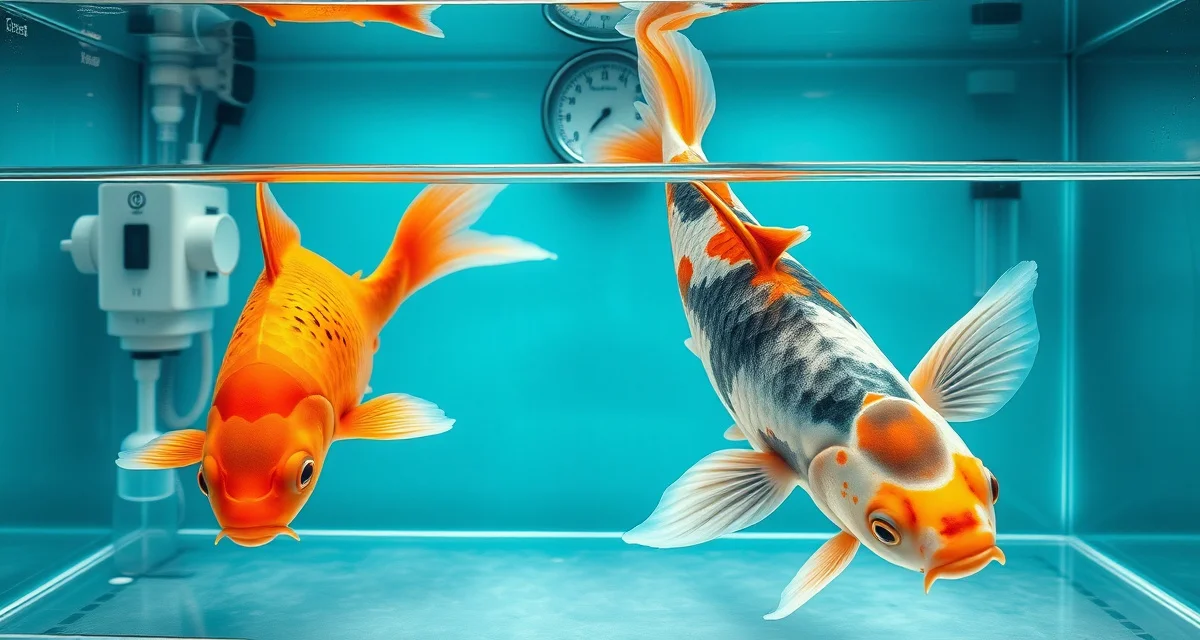
What to Do When You Find Disease During Koi Quarantine
Finding disease-after-pond-treatment) during quarantine is stressful. It's also the quarantine working. KoiQuanta's disease-found workflow extends quarantine and loads the appropriate treatment protocol automatically. No competitor provides a structured response to quarantine disease discovery.
A fish that develops disease in quarantine is a fish that didn't bring that disease into your display pond. That's the entire point. The key now is correct response, not panic.
TL;DR
- If disease appeared on day 18, the previous 18 days don't count as a disease-free observation period.
- You need 14 or more days of symptom-free observation after treatment completes before discharge can be considered.
- If bacterial disease appears to be spreading (multiple fish developing signs within 24-48 hours), consider treating the whole tank.
- Standard minimum extension: 14 days symptom-free after treatment completion.
- The new quarantine period should be at least 14 days symptom-free after treatment ends, in addition to whatever treatment duration is required.
The First Response: Observe and Document
The instinct when you find a sick fish is to do something immediately. Resist this for 30 minutes.
Before touching anything, observe carefully and document what you see:
- Which fish are showing signs? All of them, or specific individuals?
- What exactly are the signs? Describe them precisely: white spots on the body (location, size, texture), red streaking (where, following blood vessels or random), behavioral changes (flashing, clamping, surface hanging, isolation)
- When did signs first appear? When was the last observation when fish appeared normal?
- Are signs worse now than at the last observation, or stable?
Open KoiQuanta and log these observations immediately. Date and time the entry. Take photos from lateral and close-up angles. This documentation matters because it establishes the timeline of the disease event and captures the presentation at first detection, which is useful for diagnosis and for any later veterinary consultation.
Identifying What You're Dealing With
Before selecting a treatment, you need at least a working diagnosis. KoiQuanta's disease identification module evaluates your symptom inputs and generates a differential diagnosis with the most likely conditions ranked.
For anything involving skin lesions, external spots, or gill symptoms, a skin scrape is highly recommended. A basic scrape and examination under magnification (even a 10x magnifying glass gives useful information; a compound microscope gives much more) can distinguish:
- Parasitic infestation (you'll see the organisms)
- Bacterial infection (no parasites visible; lesion characteristics guide diagnosis)
- Fungal infection (fungal hyphae visible under microscope)
- Viral conditions (no specific organisms visible; diagnosed by exclusion and symptom pattern)
You don't need a definitive diagnosis before starting treatment. You need a working hypothesis good enough to select the correct category of treatment.
Restarting the Quarantine Clock
This is critical and often misunderstood. When disease is found during quarantine, the quarantine clock resets from the point of treatment completion, not from the original start date.
The purpose of quarantine is to observe fish for a disease-free period long enough to rule out subclinical infections. If disease appeared on day 18, the previous 18 days don't count as a disease-free observation period. You need 14 or more days of symptom-free observation after treatment completes before discharge can be considered.
KoiQuanta's disease-found workflow handles this automatically. When you log a disease event during an active quarantine, the system:
- Marks the existing quarantine as "extended due to disease event"
- Sets a new minimum observation period starting from treatment completion
- Adjusts the estimated discharge date accordingly
You'll answer "Should I restart the quarantine clock when disease is found?" with yes, every time.
Should You Treat the Whole Tank or Just Affected Fish?
This depends on the disease type and the quarantine setup.
For parasite infestations (external parasites, protozoan): Treat the whole tank. External parasites spread freely in shared water. Even fish showing no visible signs are likely infested. The emergency koi quarantine protocol for parasites always involves treating the entire quarantine system, not just symptomatic fish.
For bacterial infections in a single fish: The decision depends on whether other fish show any signs. If one fish has a bacterial ulcer and the others appear completely normal, you may treat the affected fish individually (topical treatment, possibly systemic if available) while maintaining close observation of the others. If bacterial disease appears to be spreading (multiple fish developing signs within 24-48 hours), consider treating the whole tank.
For viral conditions: Isolation of the affected fish from other quarantine individuals is appropriate. Viral conditions (KHV, SVCV) spread in shared water and have no effective treatment; isolation is about preventing further spread.
Extended Hold After Treatment
After completing the appropriate treatment course, the fish must remain in quarantine under observation for a minimum additional period before discharge can be considered. Standard minimum extension: 14 days symptom-free after treatment completion.
During this observation extension:
- Log daily observations with specific symptom checks (is the treated lesion healing? are other fish developing signs?)
- Continue water parameter testing
- Don't reduce observation frequency just because fish look better
KoiQuanta's quarantine discharge checklist won't allow you to mark the quarantine complete until the minimum observation extension has elapsed and all discharge criteria are met. The koi quarantine discharge criteria system is designed specifically to prevent premature discharge of fish that look recovered but may still be subclinically infected.
Documentation of the Disease Event
The disease event record in KoiQuanta creates a permanent reference document that includes:
- First observation date and symptoms
- Diagnosis or working hypothesis
- Treatments applied with dates and doses
- Treatment response timeline
- Resolution date
- Extended observation period
- Final discharge status
This documentation becomes part of the fish's health record. When you sell this fish, the quarantine record will show the disease event, the treatment, and the successful resolution. A buyer seeing that a fish had trichodina in quarantine, was treated successfully, and completed a 14-day symptom-free observation period after treatment has more information and more confidence than a buyer looking at an undocumented fish.
Frequently Asked Questions
What do I do if my quarantined koi gets sick?
Stop, observe, and document before doing anything else. Photograph the symptoms and log them in KoiQuanta with a timestamp. Use the disease identification module with your symptom inputs to generate a differential diagnosis. Perform a skin scrape if the presentation involves external signs. Once you have a working diagnosis, select the appropriate treatment for the disease type. For parasites, treat the whole tank. For isolated bacterial issues in a single fish, consider individual treatment with close observation of others. Reset the quarantine clock. The key is accurate diagnosis before treatment selection.
Should I restart the quarantine clock when disease is found?
Yes, always. The quarantine clock exists to document a disease-free observation period. If disease appears during quarantine, that observation period is interrupted and must restart after treatment completion. The new quarantine period should be at least 14 days symptom-free after treatment ends, in addition to whatever treatment duration is required. KoiQuanta handles this automatically when you log a disease event during an active quarantine. The system adjusts the expected discharge date and won't generate a discharge eligibility confirmation until the extended observation period is complete.
Do I need to treat the whole quarantine tank or just affected fish?
For external parasites and protozoan infestations, treat the whole tank. Parasites spread freely in shared water and fish showing no visible signs are likely sub-clinically infested. Treating only visibly affected fish leaves the rest of the quarantine population to re-infect treated fish after treatment ends. For bacterial infections in a single fish without signs in others, individual treatment with close monitoring of the group may be appropriate. For viral conditions, isolate the affected individual from other quarantine fish but recognize that treatment options are very limited for most koi viral diseases.
What is What to Do When You Find Disease During Koi Quarantine?
When you find disease during koi quarantine, it means your quarantine system is working as intended. A sick fish caught in quarantine is a fish that didn't infect your main pond. The correct response involves a 30-minute observation period before intervening, documenting symptoms carefully, then extending the quarantine clock. Any days prior to disease discovery do not count toward your disease-free observation requirement.
How much does What to Do When You Find Disease During Koi Quarantine cost?
There is no direct cost to the disease-response protocol itself — it is part of following proper koi quarantine practice. Costs come from treatment medications, which vary by disease type. Investing in a structured quarantine program like KoiQuanta's 30-day protocol upfront is far cheaper than treating an entire display pond after an outbreak, which can involve hundreds of gallons and dozens of fish.
How does What to Do When You Find Disease During Koi Quarantine work?
When disease appears, you pause the quarantine clock and load the appropriate treatment protocol for the identified condition. You treat the affected fish — or the entire tank if multiple fish show signs within 24-48 hours. After treatment completes, a minimum 14-day symptom-free observation period begins. Only after those 14 clean days can discharge be considered. The original days before disease do not count.
What are the benefits of What to Do When You Find Disease During Koi Quarantine?
The primary benefit is protecting your display pond. A disease caught in quarantine never reaches your established fish. Secondary benefits include accurate diagnosis under controlled conditions, lower treatment volume in a small quarantine tank versus a full pond, and the confidence of a structured protocol rather than guesswork. You also build observation skills that make you faster at identifying problems in future fish.
Who needs What to Do When You Find Disease During Koi Quarantine?
Any koi keeper who adds new fish to an existing pond needs this knowledge. It is especially critical for hobbyists who source fish from multiple suppliers, attend koi shows, or keep high-value specimens. If you run a 30-day quarantine program and discover illness partway through, knowing the correct extension and treatment response prevents you from either releasing a still-infectious fish or abandoning quarantine prematurely out of frustration.
How long does What to Do When You Find Disease During Koi Quarantine take?
Timeline depends entirely on the disease and treatment response. Treatment itself may run 5-14 days depending on the condition. After treatment ends, you need a minimum of 14 consecutive symptom-free days before discharge. If disease appeared on day 18 of a 30-day quarantine, expect a total quarantine duration of at least 32-42 days from the treatment completion point, not from the original start date.
What should I look for when choosing What to Do When You Find Disease During Koi Quarantine?
Look for a protocol that resets the observation clock after disease discovery — not one that counts pre-illness days toward your disease-free window. The protocol should differentiate between isolated cases and spreading infections, recommend whole-tank treatment when multiple fish show signs within 48 hours, and require at least 14 symptom-free days post-treatment. Avoid any system that discharges fish before confirming a clean observation period following treatment completion.
Is What to Do When You Find Disease During Koi Quarantine worth it?
Yes. The alternative — skipping a proper disease response or discharging fish before the post-treatment observation window closes — risks introducing pathogens to your display pond. Treating an established pond is exponentially more difficult, expensive, and stressful to fish than treating a small quarantine tank. The extra weeks added by a disease extension are an inconvenience. A pond-wide outbreak is a potential disaster. The math strongly favors the structured response.
Related Articles
- Getting a Second Opinion on Koi Disease Diagnosis-second-opinion)
Sources
- Associated Koi Clubs of America (AKCA)
- Koi Organisation International (KOI)
- University of Florida IFAS Extension Aquaculture Program
- Fish Vet Group
- Water Quality Association