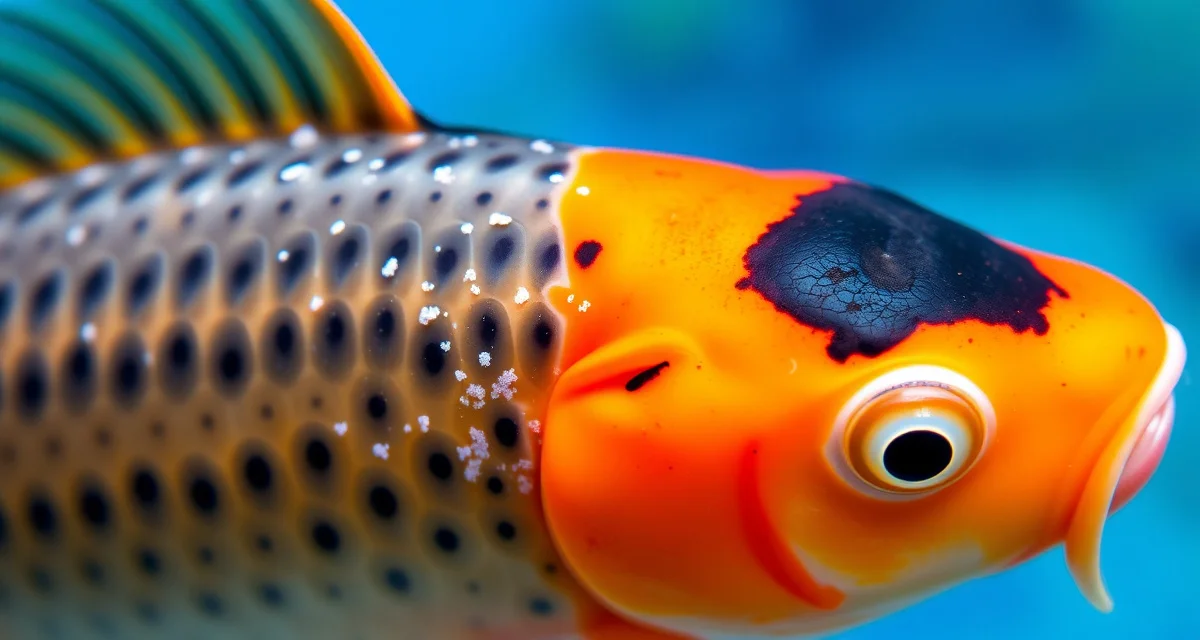
How to Treat Ich in a Koi Pond
If you see white spots on your koi that look like grains of salt dusted across the skin and fins, you're dealing with ich. Knowing how to treat ich in a koi pond correctly means understanding something counterintuitive about the parasite's life cycle: you can't actually kill ich while it's on the fish.
Ich cysts are resistant to all treatments. Only the free-swimming stage is vulnerable. Miss that window, and you're just doing expensive water changes while the parasite completes its cycle and returns for another round.
TL;DR
- The whole cycle from visible white spot to re-infection takes anywhere from 4 days at 25°C to 3+ weeks at 10°C.
- Before treating: - White spot disease (ich): Uniform white spots, roughly 0.5-1mm, spread across body and fins.
- Target: 25-28°C (77-82°F) if your koi can tolerate it safely.
- Raise temperature gradually, no more than 1°C per hour, to avoid additional stress.
- At 25°C, the theront stage emerges within 4-7 days.
- At 10°C, the cycle may take 3-4 weeks and you may need to maintain treatment longer.
- Salt at 0.3-0.5% concentration disrupts the osmotic balance of theronts and helps fish produce a protective mucus layer.
What Ich Actually Is
Ich is caused by Ichthyophthirius multifiliis, a protozoan parasite. The white spots you see are not the parasite itself. They're mature trophonts embedded under the fish's mucus layer, encysted and protected. At this stage, nothing you put in the water will penetrate the cyst to kill them.
When a trophont finishes feeding on the fish's tissue, it drops off and sinks to the pond bottom. It then divides rapidly inside a cyst (the tomont stage), producing hundreds of free-swimming theronts. These theronts swim actively through the water column searching for a host. This is the only stage where chemical treatment works.
The whole cycle from visible white spot to re-infection takes anywhere from 4 days at 25°C to 3+ weeks at 10°C. Temperature is everything in ich management.
Step 1: Confirm It's Ich
Not everything that looks like ich is ich. Before treating:
- White spot disease (ich): Uniform white spots, roughly 0.5-1mm, spread across body and fins. Fish may flash (rub against surfaces) due to irritation.
- Costia: More diffuse grayish film, less distinct white spots. Fish often clamp fins.
- Epistylis: White tufts that look similar to ich but are usually more irregular and often appear on injured areas first.
- Lymphocystis: Larger, cauliflower-like white growths, typically on fins. Very different in texture.
If you're unsure, a gill scrape or skin scrape examined under a microscope will confirm. But if the classic small, uniform white spots are present and spreading rapidly, you can reasonably start treatment immediately while confirming.
Step 2: Raise Water Temperature
Raising pond temperature speeds up the ich life cycle and shortens the time until free-swimming theronts emerge. This makes your chemical treatments more effective because the vulnerable stage arrives sooner and you can synchronize your treatments with it.
Target: 25-28°C (77-82°F) if your koi can tolerate it safely. Don't exceed 30°C.
Raise temperature gradually, no more than 1°C per hour, to avoid additional stress. If your pond doesn't have a heater, this step applies mainly to indoor quarantine tanks. But even in an outdoor pond, treatment in warmer summer weather is inherently faster-resolving than treatment in spring or fall.
At 25°C, the theront stage emerges within 4-7 days. At 15°C, you're waiting 10-14 days. At 10°C, the cycle may take 3-4 weeks and you may need to maintain treatment longer.
Step 3: Choose Your Treatment
Salt (Sodium Chloride)
The most practical first-line treatment for most hobbyists. Salt at 0.3-0.5% concentration disrupts the osmotic balance of theronts and helps fish produce a protective mucus layer.
Dosing: To achieve 0.3% in a 1000-gallon pond, add approximately 2.5 lbs of non-iodized pond salt. Always add in increments over 24-48 hours. Dissolve in a bucket of pond water first, then distribute.
Salt does not kill adult ich or cysts. It suppresses the free-swimming stage and supports fish immune response. Use the koi salt treatment calculator to calculate your exact dose by pond volume.
Potassium Permanganate (KMnO4)
More powerful than salt and effective against a broader range of parasites. Potassium permanganate oxidizes the free-swimming theronts and helps clear secondary bacterial infections in fish tissue damaged by ich.
Standard pond dose: 2-3 mg/L (2-3 ppm). Add during daylight hours. Maintain aeration during treatment. The water turns pink-purple during treatment. When it turns brown, the active chemical has been consumed.
Never use KMnO4 in high-organic-load water without adjusting dose. The organic matter consumes the chemical before it can work. Test with a demand dose if in doubt.
Formalin
Effective against free-swimming theronts. Dose carefully. Formalin removes dissolved oxygen from the water and is particularly dangerous in warm weather. Temperature-correct your dose downward if treating above 22°C.
Standard dose: 15-25 mL of 37% formalin per 1000 gallons. Run heavy aeration throughout treatment. Never use if dissolved oxygen is already below 7 mg/L.
Step 4: Time Your Re-treatments Correctly
This is where most ich treatments fail. A single treatment catches one wave of theronts. Any theronts that were still encysted on fish or still in the tomont stage on the pond bottom will survive and produce a new wave.
The re-treatment schedule depends on water temperature:
| Water Temperature | Life Cycle Speed | Re-treatment Interval |
|---|---|---|
| 28-30°C | Fast | Every 4-5 days |
| 22-25°C | Moderate | Every 5-7 days |
| 15-20°C | Slow | Every 7-10 days |
| 10-15°C | Very slow | Every 10-14 days |
You need a minimum of 3 treatments to break the full cycle, typically treatments on days 1, 5-7, and 10-14. KoiQuanta's ich protocol automatically calculates your re-treatment dates based on your logged water temperature, so you don't have to work it out manually.
Step 5: Monitor and Confirm Clearance
After completing the full treatment cycle, watch closely for two full life cycle periods without new white spots appearing. This means:
- At 25°C: watch for 8-10 days post-final treatment
- At 15-18°C: watch for 14-20 days post-final treatment
Check fish daily in good light. Early morning or when the sun is directly on the pond surface makes white spots much easier to see.
Don't assume clearance after the spots disappear. Spots disappear when trophonts drop off the fish, not when the parasite is gone from the pond. The theronts are still emerging from the bottom and looking for hosts.
Common Mistakes in Ich Treatment
Single treatment, no follow-up. The most common mistake. One dose kills one generation of theronts. Without re-treatment, the next generation reinfects the fish.
Treating at wrong temperature. If your water is below 12°C, the life cycle is so slow that you need to continue treatment for weeks. Many people stop too early when treating cold-water ponds.
Adding salt without knowing existing concentration. If you previously treated with salt and didn't do full water changes, your starting concentration is already elevated. Adding a full dose on top of existing salt can push fish into osmotic stress. Test the existing salt concentration first or use an incremental dose calculator.
Using formalin in low-oxygen conditions. Formalin + warm water + low DO = fish kill. Always check dissolved oxygen before formalin treatment.
Medicating through filter without preparation. Some ich treatments, especially salt at therapeutic levels, reduce biofilter efficiency. Monitor ammonia and nitrite closely throughout treatment.
Related Articles
- Why Is My Koi Jumping Out of the Pond? Causes and Solutions
- Koi Pond Aeration: How Much Do You Really Need?
- How Deep Does a Koi Pond Need to Be? Minimum Depth by Region
FAQ
What kills ich in a koi pond?
Only the free-swimming theront stage of ich is vulnerable to chemical treatment. Salt at 0.3-0.5%, potassium permanganate at 2-3 ppm, and formalin at therapeutic doses will kill free-swimming theronts. Nothing currently available penetrates the cyst stage or affects trophonts embedded in the fish's mucus layer. This is why re-treatment on a schedule timed to the life cycle is the only effective strategy.
How many ich treatments are needed?
A minimum of three treatments spaced to the water temperature cycle is needed to break the ich cycle. At 25°C, that's treatments on days 1, 5, and 10. At 15°C, that's treatments roughly on days 1, 8, and 16. Rushing or missing re-treatment windows means surviving theronts reinfect the fish and the cycle starts over. Track your treatment dates carefully or use KoiQuanta's lifecycle-aware scheduling to automate the timing.
Can I treat ich without medication?
Partially. Raising water temperature to 28-30°C speeds up the life cycle and some sources suggest it can weaken theronts at the upper end of the koi safe range, but this alone won't clear a heavy infestation. Salt is a relatively gentle first-line option with a real mechanism of action against theronts and good fish health support benefits. For severe outbreaks with heavy spot loading and fish in visible distress, chemical treatment is necessary. Temperature manipulation combined with salt is the most practical two-pronged approach for most hobbyists.
What is How to Treat Ich in a Koi Pond?
Treating ich in a koi pond is the process of eliminating Ichthyophthirius multifiliis, a protozoan parasite that causes white spots resembling grains of salt on koi skin and fins. Because ich cysts are treatment-resistant while attached to fish, effective treatment targets only the free-swimming theront stage of the parasite's life cycle, requiring careful timing and water temperature management.
How much does How to Treat Ich in a Koi Pond cost?
Treating ich in a koi pond has no fixed cost — it depends on pond size, chosen treatment method, and severity of infection. Common approaches use pond salt (0.3–0.5% concentration), which is relatively inexpensive. Additional costs may include a heater to raise water temperature, water conditioners, and medication. A basic salt treatment for a small pond can cost under $20, while larger setups cost more.
How does How to Treat Ich in a Koi Pond work?
Ich treatment works by targeting the parasite's vulnerable free-swimming theront stage rather than the cysts on the fish. Raising water temperature to 25–28°C accelerates the life cycle, forcing theronts to emerge sooner. Salt added at 0.3–0.5% concentration disrupts theront osmotic balance and stimulates protective mucus production in koi, giving treatments the best chance of breaking the infection cycle.
What are the benefits of How to Treat Ich in a Koi Pond?
Treating ich promptly prevents a minor outbreak from becoming a serious health crisis. Benefits include stopping the spread of infection to other fish, reducing stress and secondary infections caused by skin damage, and restoring normal fish behavior and appetite. Early, targeted treatment is also more cost-effective than extended treatment cycles caused by missing the theront window.
Who needs How to Treat Ich in a Koi Pond?
Any koi keeper who notices uniform white spots (0.5–1mm) across their fish's body and fins needs to treat for ich immediately. This applies equally to backyard hobbyists and serious enthusiasts. Koi in outdoor ponds are especially vulnerable during temperature fluctuations in spring and autumn, when immune systems are suppressed and ich life cycles are most likely to take hold.
Sources
- Associated Koi Clubs of America (AKCA)
- Koi Organisation International (KOI)
- University of Florida IFAS Extension Aquaculture Program
- Fish Vet Group
- Water Quality Association