How Deep Does a Koi Pond Need to Be? Minimum Depth by Region
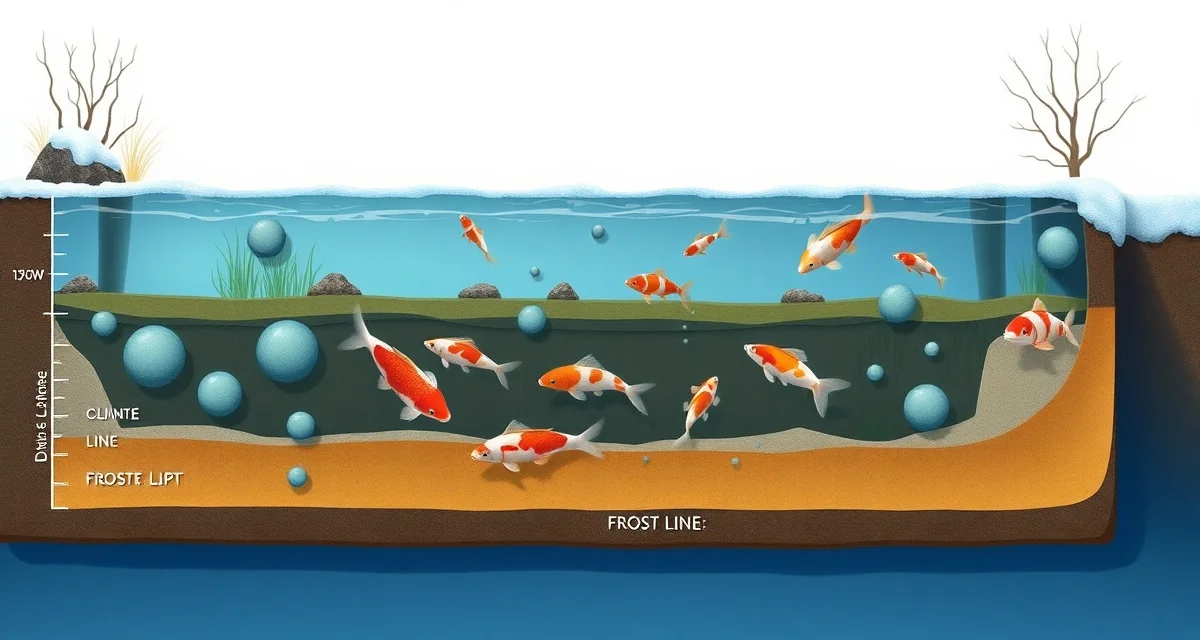
Koi ponds in USDA Zone 5 climates need a minimum depth of 4 feet to maintain a frost-free zone for koi winter dormancy. That's the number most online guides skip over, defaulting to a generic "2 to 3 feet" recommendation that's adequate for mild climates and a death sentence for koi in northern states where ice covers the pond for months. The depth requirement is not the same everywhere. Where you live determines the minimum depth your pond needs to keep koi alive through winter.
KoiQuanta's regional pond depth guide accounts for local frost line depth to ensure koi can overwinter safely in every US climate zone. You enter your location and pond specifications; the guide tells you whether your pond depth is adequate for your specific winter conditions.
TL;DR
- Minimum Depth by Region Koi ponds in USDA Zone 5 climates need a minimum depth of 4 feet to maintain a frost-free zone for koi winter dormancy.
- That's the number most online guides skip over, defaulting to a generic "2 to 3 feet" recommendation that's adequate for mild climates and a death sentence for koi in northern states where ice covers the pond for months.
- Koi enter a dormant state as water temperature drops below 10 degrees Celsius.
- A 2-foot-deep pond heats up rapidly in summer sun and cools rapidly at night.
- A 4-foot pond maintains more stable temperatures throughout the day and night.
- In ponds shallower than 3 feet, herons can reach fish anywhere in the pond.
- A deep zone at least 3 to 4 feet deep gives koi a retreat area where herons cannot follow.
Why Depth Matters for Koi
Winter survival: This is the primary depth concern in cold climates. Koi enter a dormant state as water temperature drops below 10 degrees Celsius. During dormancy, they remain near the pond bottom where water temperature is relatively stable and above freezing. If the pond is shallow enough to freeze all the way through, koi die. The pond needs a deep zone that stays liquid even during extended freezes.
Temperature stability: Deeper ponds have higher thermal mass. A 2-foot-deep pond heats up rapidly in summer sun and cools rapidly at night. A 4-foot pond maintains more stable temperatures throughout the day and night. Stable temperatures reduce thermal stress on koi, which chronically stresses fish and suppresses immune function.
Predator protection: Herons are the most common koi predator in most of the US. Herons hunt by wading into shallow water and spearing fish. In ponds shallower than 3 feet, herons can reach fish anywhere in the pond. A deep zone at least 3 to 4 feet deep gives koi a retreat area where herons cannot follow.
Dissolved oxygen stratification: Very shallow ponds heat excessively in summer, and warm water holds less dissolved oxygen. Deeper ponds maintain cooler bottom zones where oxygen levels are more stable.
Fish space: Koi are active, three-dimensional swimmers. Extremely shallow ponds restrict their natural behavior and can cause physical damage from fish striking the bottom or sides during active swimming.
Minimum Depth by Climate Zone
These are minimum depths for the deepest point of the pond, not average depth.
USDA Hardiness Zones 9-10 (Southern California, Southern Florida, Gulf Coast, Hawaii): Minimum 2 feet. Frost is rare to nonexistent. The primary depth concerns are thermal stability and predator protection rather than freeze risk. Three feet provides meaningfully better thermal stability than 2 feet in hot-summer climates.
USDA Hardiness Zones 7-8 (Pacific Northwest coast, Mid-Atlantic, Southeast, parts of Texas): Minimum 2.5 to 3 feet. Occasional hard freezes occur but extended periods of below-freezing temperatures are uncommon. A 3-foot deep zone provides protection against the occasional severe winter and improved thermal stability.
USDA Hardiness Zones 5-6 (Upper Midwest, New England, Mid-Atlantic inland, Pacific Northwest inland): Minimum 4 feet. Winter temperatures regularly drop well below freezing and ice cover can persist for weeks. Koi need a deep zone that stays liquid during extended freezes. Ice will form at the surface and may extend down 12 to 18 inches in the coldest stretches. A 4-foot pond maintains a liquid bottom zone even during extended hard freezes in most Zone 5 and 6 locations.
USDA Hardiness Zones 3-4 (Northern Minnesota, North Dakota, Montana, Northern New England): Minimum 5 feet. Frost lines in these regions can extend 4 feet or deeper. In Zone 3 and 4 climates, outdoor koi keeping in ponds requires exceptional depth to maintain unfrozen water, and many hobbyists in these zones bring koi indoors for winter rather than relying on pond depth alone.
Note on frost lines: The frost line depth (how deep the ground freezes) in your specific location is the better reference point than zone alone. Local building codes publish frost line depths for frost-protected foundation requirements. Your pond's deep zone should extend below the local frost line to be safe in extreme winters.
Other Depth Considerations
Minimum overall depth vs. deep zone: Most koi ponds are not uniform depth. A pond might be 18 inches at the shallow edges and 4 feet in the center. What matters for winter survival is that the deep zone is adequate; shallow shelf areas for planting are fine as long as the deep center zone meets the regional minimum.
Quarantine and treatment tanks: Quarantine tanks and treatment systems don't need to follow the same depth guidelines as the main pond. A quarantine tank 2 feet deep is adequate for short-term holding and treatment regardless of climate, as these systems are typically indoors or managed for temperature.
Pond covers and insulation: In borderline-depth situations (for example, a 3-foot pond in Zone 5), adding a pond cover or floating insulation during the coldest weeks can help maintain unfrozen water. This is a supplemental measure, not a substitute for adequate depth.
KoiQuanta's quarantine tank setup guide covers specifications for indoor quarantine and treatment systems. The winter koi dormancy guide covers full winterization protocols for outdoor ponds in cold climates.
Frequently Asked Questions
What is the minimum depth for a koi pond in cold climates?
In USDA Zone 5 (most of the Upper Midwest, New England, and Mountain States), the minimum deep-zone depth is 4 feet. In Zone 6, 3 to 3.5 feet is the practical minimum. In Zone 7 and warmer, 2.5 to 3 feet is workable. These are minimums for outdoor pond koi survival; deeper ponds provide better thermal stability and predator protection regardless of climate. The specific frost line depth for your location from your local building codes is a more precise reference than zone alone.
Can koi survive winter in a 2-foot pond?
In USDA Zones 9 and 10 (Southern California, South Florida, Gulf Coast), yes. In Zone 8 (Pacific Northwest coast, Southeast), a 2-foot pond is marginal: most winters it will be fine, but a hard freeze can threaten fish. In Zone 7 and colder, a 2-foot pond is not adequate for outdoor koi overwintering without supplemental heating. In Zone 5 and colder, a 2-foot pond will freeze solid in most winters, killing koi. Hobbyists in cold climates with existing shallow ponds should either deepen the pond, install a pond heater, or bring fish indoors for winter.
Does pond depth affect koi disease management?
Yes, in several ways. Deeper ponds with better thermal stability reduce the chronic stress that predisposes fish to disease. Adequate depth for winter dormancy means koi enter spring in better condition, which reduces spring disease susceptibility. Shallower ponds also heat faster in summer, increasing temperature stress and reducing dissolved oxygen, both of which increase disease risk. From a treatment standpoint, deeper ponds have more total water volume, which affects both dose calculations and the dilution capacity for treatment residuals after treatment ends.
What is How Deep Does a Koi Pond Need to Be? Minimum Depth by Region?
This is a regional koi pond depth guide that goes beyond the generic '2 to 3 feet' advice found on most sites. It explains the minimum pond depth required to keep koi alive through winter based on your specific USDA climate zone, accounting for local frost line depth so koi can safely enter dormancy without the pond freezing solid.
How much does How Deep Does a Koi Pond Need to Be? Minimum Depth by Region cost?
The KoiQuanta regional pond depth guide is free to use. You enter your location and pond specs, and the guide returns a depth recommendation tailored to your winter conditions at no cost.
How does How Deep Does a Koi Pond Need to Be? Minimum Depth by Region work?
The guide uses your location to identify your USDA hardiness zone and local frost line depth, then calculates the minimum pond depth needed to maintain a frost-free zone below the ice. Koi enter dormancy below 10°C, so the pond must be deep enough that the bottom layer stays above freezing throughout winter.
What are the benefits of How Deep Does a Koi Pond Need to Be? Minimum Depth by Region?
The main benefit is avoiding the costly mistake of building a pond that's too shallow for your climate. A 2-foot pond is adequate in Zone 9 but lethal in Zone 5. The guide gives you a precise, region-specific minimum so you build once and overwinter koi successfully, rather than losing fish to a preventable freeze.
Who needs How Deep Does a Koi Pond Need to Be? Minimum Depth by Region?
Anyone planning to build a koi pond or struggling to overwinter koi in a colder climate needs this guidance. It's especially critical for pond owners in northern states — USDA Zones 4 through 6 — where ice can cover a pond for months and generic depth recommendations consistently lead to fish loss.
How long does How Deep Does a Koi Pond Need to Be? Minimum Depth by Region take?
Using the guide takes under five minutes. You input your location and current or planned pond depth, and it immediately returns whether your pond meets the minimum depth threshold for safe overwintering in your specific climate zone.
What should I look for when choosing How Deep Does a Koi Pond Need to Be? Minimum Depth by Region?
Look for a guide that factors in your specific USDA zone and frost line depth rather than applying a one-size-fits-all number. You also want it to account for pond surface area and whether you plan to use a pond heater or de-icer, since these variables affect the minimum safe depth for your setup.
Is How Deep Does a Koi Pond Need to Be? Minimum Depth by Region worth it?
Yes, if you keep koi in a climate with freezing winters. The difference between a 2-foot and a 4-foot pond is the difference between koi surviving winter and not. Getting the depth right at build time is far less expensive than losing a pond of mature koi or excavating and relining an existing pond.
Related Articles
- Koi Pond UV Sterilizer: Do You Really Need One?
- How Long Do Koi Dealers Need to Quarantine New Fish? The Official Answer
Sources
- Associated Koi Clubs of America (AKCA)
- Koi Organisation International (KOI)
- University of Florida IFAS Extension Aquaculture Program
- Fish Vet Group
- Water Quality Association