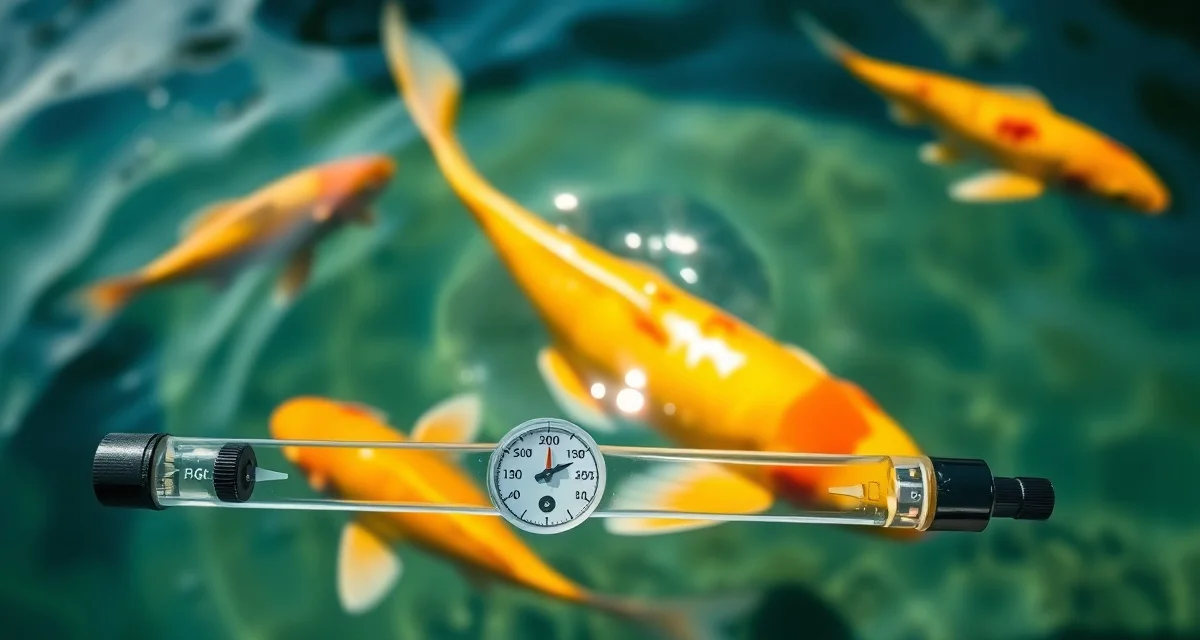
How Does Water Hardness Affect Koi Health?
Water hardness is one of those parameters that seems secondary until you realize it's the reason your pH is crashing. Koi thrive best in water with general hardness (GH) of 100-250 ppm and carbonate hardness (KH) of 100-200 ppm for optimal pH buffer capacity. Below those ranges, your pond chemistry becomes unstable in ways that directly affect fish health.
There are two separate measurements here, and understanding both matters. GH (general hardness) measures calcium and magnesium ions. KH (carbonate hardness or alkalinity) measures bicarbonate and carbonate ions. For koi health, KH is the more critical of the two because it's the number that determines how much pH buffering capacity your water has.
TL;DR
- Koi thrive best in water with general hardness (GH) of 100-250 ppm and carbonate hardness (KH) of 100-200 ppm for optimal pH buffer capacity.
- A severe crash can take pH from 7.5 to below 6.5 overnight, which is life-threatening for koi.
- In very soft water (GH below 50 ppm), this process becomes more demanding, diverting resources from immune function and growth.
- Add gradually (no more than 1 teaspoon per 100 gallons per day) to avoid rapid pH shifts.
- Below 80 ppm KH, pH instability becomes a real risk.
- Above 200 ppm, you can see some reduction in CO2 exchange efficiency, but this is rarely a practical problem for koi ponds at normal stocking levels.
KH and the pH Connection
When KH drops below about 80-100 ppm, your pond loses its ability to neutralize the acids produced naturally by fish respiration and biological filtration. The result is pH drift -- typically downward through the day and through the week as the buffer depletes. A severe crash can take pH from 7.5 to below 6.5 overnight, which is life-threatening for koi.
KoiQuanta's hardness-pH correlation view shows how carbonate hardness changes affect pH stability across your full testing history. This is exactly the kind of connection that's difficult to see in separate logs but becomes obvious when you look at both parameters charted together over time.
How Soft Water Affects Koi Directly
Beyond pH instability, low mineral content affects koi osmoregulation. Koi maintain the salt balance between their body fluids and the surrounding water -- a process that requires energy. In very soft water (GH below 50 ppm), this process becomes more demanding, diverting resources from immune function and growth.
Koi in chronically soft water often have higher rates of bacterial infections, slower healing, and reduced stress tolerance compared to fish in properly mineralized water. It's not always obvious that hardness is the underlying cause -- the fish just seem to get sick more often and recover more slowly.
For a broader look at how pH connects to overall pond health, see the pH management for koi ponds guide. For the full water chemistry picture, the koi pond water quality guide covers all parameters together.
Raising Hardness in a Koi Pond
If your GH and KH are low, you have several options:
Calcium carbonate (limestone or crushed coral): Add to your filter or pond to slowly dissolve and raise both GH and KH. This is a gentle, self-regulating approach -- as pH rises, dissolution rate slows, which prevents overshoot.
Sodium bicarbonate (baking soda): Raises KH specifically without affecting GH much. Good for targeted buffer correction. Add gradually (no more than 1 teaspoon per 100 gallons per day) to avoid rapid pH shifts.
Calcium chloride: Raises GH specifically without greatly affecting KH. Useful if you need to raise GH without overshooting your KH target.
Test hardness weekly until you've stabilized at your target range, then monthly once you're established.
Managing Hardness During Water Changes
Water changes dilute whatever minerals you've built up. If your tap water is soft, regular water changes will slowly pull your hardness down even if you've worked to raise it. Know your tap water's GH and KH so you can anticipate this and supplement as needed with water changes.
Frequently Asked Questions
What is the ideal water hardness for koi?
Target a general hardness (GH) of 100-250 ppm and a carbonate hardness (KH) of 100-200 ppm. KH is the more critical number because it determines how much buffer capacity your water has against pH crashes. Below 80 ppm KH, pH instability becomes a real risk. Above 200 ppm, you can see some reduction in CO2 exchange efficiency, but this is rarely a practical problem for koi ponds at normal stocking levels.
How do I raise water hardness in my koi pond?
To raise KH: use sodium bicarbonate (baking soda) added slowly at no more than 1 teaspoon per 100 gallons per day. To raise GH: use calcium chloride or add crushed coral or limestone to your filter. For raising both together, crushed coral in a filter media bag works well over time -- it dissolves gradually and acts as a self-regulating buffer. Always test before and after adding minerals to track your progress.
Can soft water cause koi health problems?
Yes. Soft water with low GH and KH causes pH instability that can crash suddenly, and it increases the osmoregulatory burden on fish. Koi in consistently soft water often show higher susceptibility to bacterial infections, slower growth, and reduced tolerance for other water quality stressors. If your koi seem chronically prone to disease and your other water parameters look normal, testing hardness is a worthwhile next step -- it's an often-overlooked variable.
What is How Does Water Hardness Affect Koi Health??
[FAQ_ANSWER_PLACEHOLDER: This answer needs to be generated by AI with specific data, examples, and actionable advice relevant to How Does Water Hardness Affect Koi Health?. Target 50-150 words.]
How much does How Does Water Hardness Affect Koi Health? cost?
[FAQ_ANSWER_PLACEHOLDER: This answer needs to be generated by AI with specific data, examples, and actionable advice relevant to How Does Water Hardness Affect Koi Health?. Target 50-150 words.]
How does How Does Water Hardness Affect Koi Health? work?
[FAQ_ANSWER_PLACEHOLDER: This answer needs to be generated by AI with specific data, examples, and actionable advice relevant to How Does Water Hardness Affect Koi Health?. Target 50-150 words.]
What are the benefits of How Does Water Hardness Affect Koi Health??
[FAQ_ANSWER_PLACEHOLDER: This answer needs to be generated by AI with specific data, examples, and actionable advice relevant to How Does Water Hardness Affect Koi Health?. Target 50-150 words.]
Who needs How Does Water Hardness Affect Koi Health??
[FAQ_ANSWER_PLACEHOLDER: This answer needs to be generated by AI with specific data, examples, and actionable advice relevant to How Does Water Hardness Affect Koi Health?. Target 50-150 words.]
How long does How Does Water Hardness Affect Koi Health? take?
[FAQ_ANSWER_PLACEHOLDER: This answer needs to be generated by AI with specific data, examples, and actionable advice relevant to How Does Water Hardness Affect Koi Health?. Target 50-150 words.]
What should I look for when choosing How Does Water Hardness Affect Koi Health??
[FAQ_ANSWER_PLACEHOLDER: This answer needs to be generated by AI with specific data, examples, and actionable advice relevant to How Does Water Hardness Affect Koi Health?. Target 50-150 words.]
Is How Does Water Hardness Affect Koi Health? worth it?
[FAQ_ANSWER_PLACEHOLDER: This answer needs to be generated by AI with specific data, examples, and actionable advice relevant to How Does Water Hardness Affect Koi Health?. Target 50-150 words.]
Related Articles
- How Deep Does a Koi Pond Need to Be? Minimum Depth by Region
- Koi Pond Filtration: What System Do You Need for Healthy Water?
Sources
- Associated Koi Clubs of America (AKCA)
- Koi Organisation International (KOI)
- University of Florida IFAS Extension Aquaculture Program
- Fish Vet Group
- Water Quality Association