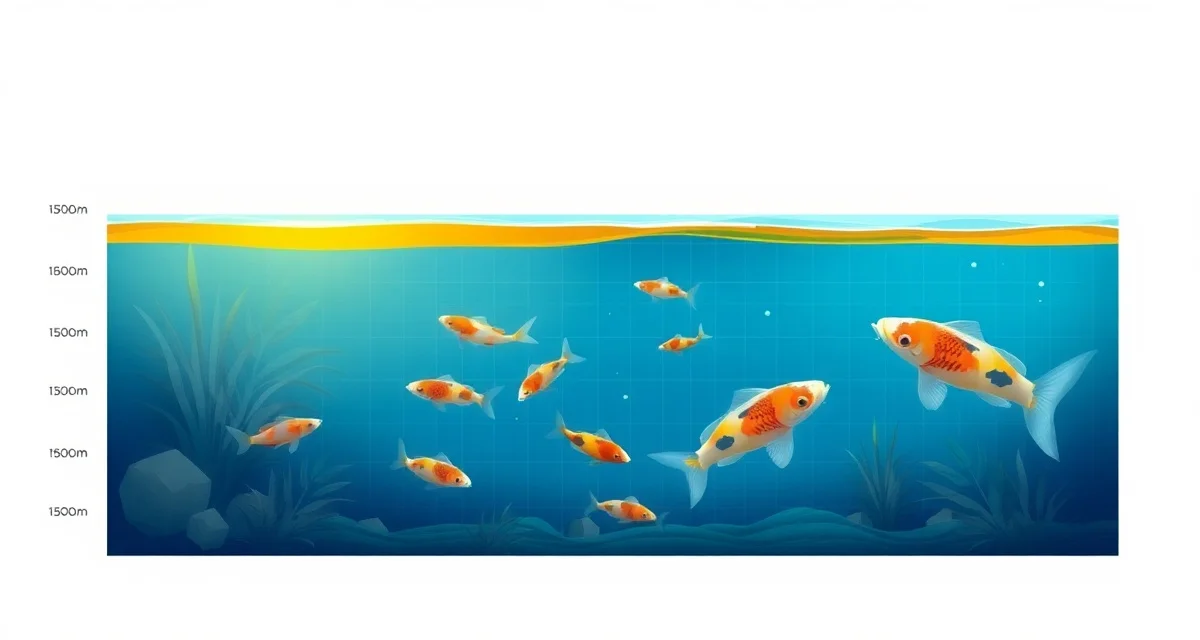
Koi Pond Depth: Minimum Requirements and Optimal Depth
Koi ponds under 4 feet deep are more vulnerable to summer oxygen crashes. This isn't the only problem with shallow ponds, but it's the most immediately dangerous one. In a shallow pond, the entire water column heats up uniformly in summer, reducing the pond's total oxygen capacity. There's no cool deep layer to buffer against heat. There's no thermal stratification that keeps the deepest water slightly cooler and oxygen-richer than the surface.
Depth is one of those design decisions you can't easily fix after the pond is built. Getting it right during planning matters.
TL;DR
- In a pond that's 6 feet deep, the bottom layer is cooler than the surface in summer, sometimes by several degrees Celsius.
- In a pond that's only 2-3 feet deep, the entire water column reaches the same temperature within hours of a hot day.
- They can reach approximately 18-24 inches into the water with their bill and neck.
- A pond that's uniformly 18 inches deep is fully accessible to a heron from any point at the edge.
- A pond with 3-4 feet of depth forces the heron to lean further over the water edge, makes it harder to track and strike moving fish, and gives koi more options for evasion.
- Large jumbo koi (70cm+) are genuinely comfortable at this depth.
- A well-designed koi pond has: Shallow shelves (18-24 inches) at the edges: Allows planting of marginal aquatic plants, creates visual interest, and provides a transition zone.
Why Depth Matters for Koi Health
Temperature Stability
Deep water is thermally stable water. In a pond that's 6 feet deep, the bottom layer is cooler than the surface in summer, sometimes by several degrees Celsius. This creates a temperature refuge for koi during heat stress events.
In a pond that's only 2-3 feet deep, the entire water column reaches the same temperature within hours of a hot day. No refuge. No buffer. Just hot water throughout, with all the associated oxygen, disease, and metabolic stress problems that brings.
In winter, the reverse applies. Deep ponds maintain unfrozen water at the bottom even when ice forms at the surface. Koi in torpor settle to the deepest available point. A pond that freezes to the bottom in a hard winter kills every fish in it.
Dissolved Oxygen and Stratification
Thermal stratification, where warmer lighter water sits above cooler denser water, affects oxygen distribution. The thermocline (boundary between warm and cool layers) is where the most complex biological activity happens.
In hot summer conditions:
- Surface water: warm, can be oxygen-rich during daylight (from algae), oxygen-depleted overnight
- Middle layers: transitional
- Deep water (below 5 feet): cooler, more temperature-stable, slightly higher oxygen capacity
Koi can access the cooler deep water when surface conditions become stressful. This behavior, koi hanging at depth during heat, is healthy and normal in adequately deep ponds.
Predator Protection
Herons hunt koi ponds by wading and striking into the water. They can reach approximately 18-24 inches into the water with their bill and neck. A pond that's uniformly 18 inches deep is fully accessible to a heron from any point at the edge.
A pond with 3-4 feet of depth forces the heron to lean further over the water edge, makes it harder to track and strike moving fish, and gives koi more options for evasion. Koi instinctively move to deeper water when they detect a threat.
Depth alone doesn't stop a determined heron. Physical barriers (netting, wires, decoys) are also needed for serious predator protection. But depth reduces the efficiency of heron predation.
Winter Survival
As covered in the cold climate guide, torpid koi settle to the deepest available water in winter. The bottom layer of a pond in a temperate climate stays above freezing even when ice covers the surface, as long as the pond is deep enough.
Minimum depth for winter survival:
- Mild winters (temperatures occasionally below 0°C): 3 feet
- Cold winters (sustained temperatures of -10°C or colder): 4-5 feet minimum
- Severe winters (polar regions): 5-6 feet minimum, or indoor housing
Minimum Depth Requirements for Koi
Absolute minimum: 3 feet (approximately 90cm)
At 3 feet, you can keep koi in temperate climates with proper management. But you're working without margin. Three-foot ponds need:
- More careful stocking to avoid overcrowding
- More intensive summer aeration
- More monitoring during temperature extremes
- Physical predator protection (herons can access the entire depth)
Recommended minimum: 4 feet (approximately 120cm)
Four feet provides meaningful temperature stability, reasonable winter protection in most temperate climates, and heron deterrence at the pond edges.
Optimal depth for serious koi keeping: 5-6 feet (150-180cm)
At this depth, temperature stability is excellent, winter survival is secure in all but the most severe climates, and koi have genuine behavioral options during stress events. Large jumbo koi (70cm+) are genuinely comfortable at this depth.
Optimal Depth by Pond Function
| Pond Type | Minimum | Recommended |
|---|---|---|
| Display pond, mild climate | 3.5 feet | 5 feet |
| Display pond, cold climate | 4.5 feet | 6 feet |
| Display pond, hot climate | 4 feet | 5.5 feet |
| Breeding pond (spawning) | 2.5-3 feet | 3-4 feet |
| Fry grow-out pond | 2-3 feet | 3 feet |
| Quarantine tank | 2-3 feet | 3 feet |
Note: Breeding and fry ponds are intentionally shallower. Spawning ponds don't need the thermal stability of display ponds, and fry ponds need to be manageable for netting and monitoring. The depth recommendations above apply specifically to main display and grow-out ponds.
Depth Distribution: Variable Depth Design
The best koi ponds aren't uniformly deep from edge to edge. A well-designed koi pond has:
Shallow shelves (18-24 inches) at the edges: Allows planting of marginal aquatic plants, creates visual interest, and provides a transition zone. However, shallow shelves at pond edges should be minimized in ponds where herons are a problem. Herons use shallow areas to stand and fish.
Sloping sides: Gentle slopes from edges to center depth provide natural circulation and prevent koi from getting trapped in corners. Avoid vertical-sided ponds where koi can't easily move between depth zones.
Deep central area: The main pond floor should be at the minimum depth for your climate. This is where bottom drains should be positioned and where torpid winter koi will rest.
A genuine deepest point: For cold climates especially, having one area that's notably deeper than the rest of the pond gives koi a thermal refuge and winter safety zone.
Bottom Drain Position and Depth
If your pond has a bottom drain (and it should), position it at the deepest point. Gravity-fed waste removal is most effective from the lowest point. A bottom drain at 5-6 feet with a pump drawing from it creates the best circulation pattern. Water and waste pull toward the center bottom drain and rise through the filtration system.
Don't let a bottom drain consideration limit your maximum depth. If you need a bottom drain at 5 feet and the pond is 6 feet at the deepest point, the drain works fine in the 5-foot zone and the deepest point provides the thermal refuge.
Does Depth Affect Koi Disease?
Yes, indirectly. Through three mechanisms:
- Temperature stability: Stable temperatures mean stable immune function. Fish in ponds with erratic temperature swings show chronically higher disease rates than those in thermally stable deeper ponds.
- Oxygen availability: Better oxygen in deeper ponds means better immune function and more vigorous koi overall.
- Behavioral options during stress: Koi in deep ponds can respond to surface threats by going deep. Koi in shallow ponds can't.
The disease angle isn't the primary reason to build a deep pond, but it's a real additional benefit.
For cold-climate specific guidance, see the koi keeping cold climates guide. For complete pond design and setup, the koi pond setup guide covers all the planning elements together.
Related Articles
- What Is the Correct Salt Percentage for Koi Ponds? Complete Guide
- Koi Pond Bead Filter: Sizing, Cleaning, and Maintenance
FAQ
How deep should a koi pond be?
A minimum of 4 feet is recommended for most koi keeping situations. Three feet is the absolute minimum for mild-climate ponds, but with reduced temperature stability, increased predator risk, and less oxygen buffer. Optimal depth for serious koi keeping is 5-6 feet. This provides excellent thermal stability, secure winter survival in most temperate climates, and genuine behavioral options for koi during heat stress or predator threats. Build deeper than you think you need. The concrete is the same price and the fish benefit every day.
Can koi survive winter in a shallow pond?
In mild climates (occasional frost but not sustained freezing), 3-foot ponds are often sufficient with a de-icer or air pump to maintain an ice-free area. In cold climates where sustained temperatures drop well below freezing for weeks, a 3-foot pond is at real risk of freezing to the bottom, which kills all fish in it. In genuinely cold climates, 4.5-5 feet minimum is needed for outdoor winter survival. Alternatively, move fish indoors to a heated system over winter. This is the only safe option in climates with extreme sustained cold.
Does pond depth affect koi disease?
Yes, indirectly. Greater depth provides thermal stability that reduces temperature stress, which directly supports stronger immune function. Deeper ponds also tend to be better oxygenated (both from mechanical aeration and through better stratification management), and oxygen availability is closely tied to disease resistance. Shallow ponds in summer can create thermal and oxygen stress that predisposes fish to disease without any specific pathogen being the trigger. If you're experiencing recurring summer disease outbreaks in a shallow pond, depth may be a contributing factor.
What is Koi Pond Depth: Minimum Requirements and Optimal Depth?
[FAQ_ANSWER_PLACEHOLDER: This answer needs to be generated by AI with specific data, examples, and actionable advice relevant to Koi Pond Depth: Minimum Requirements and Optimal Depth. Target 50-150 words.]
How much does Koi Pond Depth: Minimum Requirements and Optimal Depth cost?
[FAQ_ANSWER_PLACEHOLDER: This answer needs to be generated by AI with specific data, examples, and actionable advice relevant to Koi Pond Depth: Minimum Requirements and Optimal Depth. Target 50-150 words.]
How does Koi Pond Depth: Minimum Requirements and Optimal Depth work?
[FAQ_ANSWER_PLACEHOLDER: This answer needs to be generated by AI with specific data, examples, and actionable advice relevant to Koi Pond Depth: Minimum Requirements and Optimal Depth. Target 50-150 words.]
What are the benefits of Koi Pond Depth: Minimum Requirements and Optimal Depth?
[FAQ_ANSWER_PLACEHOLDER: This answer needs to be generated by AI with specific data, examples, and actionable advice relevant to Koi Pond Depth: Minimum Requirements and Optimal Depth. Target 50-150 words.]
Who needs Koi Pond Depth: Minimum Requirements and Optimal Depth?
[FAQ_ANSWER_PLACEHOLDER: This answer needs to be generated by AI with specific data, examples, and actionable advice relevant to Koi Pond Depth: Minimum Requirements and Optimal Depth. Target 50-150 words.]
Sources
- Associated Koi Clubs of America (AKCA)
- Koi Organisation International (KOI)
- University of Florida IFAS Extension Aquaculture Program
- Fish Vet Group
- Water Quality Association