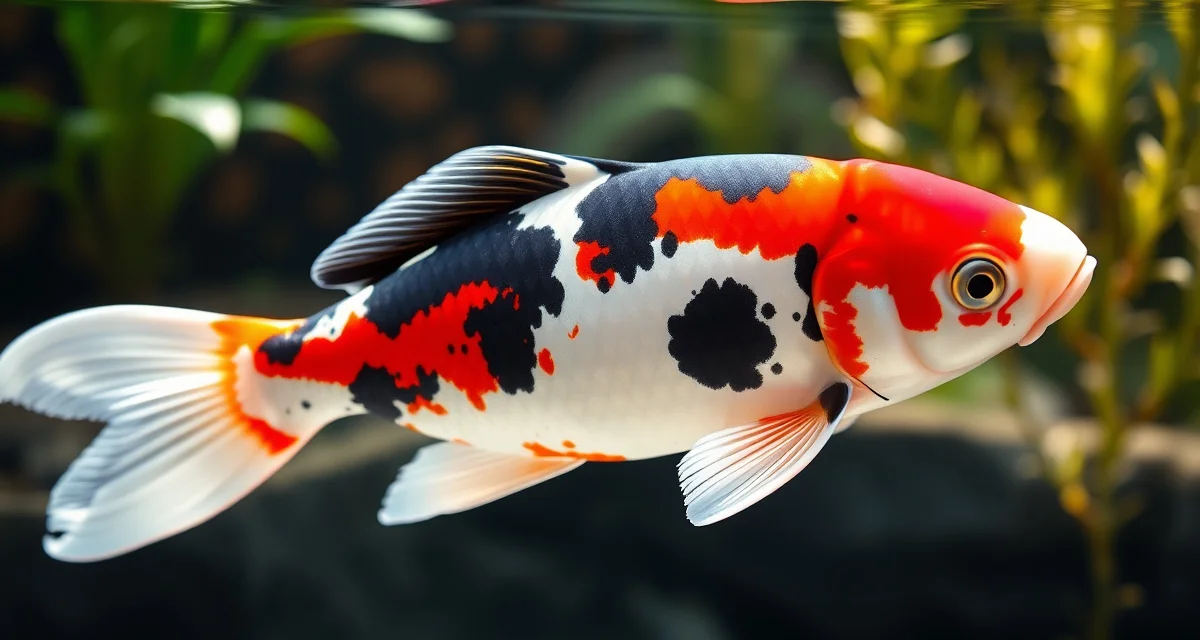
Showa Koi Health Management: Disease Tracking for Tri-Color Champions
Showa are the most complex koi to evaluate and, in the experience of many serious hobbyists, among the most demanding to keep at their best. The tri-color pattern of sumi (black), hi (red), and shiroji (white) is inherently unstable as the fish develop and age. What makes this variety so compelling as a show fish, the way pattern shifts and deepens with time, is also what makes health monitoring more nuanced than for simpler varieties.
Showa koi with thick black sumi patterns are prone to scale issues where sumi transitions to hi, requiring targeted inspection at those color junction points. Generic health apps treat all varieties the same. This guide doesn't.
TL;DR
- A praziquantel course at day 7-10 is appropriate for all koi coming from high-risk sources (shows, imports, dealers with mixed stock).
- If a gray area was visible in photos from day 14 and has deepened consistently over 4 weeks, it's almost certainly sumi development.
- At a very early stage, this is treatable with salt at 0.3% and improved water quality.
- Many serious Showa keepers manage their ponds to avoid temperatures above 25°C as a sumi quality preference as well as for health reasons.
- For a variety where scale quality at pattern boundaries is already a concern, consistent pH in the 7.0-8.0 range is worth managing actively.
Understanding Showa Health Vulnerability Points
The junction lines between sumi and hi on a Showa are not just aesthetic boundaries. They're the points where scale edges meet across different pattern zones, and where physical or bacterial stress most commonly shows first.
Showa are particularly susceptible to fin rot and scale damage at color boundary junctions. This isn't random. The scale structure at heavy sumi-to-hi boundaries can be under slight physical tension as the sumi continues to develop and the underlying skin layers adjust. This creates a higher-than-average susceptibility to minor injury that, if untreated, can become bacterial infection.
The practical implication for health monitoring is that routine inspection of Showa should specifically focus on these junction zones rather than just scanning the fish generally.
Quarantine Protocol for New Showa
When you acquire a new Showa, whether a Japanese import or a quality domestic fish, the quarantine setup follows the same structure as any koi quarantine but with Showa-specific observation priorities.
Arrival inspection, Showa-specific:
- Check all sumi-to-hi boundary lines for any scale lifting, redness, or minor hemorrhaging
- Note the current sumi development stage. Young Showa often have incomplete sumi that will develop during the quarantine period and beyond
- Photograph all three sides (both flanks and dorsal view) on arrival. Showa pattern changes are best tracked visually over time
- Check fins for any blood streaks or fraying at the base, particularly on the pectoral fins where heavy sumi pattern sometimes extends
Sumi patterns can temporarily fade or shift after shipping stress. This is normal and not a health concern. Note the development stage at arrival and don't attempt to assess quality until the fish has been in stable conditions for at least two weeks.
30-day quarantine milestones:
Salt at 0.2% from day one. Temperature stable at 18-22°C. Feed lightly in the first week as appetite returns from shipping stress. KoiQuanta's Showa-specific quarantine protocol in the complete quarantine guide pre-populates the variety-specific observation fields for each check-in.
A praziquantel course at day 7-10 is appropriate for all koi coming from high-risk sources (shows, imports, dealers with mixed stock). Flukes are common quarantine finds and praziquantel is effective. The praziquantel dose calculator handles the dose for your tank volume.
The Sumi Development Complication
Here's something unique to Showa management. Sumi changes. It's supposed to change. Sumi that emerges or deepens during your ownership is often celebrated as the fish developing its final quality. But sumi development can look superficially similar to some early disease presentations if you don't know what you're looking at.
Emerging sumi appears as gray areas beneath the skin, often slightly raised-looking before it fully develops. Early bacterial infection can also cause skin darkening. Scale lifting, however, is not part of sumi development. Any raised scales in what appears to be developing sumi should be evaluated as a health concern, not attributed to pattern change.
Logging observations and photographs in KoiQuanta creates a timeline that makes these distinctions easier. If a gray area was visible in photos from day 14 and has deepened consistently over 4 weeks, it's almost certainly sumi development. If it appeared suddenly between weekly observations, that warrants closer attention.
Fin Rot and Scale Damage Management
Fin rot in Showa typically presents first at the trailing edge of the caudal fin. Look for white or slightly translucent fraying. At a very early stage, this is treatable with salt at 0.3% and improved water quality. Once fin rot penetrates to the base of the fin, antibiotic treatment becomes necessary.
Scale damage at sumi boundaries is most often caused by handling or rough transport. Minor scale loss heals without intervention if water quality is good. Multiple scale losses at boundary junctions in the same region suggest a recurring physical issue (rough surfaces in the holding facility) or early bacterial involvement.
The bacterial infection treatment tracker handles logging and treatment scheduling for any bacterial issues that develop during quarantine or ongoing management.
Water Quality for Showa
Water quality requirements for Showa aren't dramatically different from other koi, but two parameters matter particularly for appearance quality as well as health.
Temperature: Sumi development is temperature-influenced. Cooler water tends to bring out deeper, richer sumi. Many serious Showa keepers manage their ponds to avoid temperatures above 25°C as a sumi quality preference as well as for health reasons. Dissolved oxygen at lower temperatures is also more reliable.
pH stability: pH swings stress scale integrity. For a variety where scale quality at pattern boundaries is already a concern, consistent pH in the 7.0-8.0 range is worth managing actively. The pH management guide covers stability management in detail.
Logging Showa Development in KoiQuanta
KoiQuanta's Showa fish profile includes fields for sumi development stage, color boundary integrity, scale condition at junction zones, and pattern development notes with photo comparison. Over time, this creates a visual development record that's useful both for health tracking and for documenting the fish's progression for sale or show purposes.
The variety-specific disease risk alert for Showa flags boundary junction scale issues as a priority observation item in every health check, so it's built into the routine rather than something you need to remember to check.
Frequently Asked Questions
What health issues are common in Showa koi?
The most Showa-specific health concern is scale damage and early bacterial infection at the boundaries between sumi, hi, and shiroji pattern areas. These junction zones are points of relative vulnerability on heavy-pattern fish. Fin rot is also more commonly observed in Showa than in single-color varieties, particularly at the base of the caudal and pectoral fins. Parasitic infections affect Showa as they do all koi, with flukes, trichodina, and costia being the most frequent quarantine findings.
How do I quarantine a new Showa koi?
A standard 30-day quarantine at 18-22°C with 0.2% salt is the baseline. Variety-specific additions include a thorough arrival inspection of all sumi-to-hi boundary lines for scale lifting or redness, arrival photography of all three body views for comparison throughout quarantine, and a praziquantel course at day 7-10 for fish from show, import, or mixed-lot sources. Log observations with photos in KoiQuanta's Showa profile, noting sumi development stage at each check-in.
What water quality parameters are most important for Showa?
Stable, high-quality water across all parameters is important for any koi, but Showa specifically benefit from temperatures kept below 25°C (for sumi development and dissolved oxygen), stable pH in the 7.0-8.0 range (to protect scale integrity at pattern boundaries), and strong dissolved oxygen levels. Ammonia at any detectable level stresses scale integrity and should be addressed immediately. Good filtration with consistent water changes is particularly important for maintaining the water clarity that lets you observe early color boundary changes.
What is Showa Koi Health Management: Disease Tracking for Tri-Color Champions?
Showa Koi Health Management: Disease Tracking for Tri-Color Champions is a specialized health monitoring framework designed for Showa koi keepers. Unlike generic approaches, it accounts for the unique challenges of managing tri-color koi with sumi, hi, and shiroji patterning. It focuses on targeted inspection at color junction points, tracking sumi development versus disease, and maintaining conditions that preserve both fish health and pattern quality over time.
How much does Showa Koi Health Management: Disease Tracking for Tri-Color Champions cost?
Showa-specific health management guidance is freely available in this article. If you use dedicated koi management software like KoiQuanta to implement a structured tracking system, costs vary by platform. Many serious hobbyists invest in water quality monitoring equipment, which ranges from affordable test kits to digital meters. The primary investment is time and attention rather than any single product or service.
How does Showa Koi Health Management: Disease Tracking for Tri-Color Champions work?
The framework works by treating Showa koi as a distinct category requiring variety-specific observation. You track health at color boundary zones where scale issues are most likely, photograph fish regularly to distinguish sumi development from disease progression, maintain water parameters within tight ranges (pH 7.0+, temperature below 25°C), and apply targeted treatments like praziquantel for high-risk new arrivals at the optimal day 7-10 window.
What are the benefits of Showa Koi Health Management: Disease Tracking for Tri-Color Champions?
Key benefits include earlier disease detection by differentiating normal sumi darkening from pathological changes, reduced misdiagnosis through pattern-aware inspection, better sumi quality preservation through temperature management, and more effective treatment timing. Keepers who apply this framework report fewer unexplained losses and better show results because health decisions are made with the Showa's natural developmental complexity in mind rather than against generic koi benchmarks.
Who needs Showa Koi Health Management: Disease Tracking for Tri-Color Champions?
Anyone keeping Showa koi seriously needs this approach, particularly those buying from high-risk sources like shows, imports, or dealers with mixed stock. It is especially relevant for hobbyists preparing fish for competition, where both health and pattern quality are judged. Breeders managing multiple Showa, or keepers who have experienced difficulty distinguishing sumi development from early disease, will benefit most from adopting a structured tracking method.
How long does Showa Koi Health Management: Disease Tracking for Tri-Color Champions take?
Initial setup of a health tracking routine takes a few hours to establish baselines, photograph fish, and record water parameters. Ongoing monitoring requires 15-30 minutes per inspection session. Distinguishing sumi development from disease typically requires 4 weeks of consistent photographic records. Treatments like a praziquantel course run 7-10 days. The long-term commitment is continuous, but the active time investment per week is modest once a routine is established.
What should I look for when choosing Showa Koi Health Management: Disease Tracking for Tri-Color Champions?
Look for an approach that is Showa-specific rather than generic. It should address color junction inspection, sumi versus disease differentiation, water temperature management for pattern quality, and quarantine protocols for new fish. Software or tracking tools should allow photo logging over time so you can document pattern changes. Avoid one-size-fits-all koi health apps that do not account for variety-specific vulnerabilities at hi-to-sumi transition zones.
Is Showa Koi Health Management: Disease Tracking for Tri-Color Champions worth it?
Yes, for anyone serious about Showa koi. The variety's shifting tri-color pattern creates genuine diagnostic complexity that generic koi care cannot address. Without a structured approach, early infections are misread as sumi development and vice versa, costing both fish health and show quality. The framework pays for itself in avoided losses, better treatment timing, and improved pattern outcomes. For competitive keepers, it is not optional but essential to managing Showa at their best.
Sources
- Associated Koi Clubs of America (AKCA)
- Koi Organisation International (KOI)
- University of Florida IFAS Extension Aquaculture Program
- Fish Vet Group
- Water Quality Association