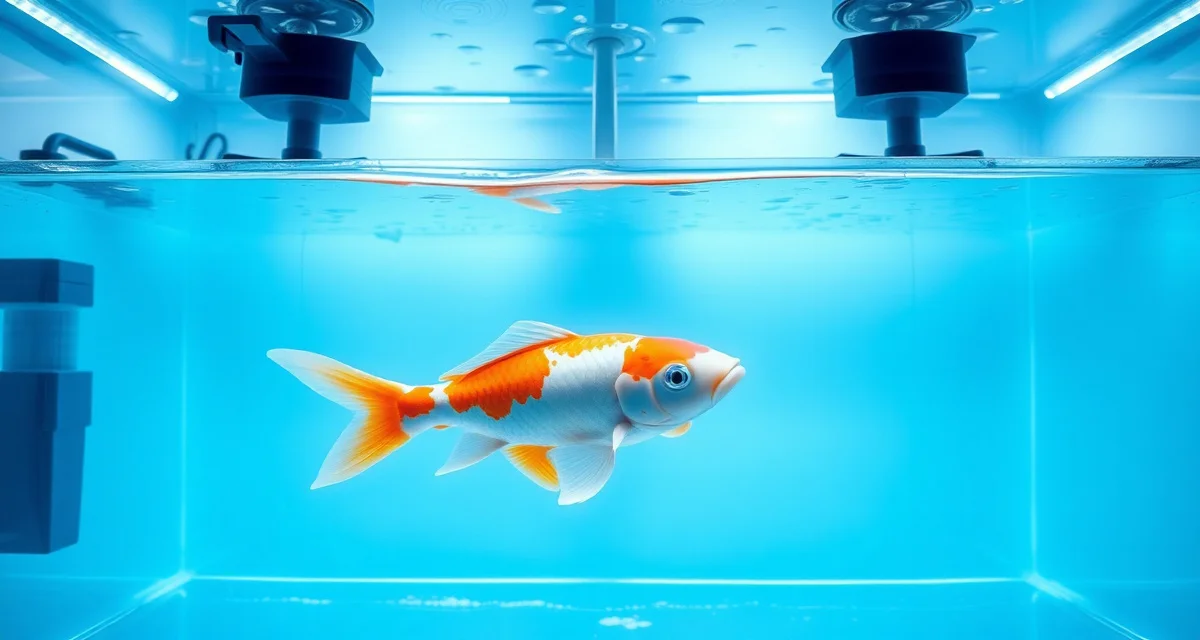
Quarantine Koi After Koi Shows and Competitions
Multi-variety show environments create pathogen mixing events. That's the clinical way to say what every experienced koi keeper knows from hard experience: you bring fish home from a show, and things go wrong.
It doesn't matter how well-run the show was. It doesn't matter if your fish looked perfect in the judging tank. You've exposed your koi-after-pond-treatment) to fish from dozens of different collections, shared water in transport containers, handled with nets that touched other fish, and put your fish through significant transport stress in the process. Post-show quarantine-implementation) is mandatory, not optional.
TL;DR
- Even if 99% of those fish are clean, the 1% that aren't creates exposure for every fish that shared air space or water with them.
- You have no way of knowing what pathogens were present in the water your fish spent 24-72 hours in.
- These typically resolve within 48-72 hours.
- Post-show, I run 0.5% routinely rather than the standard 0.3%.
- If the fish attended a show where flukes are a known problem in the region, consider a round of praziquantel during this window (2.5-5 ppm for 24-48 hours for gill flukes).
- KHV has an incubation period of 14-21 days at optimal temperature (68-72°F).
- A 21-day quarantine might clear before clinical KHV signs appear.
Why Shows Carry Unusually High Disease Risk
Pathogen Mixing
A major show might have 200-500 fish from 50-100 different sources. Even if 99% of those fish are clean, the 1% that aren't creates exposure for every fish that shared air space or water with them. Aerosolized water from nearby tanks, shared handling equipment, and stress-induced immune suppression all create transmission opportunities.
Stress-Induced Immune Suppression
The act of going to a show is immunologically expensive for a koi. Bagging and transport, unfamiliar water, unfamiliar tank, temperature fluctuations, lighting changes, handling for judging - every one of these events triggers a cortisol stress response. Chronic cortisol elevation suppresses the immune system. Your fish is at its most vulnerable to opportunistic infection during and immediately after a show.
Water Contamination
Show water systems vary enormously in quality. Some shows run excellent independent filtration per tank. Others run shared systems or underfiltered show benches. You have no way of knowing what pathogens were present in the water your fish spent 24-72 hours in.
The Post-Show Quarantine Protocol
Immediate: Transport and Return Home
- Keep your fish separate from your home collection during transport - obvious, but worth stating
- Record water parameters in the show bag or transport water when you get home
- Don't release show transport water into your main system
- Acclimatize by floating bags or equalizing temperature gradually before transfer to quarantine tank
Days 1-3: Arrival Observation
Don't treat yet. Watch.
Post-show fish often show minor behavioral changes that are stress responses rather than disease - slightly elevated gilling, reduced appetite, some lethargy. These typically resolve within 48-72 hours.
Signs that indicate something more serious:
- Rapid gilling that doesn't improve by day 2
- Flashing or scratching behavior
- Loss of orientation or balance issues
- Any skin lesions or mucus abnormalities
Log your observations twice daily. Document everything - even the "looks fine" entries matter.
Days 4-7: Prophylactic Salt Treatment
Begin salt treatment on day 4 regardless of what you're seeing. Build to 0.3-0.5% over 24 hours.
Post-show, I run 0.5% routinely rather than the standard 0.3%. The additional osmotic stress on parasites is worth it given the exposure risk.
If the fish attended a show where flukes are a known problem in the region, consider a round of praziquantel during this window (2.5-5 ppm for 24-48 hours for gill flukes). Praziquantel is low-stress enough to run prophylactically.
Days 8-21: Extended Observation Window
Post-show quarantine should run a minimum of 28 days, not 21. Here's why:
Show exposure includes KHV risk, especially at shows where imports or show-circuit fish have been present. KHV has an incubation period of 14-21 days at optimal temperature (68-72°F). A 21-day quarantine might clear before clinical KHV signs appear.
Maintain temperature at 65-68°F. Keep observations daily. If you attend large national or international-level shows, consider PCR testing your fish on return - especially for high-value fish in a collection with other valuable fish.
Discharge Criteria Post-Show
Same as standard quarantine, plus:
- 28 days elapsed (not 21)
- No signs of respiratory distress at any point during the hold
- If PCR testing was conducted, negative results confirmed
- All fish eating normally with no episodes of appetite loss
Treatments to Have Ready
Post-show quarantine should have the following on hand before the fish arrive home:
- Non-iodized salt (enough for 0.5% in your quarantine tank)
- Praziquantel (flukes)
- Malachite green and formalin or API Pond Salt for ich if it develops
- Potassium permanganate (for surface bacterial treatment if needed)
- Antibiotic (oxytetracycline or similar) for bacterial complications
You don't necessarily use all of these. But having them ready means you're treating early if something appears rather than losing time sourcing medication.
Show-Return Quarantine for Dealers
If you're a dealer taking fish to shows and bringing unsold fish home, you're adding a wrinkle: those fish may have been in your display system before the show and now they need to go back through quarantine before returning.
This is an important protocol discipline. Don't put show-return fish directly back into your sales display. Quarantine them just like new arrivals - they've had the same exposure risks.
KoiQuanta includes show-return quarantine templates that pre-populate with the standard post-show observation criteria. You're not building the protocol from scratch each time - you're working through a documented workflow.
Related Articles
- Preparing Koi for Shows: Health, Conditioning, and Travel Management
- Quarantine After Koi Treatment: Post-Treatment Holding Period
- How Long Do Koi Dealers Need to Quarantine New Fish? The Official Answer
- Should You Prophylactically Treat New Koi During Quarantine?
FAQ
How long do I quarantine koi after a show?
Minimum 28 days. Standard quarantine is 21 days for routine new arrivals, but post-show fish carry additional exposure risk, particularly for KHV, which has an incubation window that can push to day 21-25. I use 28 days as the floor for post-show quarantine and extend to 42 days for fish that attended major shows with international fish present.
What treatments should I use post-show?
Prophylactic salt at 0.3-0.5% is standard. If flukes are a concern in your region's show circuit, a round of praziquantel during the first week is reasonable preventive practice. Beyond that, treat based on what you observe. Don't carpet-bomb fish with every medication in your cabinet - it adds stress and makes it harder to identify what's actually happening if a problem develops.
Is salt treatment enough after a koi show?
For low-risk shows and healthy fish, salt may be sufficient as a prophylactic - combined with proper observation over the full quarantine window. But for fish from high-risk shows, particularly those with international competition fish or a history of KHV rumors, I wouldn't rely on salt alone. PCR testing and/or a praziquantel round gives you more complete coverage of the most likely post-show threats.
What records should I keep during this type of event?
Record the date, water temperature, and full parameter readings (ammonia, nitrite, pH, dissolved oxygen), a description of observed signs in each affected fish, any treatments applied with dose and rationale, and the fish's response at 24, 48, and 72 hours post-treatment. These records in KoiQuanta build the health history that makes future events faster to diagnose and treat.
What is Quarantine Koi After Koi Shows and Competitions?
[FAQ_ANSWER_PLACEHOLDER: This answer needs to be generated by AI with specific data, examples, and actionable advice relevant to Quarantine Koi After Koi Shows and Competitions. Target 50-150 words.]
How much does Quarantine Koi After Koi Shows and Competitions cost?
[FAQ_ANSWER_PLACEHOLDER: This answer needs to be generated by AI with specific data, examples, and actionable advice relevant to Quarantine Koi After Koi Shows and Competitions. Target 50-150 words.]
How does Quarantine Koi After Koi Shows and Competitions work?
[FAQ_ANSWER_PLACEHOLDER: This answer needs to be generated by AI with specific data, examples, and actionable advice relevant to Quarantine Koi After Koi Shows and Competitions. Target 50-150 words.]
What are the benefits of Quarantine Koi After Koi Shows and Competitions?
[FAQ_ANSWER_PLACEHOLDER: This answer needs to be generated by AI with specific data, examples, and actionable advice relevant to Quarantine Koi After Koi Shows and Competitions. Target 50-150 words.]
Sources
- Associated Koi Clubs of America (AKCA)
- Koi Organisation International (KOI)
- University of Florida IFAS Extension Aquaculture Program
- Fish Vet Group
- Water Quality Association