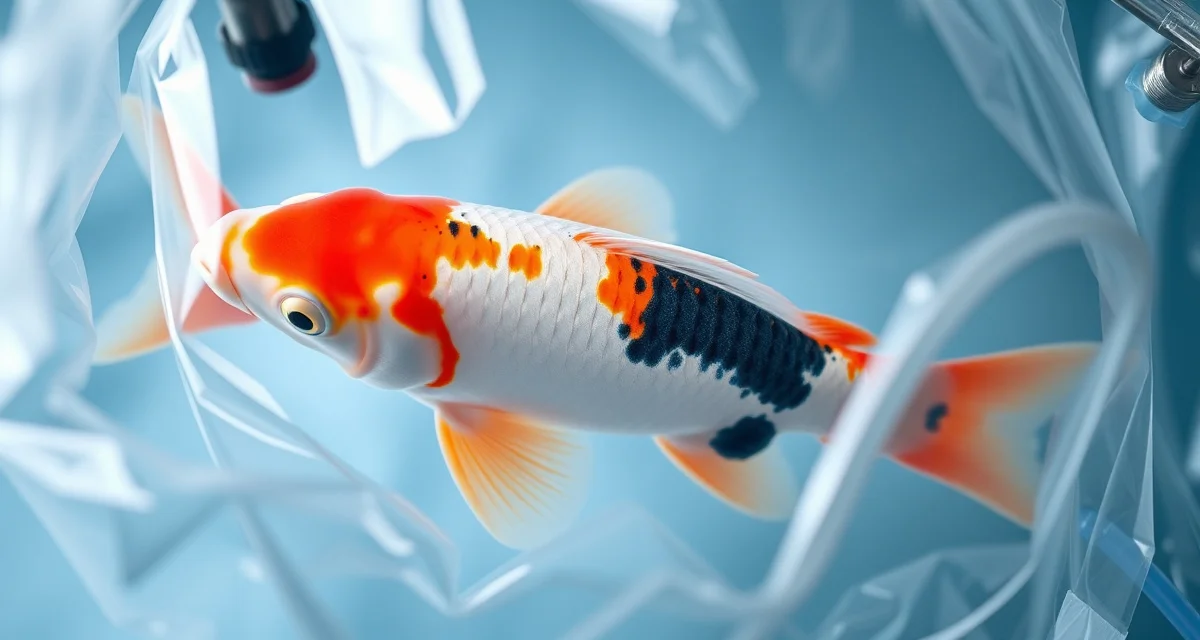
Transporting Koi Safely: Bagging, Oxygen, and Acclimation
Koi can survive 12-24 hours in a correctly oxygen-charged transport bag at appropriate temperature. This range gives you meaningful flexibility if you understand the factors that determine how long a given bag setup will last safely. The two variables that matter most are oxygen volume relative to fish size, and water temperature during transport. Get both right and koi transport is reliable. Get either wrong and you're looking at distressed or dead fish on arrival.
KoiQuanta's transport event logging triggers an arrival protocol and extended monitoring period, so the period after transport receives the same structured attention as the transport itself.
TL;DR
- Elevated CO2 (hypercapnia) is independently toxic to fish, separate from oxygen depletion.
- CO2 acidifies the water as it accumulates, causing pH to drop.
- High CO2 also interferes with oxygen uptake at the gill level -- fish in a CO2-rich bag can suffocate even if dissolved oxygen appears adequate on paper.
- For a 10-inch koi, a bag with 2-3 liters of water is typically adequate.
- Small fish (under 6 inches) can sometimes be grouped, but large koi should be bagged individually.
- Insert the oxygen tube from your regulator and charge the bag until it's inflated firmly -- approximately 2/3 of bag volume should be pure oxygen.
- The oxygen:water ratio should be at least 2:1.
The Physiology of Koi Transport Stress
Understanding why transport is stressful helps you take the right steps to minimize it.
Oxygen depletion: Koi consume oxygen continuously. In a sealed bag with a finite oxygen supply, dissolved oxygen drops over time as fish metabolize. In an air-charged bag, most of the gas is nitrogen, not oxygen -- you have a much smaller oxygen reserve than you'd expect from the bag's apparent size. In an oxygen-charged bag, the reserve is dramatically larger.
Carbon dioxide buildup: Fish exhale CO2. In a sealed container, CO2 accumulates. Elevated CO2 (hypercapnia) is independently toxic to fish, separate from oxygen depletion. CO2 acidifies the water as it accumulates, causing pH to drop. High CO2 also interferes with oxygen uptake at the gill level -- fish in a CO2-rich bag can suffocate even if dissolved oxygen appears adequate on paper.
Ammonia accumulation: Fish excrete ammonia continuously. In a sealed bag with limited water volume, ammonia accumulates. Cold water and a lower pH both reduce the toxicity of ammonia (cold water reduces toxicity because fish metabolism slows; lower pH reduces free ammonia compared to ionized ammonium). However, on arrival when the bag is opened and pH normalizes, any accumulated ammonium rapidly converts to the more toxic free ammonia form.
Physical stress: Being confined in a bag and jostled during transport is physically and psychologically stressful. This elevates cortisol, suppresses immune function, and depletes energy reserves.
Preparing Fish for Transport
Pre-transport fasting: Stop feeding fish 24-48 hours before transport. This reduces waste production during transit and reduces the risk of regurgitation in the bag. A fish that hasn't eaten recently produces considerably less ammonia per hour.
Catching and bagging: Catch fish with minimal net time -- prolonged netting stresses fish and can injure fins and scales. Use a soft knotless net and transfer quickly.
Water for the bag: Use your pond water for the transport bag, not fresh tap water. Your fish are adapted to your pond's chemistry. Fresh tap water, even dechlorinated, has different mineral content and pH that can cause shock when fish are already stressed.
Bagging Technique
Double bag: Two bags, one inside the other. The outer bag provides a backup if the inner bag leaks. For valuable fish, triple bagging is not excessive.
Water volume: Fill the bag approximately one-third with water. The fish needs enough water to stay submerged and to turn around, but not so much water that the oxygen head space is reduced. For a 10-inch koi, a bag with 2-3 liters of water is typically adequate.
One fish per bag for larger fish: Multiple large fish per bag dramatically accelerates oxygen depletion and physical injury risk. Small fish (under 6 inches) can sometimes be grouped, but large koi should be bagged individually.
Oxygen charging: Deflate as much air as possible from the bag. Insert the oxygen tube from your regulator and charge the bag until it's inflated firmly -- approximately 2/3 of bag volume should be pure oxygen. Twist the bag above the water line and seal firmly with multiple rubber bands. The oxygen:water ratio should be at least 2:1.
Why pure oxygen is essential for long transport: A bag charged with air contains only 21% oxygen. A bag charged with pure oxygen contains close to 100% oxygen in the head space. The oxygen-charged bag has nearly 5x the oxygen reserve per unit of bag volume, directly translating to extended safe transport duration.
Temperature Management During Transport
Cold is better for transport: Lower temperatures reduce fish metabolic rate, which reduces oxygen consumption and ammonia production. A fish at 15°C produces considerably less ammonia per hour than the same fish at 22°C.
Insulated boxes: Transport bags should be packed in insulated polystyrene (styrofoam) boxes. These maintain temperature during transit and protect bags from physical damage. Sealed boxes also prevent light stress, which reduces fish activity and ammonia production.
Ice: In warm weather, ice packs in the insulated box help maintain lower temperatures. Don't let ice contact the bags directly -- you want to slow temperature change, not freeze the fish. Pack ice packs on the outside of the bags or in a separate compartment of the box.
Target transport temperature: Aim for 12-15°C for transport. This is cool enough to reduce metabolism without being so cold as to cause temperature shock on arrival.
Transport Duration Limits
With correct oxygen charging and temperature management:
- 12 hours: safe for virtually all fish in correctly sized bags
- 12-18 hours: manageable for healthy adult koi with adequate oxygen
- 18-24 hours: achievable with optimal conditions but watch fish carefully on arrival
- Beyond 24 hours: increasing risk, particularly for larger fish or any compromised fish
These limits assume correct bagging -- inadequate oxygen or elevated temperature drastically shortens safe duration.
Acclimation on Arrival
Do not open bags and release fish immediately. Temperature shock on arrival is a significant risk. The bag water has been cooling during transport; your pond or quarantine tank may be noticeably warmer.
Float bag to temperature-match: Place the sealed bag in the receiving tank or pond for 15-30 minutes. This equalizes temperature gradually. For fish arriving from a significantly different temperature environment, this step is essential.
Do not add bag water to your pond/tank: Bag water contains elevated CO2, ammonia, and any pathogens the fish or transit water may carry. Net the fish out and let bag water drain. Transfer the fish, not the water.
Post-arrival monitoring: Fish are stressed after transport. For the first 24-48 hours, watch for:
- Listing or difficulty maintaining position
- Extreme lethargy beyond the expected rest period
- Visible fin clamping or surface-crowding after temperature adjustment
- Any fish that die within the first 12 hours (often indicates transport damage or pre-existing disease)
For the quarantine protocol following transport arrival, the koi quarantine first 48 hours guide covers the critical post-transport period. For reducing stress during quarantine generally, the koi quarantine stress reduction guide covers the management approaches that support recovery.
Frequently Asked Questions
How do I transport koi safely?
Fast fish for 24-48 hours before transport to reduce waste production. Bag individually in double bags with pond water filling approximately one-third of bag volume. Charge the bag with pure oxygen (not air) until it's firmly inflated with approximately two-thirds oxygen head space. Seal with multiple rubber bands. Place in insulated polystyrene boxes to maintain temperature -- add ice packs in warm weather to keep water around 12-15°C. On arrival, float the sealed bag in the receiving tank for 15-30 minutes to temperature-match, then net fish into the tank without adding bag water to your system.
How long can koi survive in a transport bag?
With correct oxygen charging (pure O2, not air) and cool temperature management (12-15°C), koi can survive 12-24 hours in a transport bag. The critical variables are oxygen volume (pure oxygen vs. air makes approximately a 5x difference in available oxygen), temperature (lower is better -- 12°C fish consume far less oxygen than 22°C fish), fish size (large fish consume more oxygen per hour), and fish health (stressed or diseased fish have higher metabolic demands). Beyond 24 hours, risk increases considerably. For long-distance transport, plan layovers to check bags or re-bag if duration will exceed 20-24 hours.
How do I acclimate koi after transport?
Float the sealed transport bag in your quarantine tank or pond for 15-30 minutes to equilibrate temperature. Don't open the bag during this period. After temperature matching, open the bag, net the fish into the tank, and discard the bag water -- don't add it to your pond. Observe the fish closely for the first few hours: some lethargy is normal, but persistent listing, extreme clamping, or surface crowding suggests distress requiring investigation. Do not feed for at least 24 hours post-transport. Begin your quarantine protocol once the fish has stabilized -- typically with parameter testing and observation rather than immediate treatment.
What is Transporting Koi Safely: Bagging, Oxygen, and Acclimation?
[FAQ_ANSWER_PLACEHOLDER: This answer needs to be generated by AI with specific data, examples, and actionable advice relevant to Transporting Koi Safely: Bagging, Oxygen, and Acclimation. Target 50-150 words.]
How much does Transporting Koi Safely: Bagging, Oxygen, and Acclimation cost?
[FAQ_ANSWER_PLACEHOLDER: This answer needs to be generated by AI with specific data, examples, and actionable advice relevant to Transporting Koi Safely: Bagging, Oxygen, and Acclimation. Target 50-150 words.]
How does Transporting Koi Safely: Bagging, Oxygen, and Acclimation work?
[FAQ_ANSWER_PLACEHOLDER: This answer needs to be generated by AI with specific data, examples, and actionable advice relevant to Transporting Koi Safely: Bagging, Oxygen, and Acclimation. Target 50-150 words.]
What are the benefits of Transporting Koi Safely: Bagging, Oxygen, and Acclimation?
[FAQ_ANSWER_PLACEHOLDER: This answer needs to be generated by AI with specific data, examples, and actionable advice relevant to Transporting Koi Safely: Bagging, Oxygen, and Acclimation. Target 50-150 words.]
Who needs Transporting Koi Safely: Bagging, Oxygen, and Acclimation?
[FAQ_ANSWER_PLACEHOLDER: This answer needs to be generated by AI with specific data, examples, and actionable advice relevant to Transporting Koi Safely: Bagging, Oxygen, and Acclimation. Target 50-150 words.]
How long does Transporting Koi Safely: Bagging, Oxygen, and Acclimation take?
[FAQ_ANSWER_PLACEHOLDER: This answer needs to be generated by AI with specific data, examples, and actionable advice relevant to Transporting Koi Safely: Bagging, Oxygen, and Acclimation. Target 50-150 words.]
What should I look for when choosing Transporting Koi Safely: Bagging, Oxygen, and Acclimation?
[FAQ_ANSWER_PLACEHOLDER: This answer needs to be generated by AI with specific data, examples, and actionable advice relevant to Transporting Koi Safely: Bagging, Oxygen, and Acclimation. Target 50-150 words.]
Is Transporting Koi Safely: Bagging, Oxygen, and Acclimation worth it?
[FAQ_ANSWER_PLACEHOLDER: This answer needs to be generated by AI with specific data, examples, and actionable advice relevant to Transporting Koi Safely: Bagging, Oxygen, and Acclimation. Target 50-150 words.]
Related Articles
- Why Are My Koi Gasping at the Water Surface? Oxygen or Disease?
- How to Buffer pH in a Koi Pond: Stable Chemistry Guide
Sources
- Associated Koi Clubs of America (AKCA)
- Koi Organisation International (KOI)
- University of Florida IFAS Extension Aquaculture Program
- Fish Vet Group
- Water Quality Association