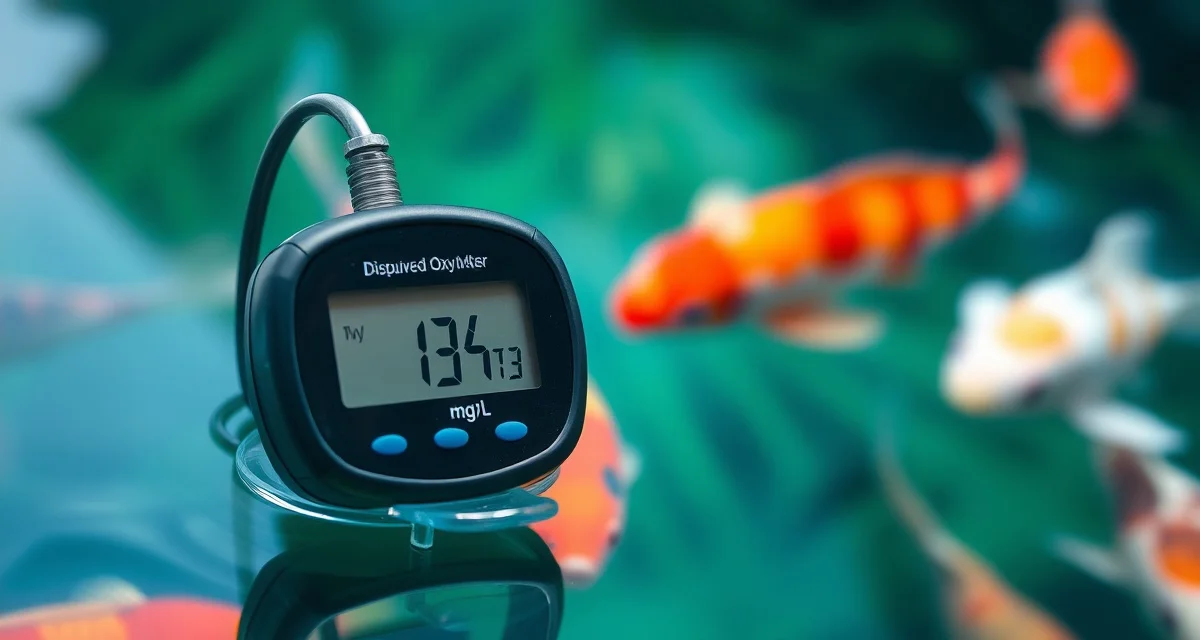
Dissolved Oxygen Tracking for Koi Ponds: Prevent Summer Crashes
Koi begin showing oxygen stress at DO levels below 6 mg/L. Mass mortalities occur below 4 mg/L within hours. These aren't slow declines with plenty of warning time. In summer conditions, dissolved oxygen can drop from 8 mg/L to below 4 mg/L between midnight and 5am, in a pond that looked perfectly healthy the evening before. You check the pond at 7am and fish are dying.
Temperature-correlated DO alerts account for the lower oxygen saturation in warm summer water automatically. Because a DO reading of 7 mg/L means something different in summer (when it's near the maximum the water can hold) than in winter (when it represents a moderate surplus), context matters for interpreting every reading.
TL;DR
- Mass mortalities occur below 4 mg/L within hours.
- In summer conditions, dissolved oxygen can drop from 8 mg/L to below 4 mg/L between midnight and 5am, in a pond that looked perfectly healthy the evening before.
- You check the pond at 7am and fish are dying.
- Because a DO reading of 7 mg/L means something different in summer (when it's near the maximum the water can hold) than in winter (when it represents a moderate surplus), context matters for interpreting every reading.
- In a warm summer pond, you're managing a margin of only 1.6 mg/L between maximum saturation and fish stress.
- In winter at 10°C, the same aeration setup provides twice the DO buffer.
- Fish begin to stress only at about 5.6 mg/L below maximum saturation compared to 1.6 mg/L in summer.
Why Dissolved Oxygen Is Different From Other Parameters
Every other critical koi parameter, including ammonia, nitrite, and pH, gives you at least 24-48 hours of warning through rising readings before fish begin dying. Dissolved oxygen crashes happen fast, sometimes in a matter of hours, and the fish can be dead before you have any warning.
This speed is the defining characteristic of DO management. You're not responding to a reading that's been slowly worsening for a week. You're preventing a crash by maintaining adequate aeration and monitoring at the right times.
The Physics of Dissolved Oxygen
Water's ability to hold oxygen decreases as temperature increases. This is a physical property of water. Warmer water simply can't contain as much dissolved gas.
| Water Temperature | Maximum DO Saturation |
|---|---|
| 10°C (50°F) | 11.3 mg/L |
| 15°C (59°F) | 10.1 mg/L |
| 20°C (68°F) | 9.1 mg/L |
| 25°C (77°F) | 8.3 mg/L |
| 28°C (82°F) | 7.8 mg/L |
| 30°C (86°F) | 7.6 mg/L |
At 30°C, even fully aerated water can only hold 7.6 mg/L. The koi safe threshold is 6 mg/L. In a warm summer pond, you're managing a margin of only 1.6 mg/L between maximum saturation and fish stress. Any disruption to aeration, any algae bloom respiration, any increased feeding reduces this margin.
In winter at 10°C, the same aeration setup provides twice the DO buffer. Fish begin to stress only at about 5.6 mg/L below maximum saturation compared to 1.6 mg/L in summer.
When DO Crashes Happen
Understanding the timing pattern helps you identify your highest-risk windows:
Overnight (midnight to 6am): The critical crash window. During the day, algae and plants add oxygen through photosynthesis. After sunset, this stops. All biological activity, including fish, algae, and bacteria, consumes oxygen throughout the night. By dawn, DO is at its lowest daily point.
After algae blooms: Green water ponds with heavy algae produce oxygen rapidly during sunny days (ponds can actually become oxygen-saturated in afternoon). At night, the same algae consumes huge amounts of oxygen. Heavy algae bloom plus a still warm night can mean DO crash by 3am.
After feeding: Digestion increases fish oxygen demand. Heavy evening feeding in summer is a risk factor for overnight oxygen stress.
During chemical treatment: Formalin removes dissolved oxygen as it reacts with organic matter. Potassium permanganate consumes oxygen during oxidation. Treating in warm water without accounting for this creates oxygen crashes during treatment.
Power outages: Loss of aeration in summer can deplete oxygen to dangerous levels within 2-4 hours. A thunderstorm power outage at 2am in August is a genuine fish emergency.
Hot, still weather: On days with no wind and very warm temperatures, surface gas exchange is reduced. Without turbulence to exchange gases at the surface, CO2 from respiration accumulates and DO drops, even with some aeration running.
Testing Dissolved Oxygen
Equipment
Liquid DO test kits: Available (Winkler method) but cumbersome. Results vary with user technique.
Electronic DO meter: The practical standard for regular monitoring. A decent meter runs $80-150 (Milwaukee MW600, Apogee SO-100). Must be calibrated regularly. Follow the manufacturer's calibration instructions monthly.
Continuous DO monitor with alarm: The gold standard for summer management. Units like the YSI Pro20 or dedicated pond DO monitors provide continuous readings with configurable alarms. If DO drops below a threshold, the alarm sounds. This is the equipment that saves fish from overnight crashes before you find them in the morning.
Where and When to Test
Location matters: Test in the least-aerated area of the pond, away from the waterfall, away from the air diffusers. The DO near aeration is always higher than in dead zones. You want to know the minimum DO in the pond, not the maximum.
Time matters more than location: Test at the critical window, early morning between 5-7am in summer. This is when DO is at its lowest daily point. If your 6am reading is above 7 mg/L, your pond is fine. If it's at 6 mg/L, you're right at the margin and need more aeration.
Don't test only at midday and conclude you have no oxygen problem. The afternoon DO in a productive pond can be 10-11 mg/L even when the pre-dawn low is below 6 mg/L.
Setting Up DO Tracking in KoiQuanta
Log each DO test with:
- Date and time (especially important for DO. Context-free readings are less meaningful.)
- DO reading in mg/L
- Water temperature at time of test (needed to interpret reading relative to saturation)
- Whether aeration is at full capacity or reduced
KoiQuanta plots DO against temperature on a dual axis, making the seasonal pattern visible. Temperature-correlated DO alerts account for the lower oxygen saturation in warm summer water. A 7 mg/L reading in August (87% of saturation at 28°C) is treated differently from 7 mg/L in April (69% of saturation at 15°C).
The summer seasonal pattern shows you how your specific pond's DO behavior changes with temperature, whether your current aeration is adequate for your warmest periods, and whether you need more capacity as the season progresses.
What Causes Low Dissolved Oxygen in Koi Ponds
Warm water temperature: Primary driver in summer. Less oxygen capacity, more biological demand.
Heavy algae growth: Algae contributes to both high daytime DO and low nighttime DO. Net effect of a heavy bloom: high amplitude daily oscillation with genuinely dangerous pre-dawn lows.
Overfeeding: Excess food decomposition consumes oxygen. Uneaten food on the pond floor creates an aerobic decomposition zone that competes with fish for available oxygen.
Heavy stocking: More fish means more oxygen demand. In summer, a pond stocked at 75% capacity without supplemental aeration is at real risk overnight.
Insufficient aeration: Waterfalls and surface agitation help, but in summer they may not be enough. Dedicated air pumps with diffusers provide reliable supplemental DO that isn't dependent on photosynthesis or temperature.
Still, calm weather: Reduced surface turbulence decreases natural gas exchange. Even well-aerated ponds can have reduced DO on extremely calm, hot nights.
Power outages or pump failure: Loss of aeration in summer can be fatal within hours. Have a battery backup for air pumps at minimum.
Emergency Response: Low DO
If you find fish at the surface gasping in the morning:
- Run every aeration source immediately. Air pump, waterfall (turn on if off), any supplemental aerators.
- Large water change with well-oxygenated source water: 25-30%
- Remove any dead plant matter or algae accumulation that's creating an oxygen sink
- Stop feeding. Digestion increases oxygen demand.
- Shade the pond from direct sun if currently sunny
- Add hydrogen peroxide (food grade 3%) at 1-2 mL per 10 gallons. This releases oxygen rapidly as an emergency measure. Use with caution; overdose causes gill damage.
- Monitor continuously until DO is above 7 mg/L and fish are behaving normally
For the detailed emergency protocol, see the koi oxygen depletion emergency guide. For pH tracking that interacts with DO through the daily photosynthesis-respiration cycle, see the pH management guide.
How to Increase Oxygen in Koi Ponds
Long-term solutions:
- Add or increase air pump and diffuser capacity
- Install a venturi fitting on the pump return
- Add a second waterfall or stream return point
- Manage algae with UV sterilization and shade
- Reduce stocking density or increase pond volume
- Install a continuous DO monitor with alarm for summer overnight protection
Immediate response options:
- Turn on all existing aeration
- Water change with fresh source water
- Hydrogen peroxide emergency dose (short-term)
DO and the koi Pond Water Quality Dashboard
The dissolved oxygen data in KoiQuanta connects to the broader koi pond water quality tracker as one of six critical parameters on the integrated dashboard. When DO trends downward over consecutive morning readings while temperature trends upward, visible in the dual-axis view, you have actionable advance warning to increase aeration before a crash occurs.
Related Articles
FAQ
What causes low dissolved oxygen in koi ponds?
High water temperature is the primary cause in summer. Warm water physically cannot hold as much dissolved oxygen as cool water. Heavy algae blooms cause high daytime DO but dangerous nighttime lows as algae respires through the dark hours. Heavy stocking combined with insufficient aeration creates continuous high oxygen demand. Decomposing organic matter (uneaten food, dead plant material) on the pond floor consumes oxygen. Still, calm weather reduces surface gas exchange. Power outages eliminate aeration precisely when it's needed most. All these factors compound each other. Heavy stocking plus an algae bloom plus a hot still night is the classic recipe for a pre-dawn oxygen crisis.
How do I increase oxygen in my koi pond fast?
Immediately: run all existing aeration at maximum capacity, turn on any waterfalls or stream returns, do a 20-25% water change with fresh source water (fresh water is more oxygen-rich than pond water in most cases), remove any dead plant matter or algae accumulation creating oxygen sinks. As an emergency measure: 3% food-grade hydrogen peroxide at 1-2 mL per 10 gallons releases oxygen rapidly. For long-term improvement: add or upgrade air pumps and diffusers, install a venturi on the pump return, manage algae with UV sterilization and shade, and reduce stocking density if applicable. A continuous DO monitor with alarm is the most reliable long-term protection against overnight crashes.
What DO level is dangerous for koi?
Koi begin showing stress signs (surface gathering, reduced activity, labored breathing) when DO drops below 6 mg/L. Mass mortality begins to occur below 4 mg/L, typically within 2-4 hours in warm water. The target range is above 8 mg/L for healthy koi keeping. This provides a safety margin above the stress threshold. In summer at warm temperatures (28-30°C), maintaining 8 mg/L requires supplemental aeration because the maximum saturation at these temperatures is only 7.6-7.8 mg/L. Test at dawn in summer, not midday, to know your actual lowest daily DO rather than the midday photosynthesis-boosted high.
What is Dissolved Oxygen Tracking for Koi Ponds: Prevent Summer Crashes?
[FAQ_ANSWER_PLACEHOLDER: This answer needs to be generated by AI with specific data, examples, and actionable advice relevant to Dissolved Oxygen Tracking for Koi Ponds: Prevent Summer Crashes. Target 50-150 words.]
How much does Dissolved Oxygen Tracking for Koi Ponds: Prevent Summer Crashes cost?
[FAQ_ANSWER_PLACEHOLDER: This answer needs to be generated by AI with specific data, examples, and actionable advice relevant to Dissolved Oxygen Tracking for Koi Ponds: Prevent Summer Crashes. Target 50-150 words.]
How does Dissolved Oxygen Tracking for Koi Ponds: Prevent Summer Crashes work?
[FAQ_ANSWER_PLACEHOLDER: This answer needs to be generated by AI with specific data, examples, and actionable advice relevant to Dissolved Oxygen Tracking for Koi Ponds: Prevent Summer Crashes. Target 50-150 words.]
What are the benefits of Dissolved Oxygen Tracking for Koi Ponds: Prevent Summer Crashes?
[FAQ_ANSWER_PLACEHOLDER: This answer needs to be generated by AI with specific data, examples, and actionable advice relevant to Dissolved Oxygen Tracking for Koi Ponds: Prevent Summer Crashes. Target 50-150 words.]
Who needs Dissolved Oxygen Tracking for Koi Ponds: Prevent Summer Crashes?
[FAQ_ANSWER_PLACEHOLDER: This answer needs to be generated by AI with specific data, examples, and actionable advice relevant to Dissolved Oxygen Tracking for Koi Ponds: Prevent Summer Crashes. Target 50-150 words.]
Sources
- Associated Koi Clubs of America (AKCA)
- Koi Organisation International (KOI)
- University of Florida IFAS Extension Aquaculture Program
- Fish Vet Group
- Water Quality Association