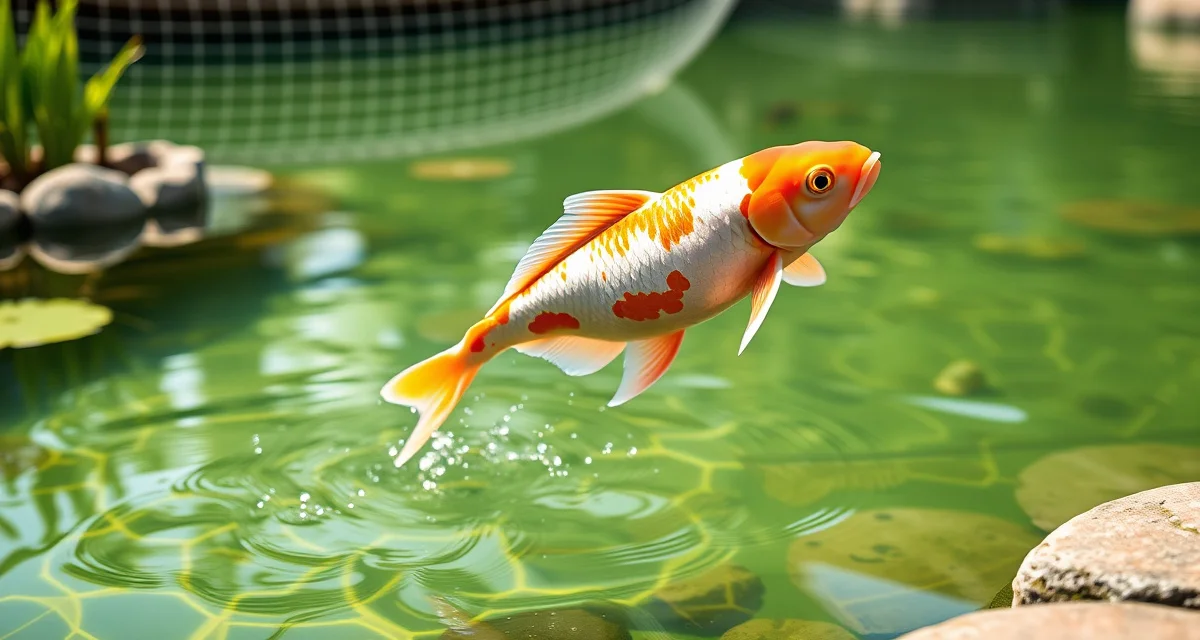
Preventing Koi from Jumping Out of the Pond
A koi pond without edge protection or netting loses fish to jumping at a rate of 1-3% annually in affected ponds. For a pond with 20 fish averaging £200 each, that's £80-120 in expected annual losses from a preventable cause. Physical prevention measures are inexpensive relative to that cost.
KoiQuanta's behavioural event logging identifies patterns preceding jump events. No competitor covers pond safety design as a health management factor in this way.
TL;DR
- For a pond with 20 fish averaging £200 each, that's £80-120 in expected annual losses from a preventable cause.
- A net stretched over the pond, supported on poles or a frame approximately 20-30cm above the water surface, catches jumping fish before they land on the ground.
- Too close (less than 10cm) and a jumping fish can still hit the ground by going over or getting stuck in the net at the edge.
- 20-30cm gap catches most jumps while preventing the fish from generating enough horizontal distance to clear the net edge.
- Koi can jump 60-90cm vertically under high-stress conditions.
- A koi in a full spawning chase or under predator attack can clear a 60cm barrier.
- For safety netting height above water surface: 20-30cm gap with nets that extend well over the pond edges is effective for most jump events.
Why Koi Jump
Koi jump for identifiable reasons. Understanding the cause shapes the prevention response.
Environmental stress response: The most common trigger. When koi pond water quality tracker deteriorates - low dissolved oxygen, high ammonia, pH crash - koi attempt to escape the immediate environment. Jumping is a stress behaviour, not curiosity. If your koi are jumping repeatedly, test your water quality first.
Parasite irritation: Ectoparasites (flukes, ich, Argulus) irritate the skin and gills. Fish flash (rub against surfaces) to remove parasites and may jump for the same reason. Jumping koi that are also flashing or showing clamped fins should be investigated for parasite infestation.
Spawning behaviour: During spawning season (spring and early summer), koi engage in energetic chase behaviour. Males chase females, fish make sudden direction changes, and surface and jump events are normal spawning behaviour rather than distress.
Startled response: Herons, predator shadows, and sudden loud noises startle koi into a flight response that includes jumping. A heron attack or shadow can trigger multiple fish to jump simultaneously.
Night activity: Koi are more likely to jump at night, possibly because of predator pressure at night (when herons and foxes are active) and reduced visibility that makes environmental navigation more difficult.
New fish: Recently introduced koi that aren't familiar with the pond boundaries are more likely to jump, particularly in the first few weeks.
Water Quality as the Primary Prevention
If your koi are jumping repeatedly, this is a water quality alarm until proven otherwise. Test:
- Dissolved oxygen (should be above 6 mg/L; below 4 mg/L causes acute stress)
- Ammonia (zero detectable)
- pH (stable, not crashed)
- Temperature (within acceptable range; extreme summer temperatures stress koi)
Fix any water quality issues before investing in physical barriers. Physical barriers prevent the loss but don't address the cause. Koi kept in poor conditions behind a net are still in poor conditions.
Log all jumping events in KoiQuanta as behavioural observations. If jumping correlates with parameter readings, the records will show it.
Physical Prevention Measures
Net Coverage
Pond net covers are the most effective physical barrier against koi jumping. A net stretched over the pond, supported on poles or a frame approximately 20-30cm above the water surface, catches jumping fish before they land on the ground.
Net selection:
- Use koi-safe netting with small enough mesh that koi can't get their heads through (less than 5cm mesh)
- Green or dark-coloured nets are less visually intrusive and discourage herons more effectively than clear nets
- The net should be taut, not sagging into the water - a fish caught in sagging net can injure itself
Net height above water: The gap between water surface and net is important. Too close (less than 10cm) and a jumping fish can still hit the ground by going over or getting stuck in the net at the edge. 20-30cm gap catches most jumps while preventing the fish from generating enough horizontal distance to clear the net edge.
The net doubles as predator protection against herons, which is often the more significant benefit for high-value collections.
Raised Pond Edges
Ponds with edges raised 20-30cm above the water line have naturally lower jump-out risk because fish can't clear the edge without greater vertical jump height.
For existing ponds with flat or flush edges, adding a raised surround - even timber boards at the waterline edge - reduces the exit pathway. The koi must clear both the water surface jump and the raised edge, which significantly reduces successful escape.
Pond Cover at Night
If your jump events are concentrated at night (often the case with predator-pressure triggers), temporary cover applied in the evening and removed in the morning is a low-cost intervention. This can be as simple as a rigid mesh panel that sits across the pond when you're not observing it.
How High Can Koi Jump?
Koi can jump 60-90cm vertically under high-stress conditions. Large, powerful fish can jump higher than smaller fish. A koi in a full spawning chase or under predator attack can clear a 60cm barrier.
For safety netting height above water surface: 20-30cm gap with nets that extend well over the pond edges is effective for most jump events. For very high-value ponds with energetic large koi, frame netting with a 40-50cm clearance and secure perimeter is more reliable.
Recovering a Jumping Koi
If you find a koi on the ground:
- Check if it's alive - koi can survive surprisingly long out of water, up to an hour if conditions are cool and humid
- Handle gently - cupped hands or wet towel, not fingers around the body
- Return to water immediately, in a bucket of pond water if possible rather than directly back to the pond
- Support in shallow water with water moving through its gills - hold the fish upright in water, moving it gently forward to pass water through its gills
- Watch for signs of recovery - normal gill movement, righting reflex, swimming stability
- Monitor closely for 48 hours - jumping trauma can cause internal injury not visible externally
Log the jump event in KoiQuanta with the date, time, which fish, and any preceding parameter readings or behavioural observations. Multiple jump events from the same fish or same time period point to a systemic problem.
Why Do Koi Jump at Night?
Night-time jumping is typically driven by predator pressure. Herons are active at night and in early morning - their approach triggers a flight response in koi that can include jumping. Foxes near the pond edge produce the same response. A koi that senses an approaching predator in the dark may jump to escape rather than dive as it would during daylight.
Koi are also more likely to swim actively near the surface at night when water is cooler (in summer), which puts them in position to jump over lower-edge ponds.
For persistent night-time jumping, cover the pond at night and investigate for heron sign (footprints at the pond edge, fish that go missing without being found, fish with heron strike injuries).
The koi jumping behavior guide covers the diagnostic interpretation of jumping as a health signal. The koi pond predator protection guide covers the full heron and predator protection strategy.
Frequently Asked Questions
How high can koi jump?
Koi can jump 60-90cm vertically under stress or during spawning behaviour. Large, powerful fish jump higher than small ones, and a fish in full stress or spawning chase generates significantly more force than a calm fish. Safety netting at 20-30cm above the water surface with a secure perimeter catches most stress-jump events. For very energetic large koi or high-value collections where a single loss is significant, framing the net higher (40-50cm gap) with net extending well past the pond edge provides more reliable containment. The net should be taut enough that a jumping fish hits the net, bounces, and falls back into the water rather than getting stuck at the edge.
What net do I use to prevent koi from jumping?
Use koi-safe netting with mesh size less than 5cm so fish can't get their heads through. Green or black nets are less visually obtrusive and provide some predator deterrence. The net must be supported on a frame or poles to maintain 20-30cm clearance above the water surface - a net that sags into the water creates a trap rather than a barrier. Ensure the net extends 30-50cm past the pond edge on all sides so jumping fish at an angle don't clear the edge. The net should be easy to remove for feeding and observation, so a frame design with removal clips or a roll-back edge panel is practical for regular access.
Why do koi jump at night?
Night-time jumping is most commonly triggered by predator presence - herons hunting at night, foxes approaching the pond edge, or other wildlife near the water. Koi sense these threats and respond with a flight response that includes surface jumping. Night-time water temperature is also lower in summer, making koi more active near the surface. If your jumping events cluster at night or early morning, investigate for heron activity: look for footprints at the pond edge, check whether fish numbers are declining (heron takes as well as jumps), and consider whether recently missing fish might have been taken rather than jumped. Net coverage is the most effective response to both jumping and heron predation.
What is Preventing Koi from Jumping Out of the Pond?
Preventing koi from jumping out of the pond refers to a set of physical and environmental measures designed to stop koi fish from leaping out of their pond and onto the ground. This includes installing safety netting, raising pond walls, managing water quality, and reducing stressors that trigger jumping behaviour. Without these precautions, ponds can lose 1-3% of their fish annually to jumping — a preventable cause of fish loss that costs pond keepers hundreds of pounds each year.
How much does Preventing Koi from Jumping Out of the Pond cost?
The primary cost is safety netting, which typically runs £20-80 depending on pond size and mesh quality. A supporting frame or poles may add another £10-40. These are one-off purchases that last several seasons. Compared to the alternative — losing fish worth £200 or more each — the investment pays for itself after preventing a single jump event. For a 20-fish pond, expected annual losses without protection range from £80 to £120.
How does Preventing Koi from Jumping Out of the Pond work?
Safety netting is suspended 20-30cm above the water surface on a frame or poles, covering the full pond including edges. This gap is critical: too close and a jumping fish can still hit the ground or become trapped at the net edge; too high and it loses effectiveness. The net catches fish mid-air and they fall back into the water unharmed. Alongside netting, reducing stress triggers like predators, poor water quality, and overcrowding addresses the root cause of jumping behaviour.
What are the benefits of Preventing Koi from Jumping Out of the Pond?
The key benefits are reduced fish loss, lower financial cost, and improved welfare. Koi can be worth hundreds of pounds each, and preventing even one annual loss pays for years of netting. Fish that land on the ground suffer stress, injury, and often die. Protection also encourages you to identify and fix underlying stress triggers — poor water quality, predator pressure, or spawning disruption — which benefits the whole pond's health and not just jump prevention.
Who needs Preventing Koi from Jumping Out of the Pond?
Any koi keeper with an open-top pond needs jump prevention measures, particularly those with valuable fish, ponds in areas with predator activity, or ponds that experience spawning behaviour. Koi can jump 60-90cm vertically under stress, and a fish in a spawning chase or fleeing a predator can clear a 60cm barrier. Keepers who use behavioural monitoring tools like KoiQuanta's event logging can identify jump-risk patterns early and intervene before losses occur.
How long does Preventing Koi from Jumping Out of the Pond take?
Installing safety netting takes under an hour for most ponds. The net and frame can be assembled and positioned in a single session. Identifying and resolving the underlying causes of jumping — such as adjusting water parameters, relocating the pond, or installing predator deterrents — may take days to weeks depending on the issue. Once in place, netting is low-maintenance and remains effective for multiple seasons with occasional checks for damage or sagging.
What should I look for when choosing Preventing Koi from Jumping Out of the Pond?
Look for netting with a mesh size small enough to prevent a fish from pushing through or getting its fins caught, but open enough not to block light significantly. Ensure the frame or supports hold the net consistently at 20-30cm above the water surface with adequate overhang beyond the pond edges. UV-stabilised materials last longer outdoors. Also consider whether the netting system allows easy access for feeding and maintenance without fully removing it each time.
Is Preventing Koi from Jumping Out of the Pond worth it?
Yes, unequivocally. The cost of netting is trivial compared to the value of a single lost fish. Beyond the financial case, koi that jump and land on hard ground suffer preventable suffering and death. Protection measures are simple, inexpensive, and durable. Combined with monitoring for the behavioural and environmental triggers that cause jumping, you significantly reduce risk across your whole pond system. For any keeper with fish worth more than the cost of a net, prevention is the rational choice.
Related Articles
Sources
- Associated Koi Clubs of America (AKCA)
- Koi Organisation International (KOI)
- University of Florida IFAS Extension Aquaculture Program
- Fish Vet Group
- Water Quality Association