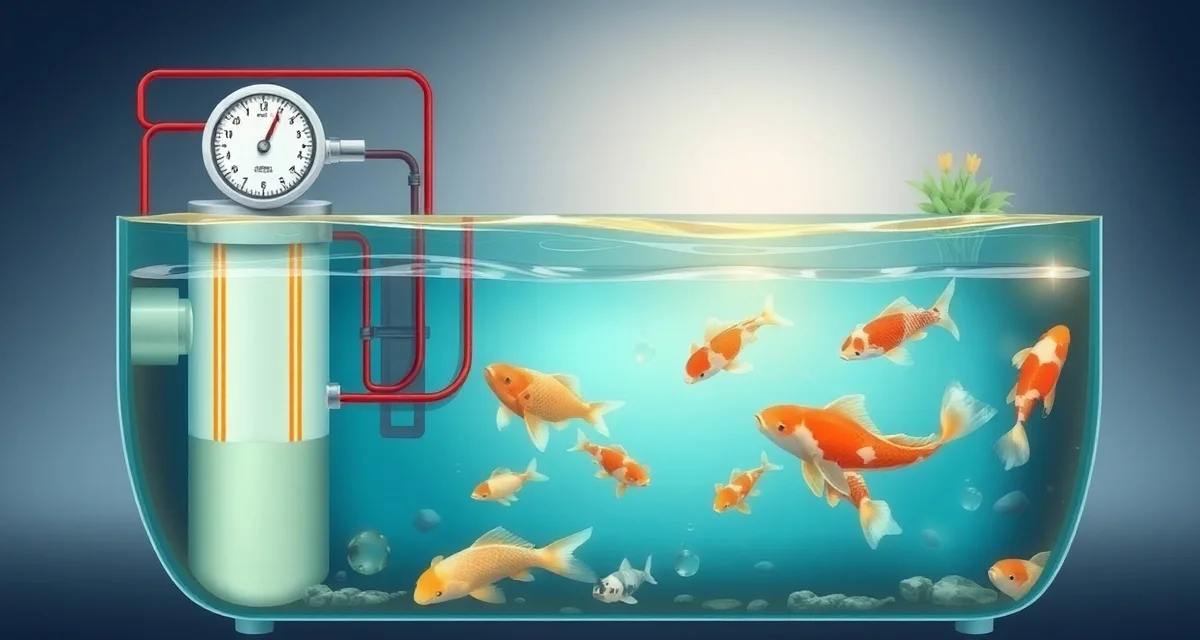
Koi Pond Heating: Options and Cost-Benefit Analysis
Year-round feeding in a heated pond can increase koi growth rate by 40-60% compared to an unheated pond in the same climate. This is the most concrete benefit of pond heating, but it's not the only one. Heated ponds also allow year-round disease treatment (many medications require temperatures above 15°C to work properly), eliminate the high-disease-risk period in early spring when unheated ponds warm slowly through the most vulnerable temperature range, and give you more control over your fish's environment.
The trade-off is cost. Heating a large outdoor pond through a cold winter is expensive. Whether it's worth it depends on your climate, your pond size, and your goals for your koi.
TL;DR
- By keeping water at a stable, optimum temperature year-round (typically 18-20°C), you remove the high-risk window of early spring when fish immune function is lowest.
- A pond held at 20°C year-round feeds year-round -- which means growth year-round.
- Keeping koi quarantine program tanks or the main pond above 18°C means you can treat effectively whenever needed, not just in summer.
- A 5,000-gallon pond in a climate with mild winters might cost $150-300/month in winter to heat to 20°C.
- A similar pond in a cold climate could be $400-700/month.
- A COP of 3-4 means every unit of electricity delivers 3-4 units of heat.
- Below approximately 5-7°C ambient, many pond heat pumps struggle to maintain pond temperature against heat loss.
Why Some Koi Keepers Heat Their Ponds
Disease management: Many koi diseases are temperature-dependent. KHV is most lethal between 18-28°C. Parasite lifecycles accelerate with temperature. By keeping water at a stable, optimum temperature year-round (typically 18-20°C), you remove the high-risk window of early spring when fish immune function is lowest.
Year-round feeding and growth: Koi stop feeding below approximately 10°C and reduce feeding considerably below 15°C. A pond held at 20°C year-round feeds year-round -- which means growth year-round. For breeders trying to develop fish for show or for dealers growing on smaller fish to sale size, this is meaningful.
Treatment flexibility: Some medications require minimum water temperatures for efficacy. Keeping quarantine tanks or the main pond above 18°C means you can treat effectively whenever needed, not just in summer.
Avoiding new pond syndrome in spring: Unheated ponds go through a high-risk period in early spring as water warms slowly from near-freezing through the disease-vulnerable range. A heated pond maintains stable temperature and avoids this risk window.
KoiQuanta's temperature logging identifies the health benefits of pond heating in your tracked data, so you can see whether your heated system correlates with better health outcomes compared to your previous unheated history.
Heating Options
Gas Heating (Natural Gas or Propane)
Gas boilers with pond heat exchangers are the most common approach for heating large ponds. The boiler heats water, which passes through a heat exchanger that transfers heat to pond water without the systems mixing.
How it works: A gas boiler (similar to domestic hot water boiler) feeds a heat exchanger (typically a coaxial or plate heat exchanger). Pond water circulates through the exchanger and returns to the pond at elevated temperature. A thermostat controls the boiler to maintain target temperature.
Costs:
- Installation: $2,000-8,000 depending on system size and gas connection
- Running costs: Highly variable by climate, pond size, and insulation. A 5,000-gallon pond in a climate with mild winters might cost $150-300/month in winter to heat to 20°C. A similar pond in a cold climate could be $400-700/month.
Advantages: Reliable, high output for large ponds, established technology.
Disadvantages: High installation cost, ongoing fuel cost, requires gas connection.
Heat Pumps
Air-source heat pumps extract heat from ambient air and transfer it to pond water. They're similar in principle to a home heat pump or air conditioner running in reverse.
How they work: Refrigerant cycling between an air-side heat exchanger (fan coil) and a water-side heat exchanger heats pond water. A thermostat controls operation.
Efficiency: Heat pumps are measured by Coefficient of Performance (COP) -- how much heat energy they deliver per unit of electrical energy consumed. A COP of 3-4 means every unit of electricity delivers 3-4 units of heat. This makes heat pumps considerably cheaper to run than electric resistance heaters at the same output.
Limitation: Heat pump efficiency drops as ambient temperature drops. Below approximately 5-7°C ambient, many pond heat pumps struggle to maintain pond temperature against heat loss. For cold climates with extended sub-zero periods, heat pumps may need supplementation.
Costs:
- Unit cost: $800-3,000 for units suitable for ponds up to 5,000-10,000 gallons
- Installation: Simpler than gas (electric connection, plumbing)
- Running costs: Approximately 40-60% less than equivalent electric resistance heating
Best for: Mild climates (minimum winter temperatures above 5°C), moderate pond sizes, keepers who want lower running costs and simpler installation than gas.
Inline Electric Heaters
Electric resistance heaters inline with the pond pump -- the flow of pond water passes through the heater element and is returned to the pond at elevated temperature.
How they work: Simple resistance heating element in a housing through which pond water flows. The thermostat controls the element to maintain target temperature.
Costs:
- Unit cost: $100-500 depending on kilowatt rating
- Running costs: The most expensive heating option per unit of heat delivered. A 3kW heater running 8 hours per day adds approximately $250-350/month at typical US electricity rates.
Best for: Quarantine tanks and small ponds (under 500 gallons) where running costs are manageable, or where the simplicity of electric heating outweighs the cost.
Solar Heating
Solar panels can contribute to pond heating in appropriate climates, but rarely provide the full heating load for koi ponds in colder regions.
How it works: Flat-plate solar collectors circulate pond water through roof-mounted panels where sunlight heats the water. Works well in summer, contributes in shoulder seasons, and typically can't maintain target temperatures through cold winters.
Best for: Supplemental heating in warmer climates, or maintaining slightly elevated temperatures without trying to hold to a specific target in cold weather.
Sizing Your Heating System
The heat required to maintain a pond at a target temperature depends on:
- Pond volume
- Target temperature differential (how much warmer than ambient)
- Heat loss rate (pond surface area, insulation, cover)
A basic calculation: a well-insulated 5,000-gallon pond in a climate where winter ambient temperature averages 5°C and you want to maintain 20°C (15°C differential) requires a significant heat input. Consult with a heating engineer or use an online pond heat loss calculator with your specific pond dimensions and local climate data before purchasing equipment.
For quarantine heating specifically, the koi quarantine heating guide covers heating a smaller, enclosed quarantine system rather than the main pond. For the temperature context and how temperature affects koi health outcomes, the koi temperature guide covers the fish biology side.
Frequently Asked Questions
Should I heat my koi pond?
The decision depends on your climate, your goals, and your budget. In climates with mild winters (minimum temperatures rarely below 5°C), heating is more cost-effective and gives you more stable conditions year-round. In cold climates with extended freezing periods, heating a large outdoor pond is expensive and may not be practical unless you have enclosed housing over the pond. For breeders and serious collectors prioritizing fish development and health management, heating makes strong sense. For casual keepers in cold climates with fish that are simply maintained through winter, the cost-benefit calculation often favors natural winter management with good autumn preparation instead.
What are the options for heating a koi pond?
The main options are: gas boiler with heat exchanger (best for large ponds in cold climates, highest installation cost, reliable output), heat pump (best for mild climates, lower running costs than gas, efficiency drops in cold ambient conditions), inline electric heater (simplest installation, highest running cost, best for quarantine tanks and small ponds), and solar collectors (effective supplement in appropriate climates, typically insufficient as sole heating source in cold regions). Most serious koi keepers in cold climates use gas or heat pump systems for main ponds, and electric for quarantine tanks.
How much does it cost to heat a koi pond?
Costs vary widely by system type, pond size, insulation quality, climate, and local energy prices. A rough reference: heating a 5,000-gallon pond in a region with cold winters to maintain 20°C year-round might cost $200-400/month with a heat pump in mild weather, rising to $400-700/month with gas in severely cold conditions. A 300-gallon quarantine tank with an electric inline heater in a heated building might cost $40-80/month. For accurate estimates, calculate your pond's heat loss based on surface area, desired temperature differential, and local energy costs, then size the system to that output.
What is Koi Pond Heating: Options and Cost-Benefit Analysis?
Koi pond heating refers to the use of electric, gas, or heat pump systems to maintain pond water at a stable, optimal temperature year-round—typically 18–20°C. Rather than letting water temperature fluctuate with the seasons, a heated pond keeps koi active, feeding, and growing continuously. This guide covers the main heating options available to pond keepers, compares their running costs, and helps you decide whether the investment makes sense for your setup and goals.
How much does Koi Pond Heating: Options and Cost-Benefit Analysis cost?
Heating costs vary significantly by climate and pond size. A 5,000-gallon pond in a mild-winter climate typically costs $150–300 per month to heat to 20°C during winter. In a cold climate, that same pond can cost $400–700 per month. Heat pumps are the most cost-efficient option, with a COP of 3–4 meaning you get three to four units of heat per unit of electricity consumed. Annual heating costs can range from a few hundred to several thousand dollars depending on your region.
How does Koi Pond Heating: Options and Cost-Benefit Analysis work?
Pond heating works by continuously circulating water through a heating unit—either a heat pump, electric immersion heater, or gas boiler—which raises the water temperature to a set point. A thermostat monitors the water and triggers the heater only when temperature drops below the target. Heat pumps extract ambient heat from the air and transfer it to the water, making them highly efficient. Electric and gas heaters generate heat directly. All systems work best when paired with good insulation and pond covers to reduce heat loss.
What are the benefits of Koi Pond Heating: Options and Cost-Benefit Analysis?
Heated ponds offer three core benefits. First, year-round feeding at optimal temperatures increases koi growth rates by 40–60% compared to unheated ponds in the same climate. Second, stable warm water eliminates the dangerous early-spring period when fish immune function is lowest and disease risk peaks. Third, keeping water above 15–18°C means disease treatments and medications work effectively whenever needed, not just in summer. For serious hobbyists or breeders, these advantages can meaningfully improve fish health and the quality of your collection.
Who needs Koi Pond Heating: Options and Cost-Benefit Analysis?
Pond heating is most valuable for koi keepers who want faster fish growth, run an active quarantine program, or live in a climate with long, cold winters where unheated ponds stay below 10°C for months. Breeders and collectors investing in high-value fish benefit most, since the health and growth advantages justify the running costs. Casual hobbyists with smaller ponds in mild climates may find that simple winterization—reducing feeding and adding aeration—is sufficient without the added expense of full heating.
How long does Koi Pond Heating: Options and Cost-Benefit Analysis take?
There is no fixed project timeline—pond heating is an ongoing operational system, not a one-time event. Installation of a heat pump or heater typically takes one to two days depending on pond complexity. Once running, the system operates continuously through the colder months. If your goal is accelerated koi growth, expect to see measurable size gains over a full 12-month heated season compared to a single unheated year. Disease treatment windows open immediately once water reaches the required temperature threshold for the medication being used.
What should I look for when choosing Koi Pond Heating: Options and Cost-Benefit Analysis?
When selecting a pond heating system, prioritize energy efficiency first—look for heat pumps with a COP of 3 or higher. Match heater output (measured in BTUs or kW) to your pond volume and your local winter temperatures; undersized heaters struggle to maintain target temperatures in cold snaps. Consider running costs alongside purchase price, as a cheaper electric heater can cost far more to operate annually than a higher-upfront heat pump. Also evaluate ease of installation, reliability of the brand, and whether the unit includes a built-in thermostat.
Is Koi Pond Heating: Options and Cost-Benefit Analysis worth it?
Whether pond heating is worth it depends on your climate, pond size, fish value, and goals. For breeders or collectors with high-value koi, the 40–60% growth rate increase and elimination of spring disease risk often justify the cost. In mild climates where winter heating bills stay under $200 per month, the case is stronger. In harsh climates with $500+ monthly bills, you need to weigh that against the value you place on year-round fish management. For casual keepers, simple winterization may be the more practical choice.
Related Articles
Sources
- Associated Koi Clubs of America (AKCA)
- Koi Organisation International (KOI)
- University of Florida IFAS Extension Aquaculture Program
- Fish Vet Group
- Water Quality Association