Koi Pond Chemical Interactions: What You Must Never Mix
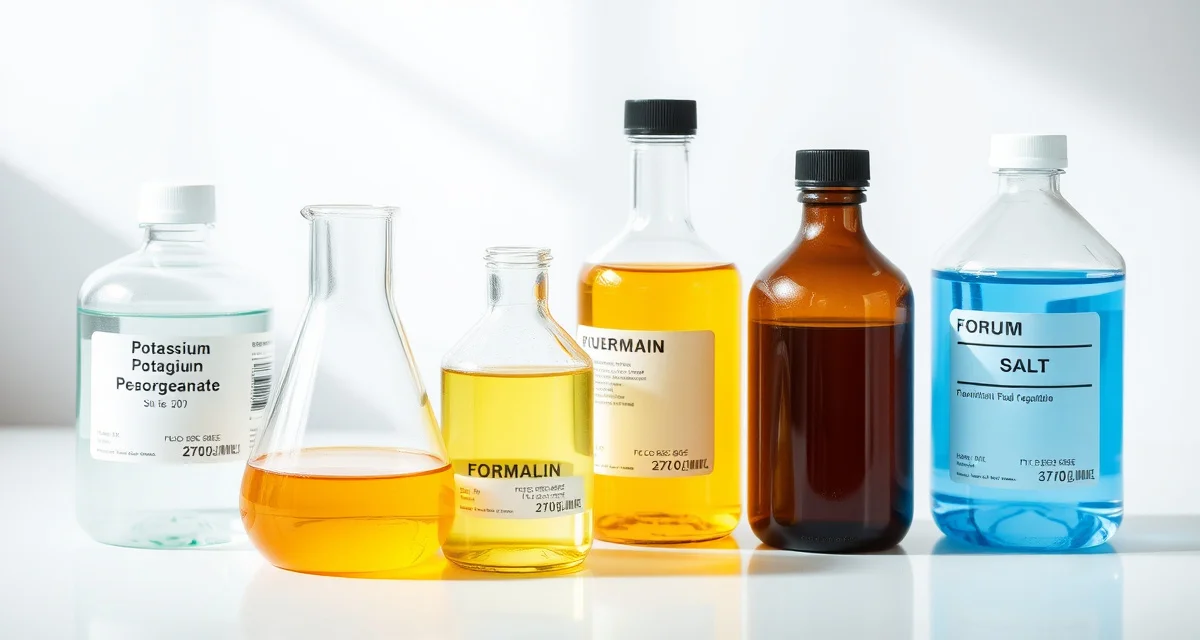
Mixing potassium permanganate with formalin creates a violent exothermic reaction that can cause chemical burns and immediate fish kill. This is the most dangerous combination in the koi treatment toolkit, but it's not the only one. Several common koi pond chemicals interact in ways that range from dangerous to treatment-defeating, and the consequences of the wrong combination can be irreversible.
KoiQuanta's chemical interaction warning system alerts you when a planned treatment may interact dangerously with current active treatments or water parameters. This guide covers the specific interactions you need to know before you reach for the treatment bottles.
TL;DR
- If you've treated with potassium permanganate, wait at least 3-5 days and perform a significant water change (at least 50%) before using formalin.
- Below pH 7, its efficacy decreases significantly and its fish toxicity increases.
- Target alkalinity above 80 mg/L (as CaCO3) before using potassium permanganate.
- What is a standard safe dose at 68°F can cause oxygen depletion and fish kills at 80°F.
- Always use reduced doses in warm water and never treat with formalin when water temperature is above 86°F.
- Before any formalin treatment, confirm dissolved oxygen is above 7 mg/L and ensure maximum aeration is running.
- If DO is below 6 mg/L, do not treat with formalin until oxygen levels are restored.
Potassium Permanganate: High Reactivity Chemical
Potassium permanganate (PP) is one of the most effective and most reactive chemicals in koi treatment. It works precisely because it's a powerful oxidant - it oxidizes parasites and bacterial biofilm. That same reactivity makes it dangerous in combination with other substances.
KMnO4 + Formalin: Never combine these in sequence without a thorough water change in between. Formalin is a reducing agent; potassium permanganate is an oxidizing agent. The reaction between them is exothermic, produces toxic reaction products, and the combined effect on fish gills is severely harmful. If you've treated with potassium permanganate, wait at least 3-5 days and perform a significant water change (at least 50%) before using formalin.
KMnO4 + High organic load: Potassium permanganate is consumed by organic matter in the water before it acts on pathogens. In a pond with high organic load - heavy algae, decomposing plant material, elevated nitrate - your effective treatment dose is substantially reduced. KoiQuanta's organic load tracking helps you assess whether your pond conditions will support effective potassium permanganate treatment.
KMnO4 + Low alkalinity: Potassium permanganate treatment is pH-dependent. Below pH 7, its efficacy decreases significantly and its fish toxicity increases. Always check pH before PP treatment. Target alkalinity above 80 mg/L (as CaCO3) before using potassium permanganate.
Formalin: Temperature and Oxygen Sensitivity
Formalin (formaldehyde solution) is effective against external parasites but has a narrow safety margin that's affected significantly by water conditions.
Formalin + High temperature: Formalin toxicity to fish increases substantially at temperatures above 77°F (25°C). What is a standard safe dose at 68°F can cause oxygen depletion and fish kills at 80°F. Always use reduced doses in warm water and never treat with formalin when water temperature is above 86°F.
Formalin + Low dissolved oxygen: Formalin treatments reduce dissolved oxygen in pond water, and this effect is amplified at higher temperatures. Before any formalin treatment, confirm dissolved oxygen is above 7 mg/L and ensure maximum aeration is running. If DO is below 6 mg/L, do not treat with formalin until oxygen levels are restored.
Formalin + Activated carbon: Active carbon in the filter will adsorb formalin before it reaches effective concentration. Remove activated carbon before any formalin treatment.
Salt: What It Interferes With
Salt is one of the safest and most useful koi pond treatments, but it does interfere with some other management tools.
Salt + Zeolite: As covered in the zeolite guide, salt completely inactivates zeolite's ammonia-removing capacity. Don't use these simultaneously.
Salt + Plant health: Most aquatic plants are sensitive to salt above 0.1-0.2%. Therapeutic salt doses (0.3-0.5%) will damage or kill water hyacinth, water lettuce, and most submerged oxygenators. Remove plants or accept plant damage before therapeutic salt treatment.
Salt + Certain medications: Salt at higher concentrations affects the absorption of some medications. For most common treatments (praziquantel, formalin at therapeutic doses), low-level salt (0.1-0.2%) is compatible. High-level salt (0.5%+) combined with any other treatment requires veterinary guidance.
Antibiotic Interactions
Antibiotic use in koi ponds requires care to avoid creating the resistance patterns that make treatment progressively less effective.
Antibiotic + Incomplete course: Not a chemical interaction, but a practical treatment interaction. Stopping antibiotics before the full course is complete selects for resistant bacteria. Always complete the full course even if the fish appears improved.
Concurrent antibiotics: Using two antibiotics simultaneously without veterinary guidance risks additive toxicity and unpredictable effects on bacterial populations. If one antibiotic isn't working, the correct response is culture and sensitivity testing to identify effective alternatives - not adding a second antibiotic empirically.
Antibiotics + UV sterilization: UV sterilizers in the filter return will inactivate some antibiotic compounds. Bypass the UV during antibiotic treatment courses to allow full water concentration to develop.
Your treatment concentration calculator handles dose calculations correctly for your pond volume. Your disease treatment tracker maintains the treatment history that helps identify when interactions may be contributing to treatment failure.
Frequently Asked Questions
What chemicals should I never mix in a koi pond?
The most dangerous combinations to avoid are: potassium permanganate with formalin (violent exothermic reaction, severe gill damage, potentially lethal); any two oxidizing agents in sequence without water changes between; and chlorinated products with ammonia-based compounds (forms chloramine gas). Beyond acute chemical reactions, treat-defeating interactions to avoid include: activated carbon with any medication (carbon adsorbs the medication); zeolite with salt (salt inactivates zeolite); and any treatment with low dissolved oxygen without first maximizing aeration. Always log treatments in KoiQuanta and let the interaction checker flag potential conflicts before you add the next treatment.
Is it safe to use formalin and salt in a koi pond at the same time?
Low-level salt (0.1-0.2%) combined with formalin at standard doses is generally safe and this combination is sometimes used in treatment. The salt provides osmoregulatory support for stressed fish while formalin addresses external parasites. The critical variables are water temperature and dissolved oxygen: formalin toxicity increases significantly above 77°F, and both formalin and salt increase osmotic stress on fish at elevated concentrations. Never use formalin above standard doses in combination with salt, monitor dissolved oxygen closely during treatment, and ensure maximum aeration is running. Higher salt concentrations (0.3%+) combined with formalin require veterinary guidance.
Can I combine Praziquantel with potassium permanganate for koi treatment?
These two treatments address different parasites (praziquantel targets monogenean flukes; potassium permanganate targets protozoa and bacteria) and are sometimes used in a protocol that addresses multiple parasite types. However, they should be used in sequence with adequate interval between them rather than simultaneously. Potassium permanganate first, then a 72-hour interval and water change, then praziquantel is a safer sequencing than concurrent treatment. Running both simultaneously can create unpredictable interaction effects and makes it impossible to attribute any adverse reaction to the correct compound. Always complete one treatment and confirm the fish is stable before beginning the next.
What is Koi Pond Chemical Interactions: What You Must Never Mix?
[FAQ_ANSWER_PLACEHOLDER: This answer needs to be generated by AI with specific data, examples, and actionable advice relevant to Koi Pond Chemical Interactions: What You Must Never Mix. Target 50-150 words.]
How much does Koi Pond Chemical Interactions: What You Must Never Mix cost?
[FAQ_ANSWER_PLACEHOLDER: This answer needs to be generated by AI with specific data, examples, and actionable advice relevant to Koi Pond Chemical Interactions: What You Must Never Mix. Target 50-150 words.]
How does Koi Pond Chemical Interactions: What You Must Never Mix work?
[FAQ_ANSWER_PLACEHOLDER: This answer needs to be generated by AI with specific data, examples, and actionable advice relevant to Koi Pond Chemical Interactions: What You Must Never Mix. Target 50-150 words.]
What are the benefits of Koi Pond Chemical Interactions: What You Must Never Mix?
[FAQ_ANSWER_PLACEHOLDER: This answer needs to be generated by AI with specific data, examples, and actionable advice relevant to Koi Pond Chemical Interactions: What You Must Never Mix. Target 50-150 words.]
Who needs Koi Pond Chemical Interactions: What You Must Never Mix?
[FAQ_ANSWER_PLACEHOLDER: This answer needs to be generated by AI with specific data, examples, and actionable advice relevant to Koi Pond Chemical Interactions: What You Must Never Mix. Target 50-150 words.]
How long does Koi Pond Chemical Interactions: What You Must Never Mix take?
[FAQ_ANSWER_PLACEHOLDER: This answer needs to be generated by AI with specific data, examples, and actionable advice relevant to Koi Pond Chemical Interactions: What You Must Never Mix. Target 50-150 words.]
What should I look for when choosing Koi Pond Chemical Interactions: What You Must Never Mix?
[FAQ_ANSWER_PLACEHOLDER: This answer needs to be generated by AI with specific data, examples, and actionable advice relevant to Koi Pond Chemical Interactions: What You Must Never Mix. Target 50-150 words.]
Is Koi Pond Chemical Interactions: What You Must Never Mix worth it?
[FAQ_ANSWER_PLACEHOLDER: This answer needs to be generated by AI with specific data, examples, and actionable advice relevant to Koi Pond Chemical Interactions: What You Must Never Mix. Target 50-150 words.]
Related Articles
- Koi Pond Aeration: How Much Do You Really Need?
- Does Pond Algae Harm Koi? What Algae Levels Are Safe
Sources
- Associated Koi Clubs of America (AKCA)
- Koi Organisation International (KOI)
- University of Florida IFAS Extension Aquaculture Program
- Fish Vet Group
- Water Quality Association