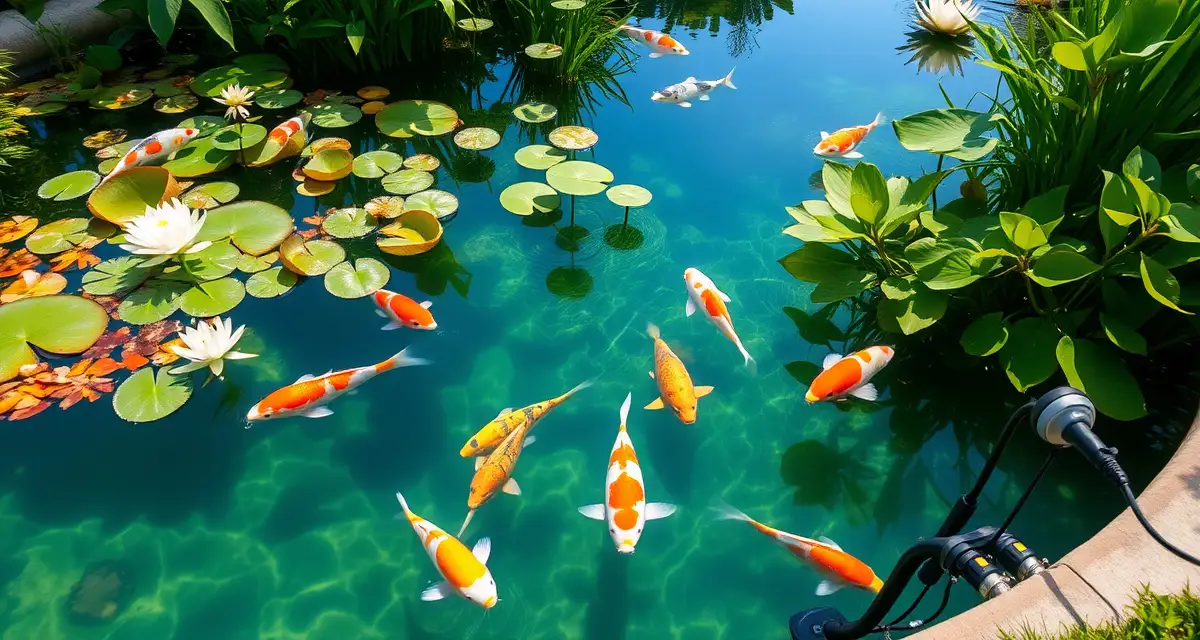
Koi Keeping in Florida: Year-Round Warm Water Management
Florida koi ponds face parasite pressure 12 months per year unlike northern ponds. This is the fundamental difference between Florida koi keeping and every other state in the continental US. Northern keepers get a winter reprieve where parasites go dormant, fish metabolism slows, and the system gets a reset. Florida keepers don't get that reprieve. Parasites breed continuously, disease pressure is constant, and pond management never fully enters a dormant phase.
Understanding this shapes everything about how you approach koi keeping in Florida.
TL;DR
- At 33°C, water holds roughly 25% less oxygen at saturation than at 20°C.
- Even modest ammonia readings at pH 8.5 are more dangerous than the same reading at pH 7.5.
- Test KH regularly and supplement if below 80 ppm.
- Central and South Florida very rarely see temperatures below 10°C.
- Provide pond shade and strong aeration for summer heat, maintain pond depth of at least 1.2m, and implement a consistent water testing and change schedule that doesn't taper off in winter.
- Most of Central and South Florida never sees water temperatures drop below 15°C, and even brief dips below 10°C are uncommon.
Florida's Climate Profile for Koi
Florida has two main climate zones for koi keeping purposes: Central and South Florida, which are effectively subtropical year-round, and North Florida (Panhandle), which gets occasional winter freezes but rarely sustained cold.
Year-round warm water: Most of Florida maintains water temperatures above 18-20°C for 10-11 months of the year, and above 15°C essentially year-round in the south. This means:
- Year-round feeding is possible and necessary (koi need food to maintain weight)
- No winter dormancy for fish or parasites
- Active biological filtration 12 months rather than seasonal
- Algae management is a year-round challenge, not a seasonal one
Summer heat extremes: South Florida summer water temperatures regularly reach 30-33°C, with some ponds hitting 34-35°C on the hottest days. This requires the same heat management strategies as Texas -- shade, aeration, pond depth, potentially active cooling.
KoiQuanta's Florida profile defaults include year-round disease monitoring and no winter dormancy, reflecting the different management cycle compared to northern ponds.
Year-Round Parasite Management
The parasite that most illustrates Florida's challenge is the monogenean fluke. In northern states, cold winters substantially reduce fluke populations between seasons. In Florida, fluke reproduction is continuous -- there's no cold reset. A fluke problem in June is as active in December as it was six months earlier.
This requires Florida keepers to maintain a year-round parasite monitoring and treatment schedule rather than the seasonal approach northern keepers use.
Year-round monitoring priorities:
- Monthly skin scrapes on a rotating sample of fish (especially if you're adding new fish)
- Watch for flashing, excess mucus, and rapid gill movement as the primary parasite indicators
- Run a full fluke treatment (Praziquantel) at least twice yearly -- spring and autumn -- as a standard protocol, more frequently if active infestation is confirmed
- Monitor for anchor worm and fish lice which also reproduce continuously in warm Florida water
What parasites are common in Florida koi ponds?
All the common external parasites are present year-round: monogenean flukes (skin and gill), trichodina, costia, anchor worm, and fish lice. Florida's warm water also supports some parasites that are less common in northern states -- including some tropical organisms that rarely establish elsewhere. If you're buying locally sourced Florida fish, assume they need thorough quarantine with full parasite screening.
The koi parasite treatment guide covers treatment protocols for all major parasite types, including the multi-treatment schedules needed to break reproductive cycles.
Heat Management in Florida Summers
The same heat management principles that apply in Texas apply in Florida, with the added complication of Florida's high humidity reducing evaporative cooling efficiency.
Shade: Partially shade the pond surface. Shade cloth, pond-side plantings, or pergola structures over the pond reduce direct solar heating.
Aeration: Run maximum aeration continuously through summer. In Florida's humid summer air, evaporative cooling from aeration is less efficient than in drier climates, so you need more of it.
Depth: Build ponds to at least 1.2-1.5m minimum. Shallow ponds in Florida summer are difficult to keep in safe temperature ranges.
Time your water changes: If your municipal water comes out cooler than your pond (often the case in summer mornings), a water change using morning tap water can provide some temperature relief.
Dissolved oxygen monitoring: Critical in Florida summers for the same reasons as Texas. At 33°C, water holds roughly 25% less oxygen at saturation than at 20°C.
Florida Water Chemistry Considerations
Florida water chemistry varies significantly by region. South Florida water is often very hard and alkaline, with high pH driven by limestone substrate. Central and North Florida water sources vary from very soft and acidic (some areas with tannin-stained water) to hard and neutral.
High-pH challenges: In areas with high pH (above 8.2-8.4), ammonia toxicity is elevated because more ammonia exists in the toxic unionized form at higher pH. Even modest ammonia readings at pH 8.5 are more dangerous than the same reading at pH 7.5. Watch ammonia more carefully if your Florida pond runs high pH.
Tannin-stained water: In areas with naturally acidic, tannin-stained water, buffering capacity (KH) may be low, creating pH stability challenges. Test KH regularly and supplement if below 80 ppm.
Do Florida Koi Ponds Freeze in Winter?
North Florida (Panhandle areas) can experience brief freezes -- not usually deep enough to freeze the pond through, but potentially cold enough to stress tropical fish and temporarily reduce water temperature to fish-challenging ranges.
Central and South Florida very rarely see temperatures below 10°C. In most of Florida, "winter" means water temperatures dropping to 15-20°C for a few months -- enough to slow fish metabolism slightly and warrant wheat germ food in the coolest months, but not enough for full winter dormancy.
The practical implication: Florida keepers never truly stop feeding or monitoring for disease the way northern keepers do. The management cycle is lower intensity in winter, but it doesn't pause.
Keeping Koi in Florida: Key Differences from Northern Approach
| Factor | Northern (e.g., Midwest) | Florida |
|--------|--------------------------|---------|
| Disease monitoring | Seasonal; reduced in winter | Year-round; consistent intensity |
| Parasite treatment | Spring/summer protocol | Year-round protocol |
| Feeding | Seasonal; stops in winter | Year-round; reduce slightly in cool months |
| Water changes | Reduced in winter | Year-round consistency |
| Oxygen management | Summer focus | Summer intensive; year-round attention |
| KHV risk | Spring/autumn window | Extended risk window, nearly year-round |
Frequently Asked Questions
How do I keep koi in Florida?
Florida koi keeping requires year-round disease monitoring and parasite management rather than the seasonal approach northern keepers use. Provide pond shade and strong aeration for summer heat, maintain pond depth of at least 1.2m, and implement a consistent water testing and change schedule that doesn't taper off in winter. Run parasite prevention protocols (Praziquantel for flukes at minimum) twice yearly rather than once, and monitor with skin scrapes on a regular basis since warm water supports continuous parasite reproduction.
Do Florida koi ponds freeze in winter?
Rarely, and only briefly in North Florida (the Panhandle). Most of Central and South Florida never sees water temperatures drop below 15°C, and even brief dips below 10°C are uncommon. Florida koi don't require winter pond preparation in the same way northern koi do -- you may reduce feeding slightly in the coolest months and switch to wheat germ food, but the pond management cycle doesn't stop. The primary winter adjustment for Florida koi is reducing, not stopping, management activity.
What parasites are common in Florida koi ponds?
All major koi external parasites are present year-round in Florida: monogenean flukes (both skin and gill flukes are especially prevalent), trichodina, costia, anchor worm, and fish lice. Because parasites breed continuously in Florida's warm water, loads can build considerably faster than in northern ponds between treatment cycles. Monthly observation with skin scrapes on sample fish and bi-annual prophylactic fluke treatment are the practical baseline for Florida koi management.
What is Koi Keeping in Florida: Year-Round Warm Water Management?
[FAQ_ANSWER_PLACEHOLDER: This answer needs to be generated by AI with specific data, examples, and actionable advice relevant to Koi Keeping in Florida: Year-Round Warm Water Management. Target 50-150 words.]
How much does Koi Keeping in Florida: Year-Round Warm Water Management cost?
[FAQ_ANSWER_PLACEHOLDER: This answer needs to be generated by AI with specific data, examples, and actionable advice relevant to Koi Keeping in Florida: Year-Round Warm Water Management. Target 50-150 words.]
How does Koi Keeping in Florida: Year-Round Warm Water Management work?
[FAQ_ANSWER_PLACEHOLDER: This answer needs to be generated by AI with specific data, examples, and actionable advice relevant to Koi Keeping in Florida: Year-Round Warm Water Management. Target 50-150 words.]
What are the benefits of Koi Keeping in Florida: Year-Round Warm Water Management?
[FAQ_ANSWER_PLACEHOLDER: This answer needs to be generated by AI with specific data, examples, and actionable advice relevant to Koi Keeping in Florida: Year-Round Warm Water Management. Target 50-150 words.]
Who needs Koi Keeping in Florida: Year-Round Warm Water Management?
[FAQ_ANSWER_PLACEHOLDER: This answer needs to be generated by AI with specific data, examples, and actionable advice relevant to Koi Keeping in Florida: Year-Round Warm Water Management. Target 50-150 words.]
How long does Koi Keeping in Florida: Year-Round Warm Water Management take?
[FAQ_ANSWER_PLACEHOLDER: This answer needs to be generated by AI with specific data, examples, and actionable advice relevant to Koi Keeping in Florida: Year-Round Warm Water Management. Target 50-150 words.]
What should I look for when choosing Koi Keeping in Florida: Year-Round Warm Water Management?
[FAQ_ANSWER_PLACEHOLDER: This answer needs to be generated by AI with specific data, examples, and actionable advice relevant to Koi Keeping in Florida: Year-Round Warm Water Management. Target 50-150 words.]
Is Koi Keeping in Florida: Year-Round Warm Water Management worth it?
[FAQ_ANSWER_PLACEHOLDER: This answer needs to be generated by AI with specific data, examples, and actionable advice relevant to Koi Keeping in Florida: Year-Round Warm Water Management. Target 50-150 words.]
Related Articles
- Koi Dealer Software for Florida: Tropical Climate Quarantine Management
- Chilodonella Infection in Koi: Cold-Water Parasite Management
- Koi Keeping in Cold Climates: Winter Management Guide
Sources
- Associated Koi Clubs of America (AKCA)
- Koi Organisation International (KOI)
- University of Florida IFAS Extension Aquaculture Program
- Fish Vet Group
- Water Quality Association