Koi Fish Identification: Tagging and Individual Recognition
Knowing which fish is which sounds simple until you're standing at the pond with a sick fish and can't remember which one received treatment last month. Individual identification isn't just for show competitors. It's a basic tool for responsible health management.
PIT (passive integrated transponder) tagging allows permanent individual koi identification at any size and represents the gold standard for serious keepers. A microchip the size of a grain of rice is injected into the musculature and remains with the fish for life. But PIT tagging isn't the only option, and for many hobbyists, other methods work just as well.
TL;DR
- Consistent water quality monitoring is the most effective way to prevent problems with koi fish identification.
- Tracking trends over time reveals issues before they become visible in fish behavior.
- KoiQuanta connects observations, water data, and treatment records in one searchable history.
- Early detection based on parameter trends reduces treatment costs and fish stress.
- Seasonal changes require adjusted monitoring schedules; automated reminders help maintain consistency.
Why Individual Identification Matters
When you treat your pond as a whole, treatment history gets recorded against the pond. When you treat individual fish - as you must for serious health management - you need to know which fish received what, and when.
Consider the practical scenarios:
A fish develops ulcers. Has this individual had ulcers before, or is this its first event? Has it been treated with antibiotics in the past six months? If so, which one, and should you worry about resistance? You can't answer any of these questions without individual fish records.
You're preparing fish for a show. Judges and fellow hobbyists will want to discuss specific fish. Show organizers may require individual health declarations. Buyers interested in purchasing a fish need its history.
Insurance documentation requires individual fish values. You can't claim insurance on a specific fish if you can't prove it existed in your collection.
PIT Tagging: The Permanent Solution
PIT tags are the most reliable long-term identification method for koi. The process is straightforward: a hollow implanting needle deposits a glass-encapsulated microchip, typically in the dorsal musculature below the dorsal fin. A handheld reader detects and displays the chip's unique number.
Advantages of PIT tagging:
- Permanent and loss-proof
- No visual alteration to the fish
- International standard (ISO 11784/11785 chips are compatible with universal readers)
- Chips can be linked to digital profiles in KoiQuanta
- Widely used in the koi show and dealer world
Considerations:
- Requires a reader to identify tagged fish
- Fish should be at least 25cm (10 inches) before tagging to ensure adequate musculature
- Implantation should be done by someone experienced, as improper technique can cause infection or chip migration
- Cost: chips are inexpensive (under $5 each) but readers cost $100-300
KoiQuanta's fish profiles support a chip number field, linking the physical tag to the digital health record. If you're working with dealers or show circuits, PIT tags are increasingly expected.
Photo Identification: Practical for Most Hobbyists
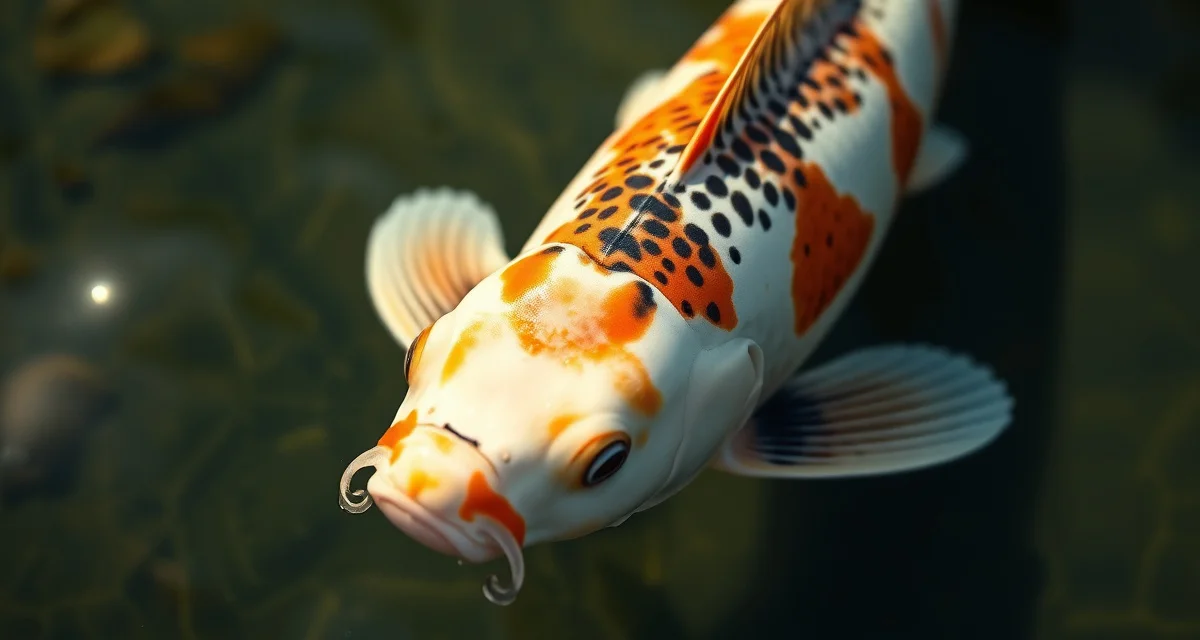
Koi patterns are as individual as fingerprints, particularly for patterned varieties like Kohaku, Sanke, and Showa. A high-quality photograph from directly above captures the pattern in enough detail to distinguish between most fish reliably.
Building a photo identification system:
Take a top-down photograph of each fish under consistent lighting. Label the image with the fish's informal name or identifier and the date. Store these in your KoiQuanta fish profiles alongside pattern description notes.
When a fish develops a health problem, you can pull up its photo to confirm you're treating the right individual. When you handle a fish for treatment, a quick photo before and after documents its condition.
Limitations of photo ID:
- Some varieties (solid-color Ogon, Chagoi) are harder to distinguish
- Patterns in younger fish can change significantly as they grow
- You need decent photographs and consistent photography to make comparison reliable
Pattern description notes supplement photos well. Notes like "large red patch covers left shoulder, small isolated hi behind dorsal" help you identify fish even before pulling up images.
Other Identification Methods
Color-coded elastomer tags are small silicone injections that sit under the skin, visible as a colored dot. These are temporary (lasting one to three years) but useful for seasonal identification or tracking cohorts of juveniles without full PIT tagging. They cause minimal stress and require no reading equipment.
T-bar anchor tags (like those used for game fish) are occasionally used in koi, attached through the dorsal fin. These are visible at a distance, which is useful for rapid head counts of specific fish in large ponds. The downside is they can cause fin damage over time and may be dislodged.
Fin clipping is used in research settings for temporary identification but isn't appropriate for display fish. Fin regrowth can make it unreliable over time anyway.
Connecting Identification to Treatment Records
The whole point of individual identification is linking it to individual records. In KoiQuanta, each fish profile holds its identification method and reference number, alongside its complete health history. When you log a treatment, you tag it to specific fish rather than just the pond.
This means when you're standing at the pond months later wondering which fish was treated for flukes in July, you have the answer in three taps. Your koi treatment journal becomes fish-specific rather than pond-wide, and your koi inventory management ties value, provenance, and health history to individual identifiers.
Frequently Asked Questions
How do I identify individual koi in my pond?
The most practical approach for most hobbyists is photo identification combined with pattern description notes. Take a top-down photograph of each fish under good lighting, note the pattern details in writing, and store both against a fish profile. For valuable or show-quality fish, PIT tagging provides permanent and verifiable identification. You can also use temporary elastomer tags to identify cohorts of fish during specific management periods like quarantine or grow-out.
What is PIT tagging for koi?
PIT (passive integrated transponder) tagging involves implanting a small microchip, typically in the dorsal musculature below the dorsal fin. Each chip carries a unique identification number that can be read with a handheld scanner. The chips are glass-encapsulated, biocompatible, and permanent. ISO-standard chips are compatible with universal readers used globally. PIT tagging is the preferred identification method for valuable koi, show fish, and commercial dealer operations where verifiable individual identity is required.
How do I track which koi received treatment?
You need a combination of reliable identification and structured record keeping. First, identify your fish individually - by photo, pattern description, PIT tag, or elastomer tag. Then log every treatment against specific fish profiles rather than just recording it as a pond-wide event. KoiQuanta supports per-fish treatment logging linked to individual profiles, so you can pull up any fish's complete treatment history instantly. This matters most when assessing repeated disease events, antibiotic exposure history, and treatment response patterns.
What is Koi Fish Identification: Tagging and Individual Recognition?
[FAQ_ANSWER_PLACEHOLDER: This answer needs to be generated by AI with specific data, examples, and actionable advice relevant to Koi Fish Identification: Tagging and Individual Recognition. Target 50-150 words.]
How much does Koi Fish Identification: Tagging and Individual Recognition cost?
[FAQ_ANSWER_PLACEHOLDER: This answer needs to be generated by AI with specific data, examples, and actionable advice relevant to Koi Fish Identification: Tagging and Individual Recognition. Target 50-150 words.]
How does Koi Fish Identification: Tagging and Individual Recognition work?
[FAQ_ANSWER_PLACEHOLDER: This answer needs to be generated by AI with specific data, examples, and actionable advice relevant to Koi Fish Identification: Tagging and Individual Recognition. Target 50-150 words.]
What are the benefits of Koi Fish Identification: Tagging and Individual Recognition?
[FAQ_ANSWER_PLACEHOLDER: This answer needs to be generated by AI with specific data, examples, and actionable advice relevant to Koi Fish Identification: Tagging and Individual Recognition. Target 50-150 words.]
Who needs Koi Fish Identification: Tagging and Individual Recognition?
[FAQ_ANSWER_PLACEHOLDER: This answer needs to be generated by AI with specific data, examples, and actionable advice relevant to Koi Fish Identification: Tagging and Individual Recognition. Target 50-150 words.]
How long does Koi Fish Identification: Tagging and Individual Recognition take?
[FAQ_ANSWER_PLACEHOLDER: This answer needs to be generated by AI with specific data, examples, and actionable advice relevant to Koi Fish Identification: Tagging and Individual Recognition. Target 50-150 words.]
What should I look for when choosing Koi Fish Identification: Tagging and Individual Recognition?
[FAQ_ANSWER_PLACEHOLDER: This answer needs to be generated by AI with specific data, examples, and actionable advice relevant to Koi Fish Identification: Tagging and Individual Recognition. Target 50-150 words.]
Is Koi Fish Identification: Tagging and Individual Recognition worth it?
[FAQ_ANSWER_PLACEHOLDER: This answer needs to be generated by AI with specific data, examples, and actionable advice relevant to Koi Fish Identification: Tagging and Individual Recognition. Target 50-150 words.]
Related Articles
Sources
- Associated Koi Clubs of America (AKCA)
- Koi Organisation International (KOI)
- University of Florida IFAS Extension Aquaculture Program
- Fish Vet Group
- Water Quality Association