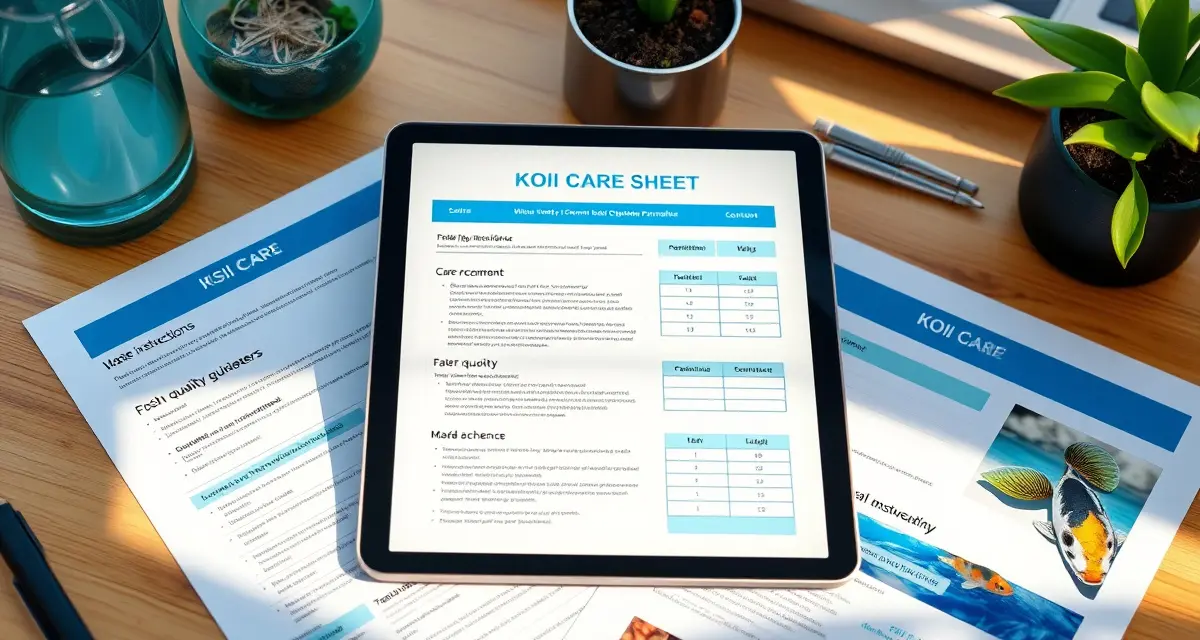
Koi Dealer Customer Care Sheet: Template and Best Practices
Dealers using standardized care sheets report 40% fewer post-sale health questions from customers. A care sheet that actually answers questions before they arise reduces your phone traffic, reduces customer anxiety, and reduces the likelihood of a customer doing something harmful to a fish in the first 48 hours because they didn't know better. The care sheet also functions as a professional differentiator -- handing a customer a document signals that this is a business that knows what it's doing.
This guide covers what a koi dealer care sheet should contain, how to tailor it for different customers, and how to turn the care sheet into a relationship-building tool.
TL;DR
- A care sheet that says "keep water clean, feed twice daily, test water weekly" doesn't help the customer who is asking "my koi is sitting on the bottom and not eating, what do I do?" 24 hours after purchase.
- A fish introduced to water 5-8°C colder than the bag causes immediate stress.
- "We recommend quarantining any new fish for 4-6 weeks before introducing to an existing collection" is a sentence that protects you and the customer.
- "Feed what fish consume in 5 minutes, once or twice daily.
- Briefly explain the relationship between water temperature and koi digestion: stop feeding below 10°C (50°F), reduce feeding below 15°C (60°F), and use easily digestible food (wheat germ) in the transitional range.
Why Most Dealer Care Sheets Fail
The typical dealer care sheet (those that exist at all) is too generic, too basic, or too focused on products to order rather than fish care. A care sheet that says "keep water clean, feed twice daily, test water weekly" doesn't help the customer who is asking "my koi is sitting on the bottom and not eating, what do I do?" 24 hours after purchase.
Good care sheets are specific, anticipate the actual questions customers will have, and tell customers when to call you versus when to act.
KoiQuanta generates branded care sheets from fish record data, so each sheet can include information specific to the fish sold -- the variety, the koi quarantine program history, known health characteristics, and care notes from the fish record.
Core Care Sheet Sections
Fish Information
This section is specific to the fish being sold, not generic. Include:
Variety and name (if applicable): The customer is taking home a specific fish, not "a koi." Telling them it's a kohaku, or a showa, or a tancho is basic but meaningful.
Size and approximate age: Relevant for feeding amount and expected growth.
Quarantine information: "This fish completed a [X]-week quarantine from [date] to [date]. During quarantine, it received [treatment summary]. It was cleared for sale on [date]." Even a brief summary here tells the customer that you run a real program. More importantly, if they have a problem in the first few weeks, they know what treatments were already administered.
Known characteristics: Does this fish tend to be dominant at feeding? Does it have any minor cosmetic marks? Has it had any previous health issues that were resolved? Brief, factual notes here build trust.
Introducing the Fish to Your Pond
This is where most customer mistakes happen. Be specific.
Float the bag: Explain the temperature-matching step. Many new customers don't know this. A fish introduced to water 5-8°C colder than the bag causes immediate stress.
Do not add bag water to your pond: Briefly explain why -- the water in the bag may contain pathogens or chemistry that's unfavorable for your existing fish.
Time to settle: Recommend that the customer doesn't stand over the pond watching and doesn't try to feed for the first several hours. Koi need time to orient without stimulation.
Quarantine recommendation: This is where you can include a recommended quarantine period for the new fish before it goes into an existing collection. Even if the customer doesn't follow through, you've done your professional duty to recommend it. "We recommend quarantining any new fish for 4-6 weeks before introducing to an existing collection" is a sentence that protects you and the customer.
Water Quality Basics
Calibrate this section to the customer's apparent level. For a beginner buyer, cover the essentials: what to test, how often, acceptable ranges, and what to do if something reads outside range. For an experienced collector, a quick summary of your recommended parameters is sufficient.
Parameters to include:
- pH: 7.0-8.5 acceptable, 7.2-7.8 ideal
- Ammonia: 0 ppm (any reading is concerning)
- Nitrite: 0 ppm in an established pond
- Temperature: preferred range, feeding temperatures, when to stop feeding in autumn
- KH: minimum 50 ppm for pH stability
Testing frequency recommendation: Weekly for established ponds, daily for the first few weeks after adding new fish.
Feeding
What your store feeds: Name the food brand and type you use. Customers often want to continue with what the fish are already eating. Abrupt food changes add stress.
How much and how often: Clear guidance reduces overfeeding (the single most common water quality issue new keepers create). "Feed what fish consume in 5 minutes, once or twice daily. Remove any uneaten food."
Temperature-based feeding adjustment: Many customers don't know to reduce or stop feeding in autumn. Briefly explain the relationship between water temperature and koi digestion: stop feeding below 10°C (50°F), reduce feeding below 15°C (60°F), and use easily digestible food (wheat germ) in the transitional range.
What not to feed: Bread, crackers, human food. Brief but worth stating.
Signs of a Healthy vs. Unhealthy Fish
Customers who don't know what to look for can miss early warning signs or, alternatively, panic about normal behavior. A brief description of both helps.
Healthy indicators: Active, coming to the surface at feeding time, fins erect and open, no unusual spots or sores, not hiding persistently.
Warning signs: Prolonged surface gasping (more than brief morning surface behavior), clamped fins, flashing (rubbing against surfaces), visible lesions or white spots, staying isolated from other fish, refusing food for more than 2-3 days.
When to call you: Provide a clear threshold. "If you see these signs, call us before treating." Customers who treat based on guesswork often make things worse. Positioning yourself as the first call in a problem saves fish and saves customer relationships.
Your Contact Information
Phone number, email, website, hours. On the front page, not buried at the bottom.
Tailoring Care Sheets for Different Buyer Profiles
New koi keepers: More detail on water quality basics, more guidance on introduction, explicit temperature and feeding charts. These customers need the fundamentals explained, not just referenced.
Experienced collectors: Shorter summary focused on your quarantine history, the fish's specific characteristics, and your contact information. They know how to keep koi -- give them the fish-specific information they need.
Dealers buying from you: A dealer-to-dealer sheet covers your quarantine documentation, the diseases tested for, any treatments administered, and the health certificate if applicable. This is a different document from a hobbyist care sheet.
Format and Presentation
One or two pages maximum. A care sheet that runs four pages doesn't get read.
KoiQuanta generates branded versions: Your logo, contact information, and the fish's record data pre-populated. This is faster than assembling each sheet manually and ensures consistency.
Laminated or waterproof: Nice to have but not essential. A sheet that survives being set down on a wet surface near a pond is better than one that doesn't.
For the full customer documentation framework beyond individual care sheets, the koi customer documentation guide covers the complete suite of records and documents in a dealer operation. For the broader dealer operations context, the dealer operations guide covers business infrastructure.
Frequently Asked Questions
What should a koi care sheet include for customers?
A complete customer care sheet covers: fish-specific information (variety, quarantine history, any notable characteristics), pond introduction procedure (temperature matching, acclimation, quarantine recommendation), water quality parameters and testing schedule, feeding guidance including temperature-related adjustments, signs of healthy vs. unhealthy fish, and your contact information with a clear invitation to call before treating. The fish-specific section is what differentiates a professional care sheet from a generic one anyone could print off the internet.
How do I create a care sheet for different koi varieties?
Use a modular template with a fixed core structure (introduction procedure, water quality, feeding basics, contact information) and a variable variety-specific section at the top that covers the variety's particular characteristics, color development patterns, and any care notes specific to that type. For example, a doitsu care sheet might note the importance of avoiding abrasion on the scaleless skin. A shiro utsuri care sheet might note that juvenile black (sumi) placement changes significantly in the first two years. Variety-specific notes transform a generic document into useful information.
Should I include quarantine requirements on the care sheet?
Yes. Recommending quarantine before introducing the new fish to an existing collection is professional advice that protects the customer's other fish. State clearly: "We recommend quarantining this fish for 4-6 weeks in a separate tank before introducing it to an established pond." You can't force compliance, but providing the recommendation in writing means you've given the customer the correct advice, and customers who follow it will have better outcomes and stronger trust in you as a result. Include a brief explanation of why -- most customers who understand the risk are more likely to follow through.
What is Koi Dealer Customer Care Sheet: Template and Best Practices?
[FAQ_ANSWER_PLACEHOLDER: This answer needs to be generated by AI with specific data, examples, and actionable advice relevant to Koi Dealer Customer Care Sheet: Template and Best Practices. Target 50-150 words.]
How much does Koi Dealer Customer Care Sheet: Template and Best Practices cost?
[FAQ_ANSWER_PLACEHOLDER: This answer needs to be generated by AI with specific data, examples, and actionable advice relevant to Koi Dealer Customer Care Sheet: Template and Best Practices. Target 50-150 words.]
How does Koi Dealer Customer Care Sheet: Template and Best Practices work?
[FAQ_ANSWER_PLACEHOLDER: This answer needs to be generated by AI with specific data, examples, and actionable advice relevant to Koi Dealer Customer Care Sheet: Template and Best Practices. Target 50-150 words.]
What are the benefits of Koi Dealer Customer Care Sheet: Template and Best Practices?
[FAQ_ANSWER_PLACEHOLDER: This answer needs to be generated by AI with specific data, examples, and actionable advice relevant to Koi Dealer Customer Care Sheet: Template and Best Practices. Target 50-150 words.]
Who needs Koi Dealer Customer Care Sheet: Template and Best Practices?
[FAQ_ANSWER_PLACEHOLDER: This answer needs to be generated by AI with specific data, examples, and actionable advice relevant to Koi Dealer Customer Care Sheet: Template and Best Practices. Target 50-150 words.]
How long does Koi Dealer Customer Care Sheet: Template and Best Practices take?
[FAQ_ANSWER_PLACEHOLDER: This answer needs to be generated by AI with specific data, examples, and actionable advice relevant to Koi Dealer Customer Care Sheet: Template and Best Practices. Target 50-150 words.]
What should I look for when choosing Koi Dealer Customer Care Sheet: Template and Best Practices?
[FAQ_ANSWER_PLACEHOLDER: This answer needs to be generated by AI with specific data, examples, and actionable advice relevant to Koi Dealer Customer Care Sheet: Template and Best Practices. Target 50-150 words.]
Is Koi Dealer Customer Care Sheet: Template and Best Practices worth it?
[FAQ_ANSWER_PLACEHOLDER: This answer needs to be generated by AI with specific data, examples, and actionable advice relevant to Koi Dealer Customer Care Sheet: Template and Best Practices. Target 50-150 words.]
Related Articles
Sources
- Associated Koi Clubs of America (AKCA)
- Koi Organisation International (KOI)
- University of Florida IFAS Extension Aquaculture Program
- Fish Vet Group
- Water Quality Association