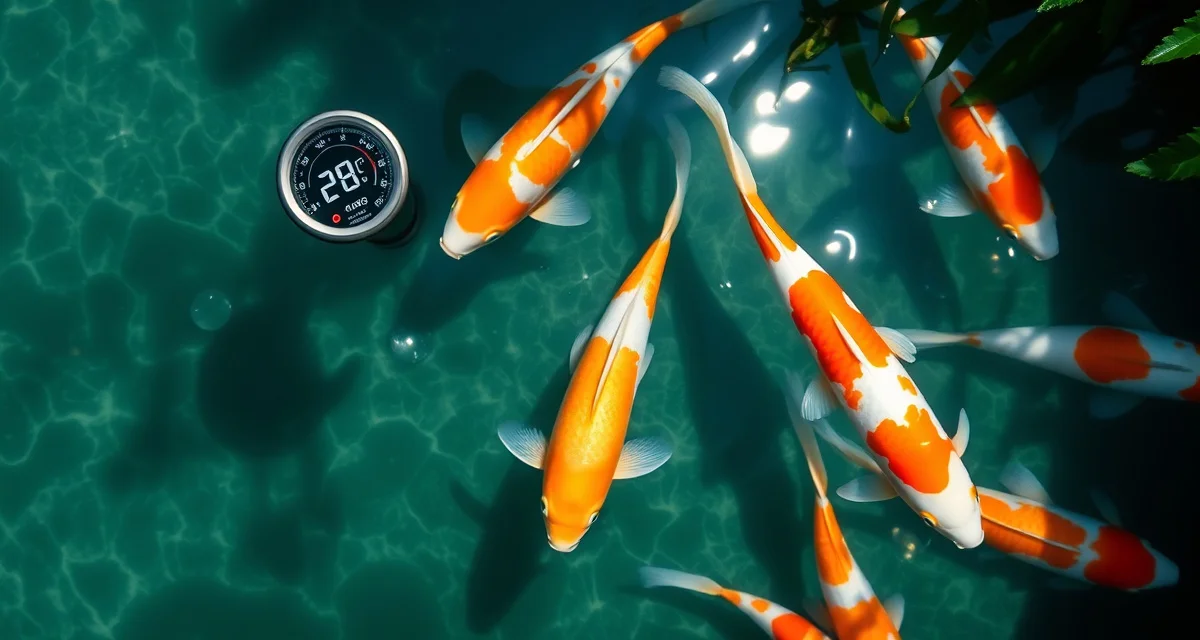
Summer Koi Heat Stress Management: Keep Fish Safe When Temperatures Spike
Koi begin showing heat stress at water temperatures above 28 degrees Celsius as dissolved oxygen levels drop below safe thresholds. In most of the continental US, that means summer brings genuine risk to outdoor koi ponds. Warm air temperatures, intense sun exposure, and reduced gas exchange capacity in warmer water create conditions where fish can go from healthy to gasping at the surface in a matter of hours.
KoiQuanta addresses this with correlated temperature and DO monitoring that triggers a heat stress alert before fish begin showing visible distress. You get the warning while there's still time to act.
TL;DR
- At 20 degrees Celsius, water can hold about 9.1 mg/L of dissolved oxygen at saturation.
- At 28 degrees Celsius, that drops to approximately 7.8 mg/L.
- At 32 degrees Celsius, it drops further to around 7.2 mg/L.
- Add a hot, sunny day, a dense algae bloom, or reduced aeration and the actual DO can drop well below 6 mg/L, which is the threshold where koi begin to experience oxygen stress.
- Even a partial water change of 10 to 15% can lower temperature and raise DO.
- Above 30 degrees Celsius, stress becomes more acute.
- Temperatures above 33 degrees Celsius are potentially lethal, particularly if dissolved oxygen is simultaneously low.
Why Heat and Dissolved Oxygen Go Together
The relationship between temperature and dissolved oxygen is simple but critical: warm water holds less dissolved oxygen than cold water. At 20 degrees Celsius, water can hold about 9.1 mg/L of dissolved oxygen at saturation. At 28 degrees Celsius, that drops to approximately 7.8 mg/L. At 32 degrees Celsius, it drops further to around 7.2 mg/L.
Those numbers assume the water is at full saturation. In a pond with active biological filtration, fish biomass, and organic decomposition, actual DO levels are typically below saturation. Add a hot, sunny day, a dense algae bloom, or reduced aeration and the actual DO can drop well below 6 mg/L, which is the threshold where koi begin to experience oxygen stress.
The dangerous scenario isn't just midday heat. Dense algae blooms produce oxygen during the day through photosynthesis, which can actually raise daytime DO to seemingly safe levels. But the same algae consume oxygen at night, and a warm summer night with low water movement can see DO crash between midnight and dawn. Fish are found gasping or dead in the morning with no warning from the previous day's daytime readings.
KoiQuanta's correlated temperature and DO monitoring captures both data points. The heat stress alert looks at the combination of water temperature and dissolved oxygen together, not either factor in isolation.
Recognizing Heat Stress Before It Becomes an Emergency
Your fish will show behavioral signs of heat stress before they start gasping at the surface. Knowing what to look for lets you act while there's still a comfortable margin:
Reduced activity in midday heat. Koi naturally become less active in the hottest part of the day during summer. Some degree of reduced activity is normal. What you're watching for is fish clustering near the surface or near aeration sources, which indicates they're seeking higher-oxygen water.
Increased gill movement. Koi breathe faster when oxygen is low or when temperature is high. If you observe rapid gill movement when fish are otherwise behaving normally, check your DO reading immediately.
Loss of appetite. Koi typically eat less in very warm water. A sudden reduction in feeding enthusiasm during a heat wave is normal, but log it in KoiQuanta as it may indicate early stress.
Surface crowding. Multiple fish spending time near the surface, or near a waterfall or aerator, is a clear sign of oxygen competition. This warrants immediate DO testing and intervention.
Emergency Responses to Heat Stress
If you observe gasping behavior or surface crowding during a heat event, you have several options for immediate intervention:
Increase aeration immediately. Adding more air stones or turning on a backup aerator can raise DO within 30 to 60 minutes. If you have a waterfall or fountain that you've turned off for aesthetics, turn it back on. Water movement and surface agitation are the fastest ways to improve gas exchange.
Add fresh water. Running cold tap water into the pond introduces cooler, oxygenated water. Even a partial water change of 10 to 15% can lower temperature and raise DO. If your tap water is treated with chlorine, add a dechlorinator before or during the water change.
Add shade. If the emergency is happening on a hot afternoon, shade cloth over part of the pond can prevent direct sun heating and reduce temperature rise. This is also a longer-term management measure worth installing before a heat emergency occurs.
Stop feeding immediately. Digesting food increases oxygen demand in fish. During a heat stress event, stop feeding until conditions stabilize.
Log every intervention in KoiQuanta with the time, the DO reading that prompted the response, and the action taken. This creates a record that helps you calibrate your summer management approach.
Proactive Summer Management
The best way to handle summer heat is to prepare before temperatures climb rather than reacting to emergencies. KoiQuanta's summer management approach is built around continuous monitoring with proactive alerts.
Optimize your aeration before summer. Inspect all air stones and diffusers in late spring, when water temperature is still comfortable. Replace any that are clogged or underperforming. Add aeration capacity before you need it. More aeration capacity than you think you need in spring translates to safety margin in August.
Check your water feature operation. Waterfalls and fountains provide meaningful gas exchange surface area. Make sure they're running efficiently. A partially blocked nozzle on a fountain isn't just aesthetic; it's reducing oxygen transfer.
Monitor for algae blooms. Green water and string algae both create overnight DO depletion risk. The dissolved oxygen tracking guide in KoiQuanta covers the relationship between algae density and overnight oxygen dynamics. If your pond goes green in summer, increase DO monitoring frequency to nighttime readings.
Manage feeding quantity. High-protein food in summer increases metabolic oxygen demand. Many experienced hobbyists reduce protein content during the hottest summer weeks, not just quantity. Lower-protein foods reduce the metabolic burden on fish already dealing with thermal stress.
Treatment Timing in Summer
Summer is a complicated time for koi disease treatment. The water temperature impact guide covers how warm water affects treatment efficacy and safety, but the key points are:
Formalin and potassium permanganate are dangerous in warm water. Both remove dissolved oxygen from the water. In cold water, this depletion is real but manageable. In warm water that's already low in DO, the same dose can create fatal oxygen levels. KoiQuanta's dose calculators account for current water temperature and include warm-weather safety warnings.
Treatment windows are earlier in the morning. If you must treat during summer, do it in the early morning when water temperature is at its coolest and DO is at its highest. Avoid treating in the afternoon when temperature peaks and DO is lowest.
Have aeration ready during treatment. Running extra aeration during any chemical treatment reduces the oxygen depletion risk. This is good practice year-round but is especially critical in summer.
Consider whether treatment can wait. For non-emergency conditions, it may be better to wait for a cooler period rather than treating during peak heat. KoiQuanta's treatment decision support can help you assess urgency versus risk.
Shade and Pond Design for Summer Survival
If you live in a climate where summer water temperatures regularly exceed 28 degrees Celsius, pond design modifications can reduce the thermal load by a meaningful amount:
Shade cloth installation over 30 to 50% of the pond surface reduces direct solar heating substantially. This doesn't need to be permanent. A frame and shade cloth installed in late spring and removed in fall is a practical solution.
Deep water zones. Ponds with at least one area deeper than 4 feet give koi access to cooler, more stable water temperatures. Fish will naturally spend time in the deeper, cooler sections during heat waves.
Water topping off. Regular topping off with cool tap water dilutes the thermal buildup from a hot day. In climates with moderate summer temperatures this may be sufficient to prevent stress. In extreme climates it's a supplement to more substantial cooling measures, not a standalone solution.
Monitoring Throughout Summer
Summer management isn't a single intervention. It's a continuous process of monitoring, logging, and adjusting. KoiQuanta's monitoring setup for summer should include:
- Water temperature logged at least twice daily (morning and afternoon) during heat waves
- Dissolved oxygen logged at minimum daily, twice daily during high-risk periods
- Fish observation logs at least every two to three days, immediately after any extreme heat event
- Feeding and food type logged with quantity
This data creates a complete picture of how your pond performs in summer heat, which gives you the information to make better decisions next season.
For guidance on the season before summer, review the spring koi pond startup guide to make sure your systems are set up correctly entering the warm season.
Frequently Asked Questions
How do I keep my koi pond cool in summer?
The most effective approaches are shade cloth over part of the pond surface (30 to 50% coverage), maximizing aeration with additional air stones or running waterfalls continuously, regular topping off with cool tap water, and keeping pond depth at 4 feet or more to give fish access to cooler deep water. Reducing feeding during peak heat weeks also helps by lowering metabolic heat production.
What temperature is too hot for koi?
Koi begin showing heat stress at water temperatures above 28 degrees Celsius (82 degrees Fahrenheit). Above 30 degrees Celsius, stress becomes more acute. Temperatures above 33 degrees Celsius are potentially lethal, particularly if dissolved oxygen is simultaneously low. KoiQuanta's heat stress alert triggers based on the combined temperature and DO reading, not just temperature alone.
Should I stop treating koi for disease in high summer temperatures?
For non-emergency conditions, yes, it's often better to wait for cooler temperatures before treating. Chemical treatments that remove dissolved oxygen, particularly formalin and potassium permanganate, are far more dangerous in warm water that's already low in DO. For urgent conditions, treatment should happen in the early morning with maximum aeration running. KoiQuanta's dose calculators include temperature-based safety adjustments.
What is Summer Koi Heat Stress Management: Keep Fish Safe When Temperatures Spike?
[FAQ_ANSWER_PLACEHOLDER: This answer needs to be generated by AI with specific data, examples, and actionable advice relevant to Summer Koi Heat Stress Management: Keep Fish Safe When Temperatures Spike. Target 50-150 words.]
How much does Summer Koi Heat Stress Management: Keep Fish Safe When Temperatures Spike cost?
[FAQ_ANSWER_PLACEHOLDER: This answer needs to be generated by AI with specific data, examples, and actionable advice relevant to Summer Koi Heat Stress Management: Keep Fish Safe When Temperatures Spike. Target 50-150 words.]
How does Summer Koi Heat Stress Management: Keep Fish Safe When Temperatures Spike work?
[FAQ_ANSWER_PLACEHOLDER: This answer needs to be generated by AI with specific data, examples, and actionable advice relevant to Summer Koi Heat Stress Management: Keep Fish Safe When Temperatures Spike. Target 50-150 words.]
What are the benefits of Summer Koi Heat Stress Management: Keep Fish Safe When Temperatures Spike?
[FAQ_ANSWER_PLACEHOLDER: This answer needs to be generated by AI with specific data, examples, and actionable advice relevant to Summer Koi Heat Stress Management: Keep Fish Safe When Temperatures Spike. Target 50-150 words.]
Who needs Summer Koi Heat Stress Management: Keep Fish Safe When Temperatures Spike?
[FAQ_ANSWER_PLACEHOLDER: This answer needs to be generated by AI with specific data, examples, and actionable advice relevant to Summer Koi Heat Stress Management: Keep Fish Safe When Temperatures Spike. Target 50-150 words.]
How long does Summer Koi Heat Stress Management: Keep Fish Safe When Temperatures Spike take?
[FAQ_ANSWER_PLACEHOLDER: This answer needs to be generated by AI with specific data, examples, and actionable advice relevant to Summer Koi Heat Stress Management: Keep Fish Safe When Temperatures Spike. Target 50-150 words.]
What should I look for when choosing Summer Koi Heat Stress Management: Keep Fish Safe When Temperatures Spike?
[FAQ_ANSWER_PLACEHOLDER: This answer needs to be generated by AI with specific data, examples, and actionable advice relevant to Summer Koi Heat Stress Management: Keep Fish Safe When Temperatures Spike. Target 50-150 words.]
Is Summer Koi Heat Stress Management: Keep Fish Safe When Temperatures Spike worth it?
[FAQ_ANSWER_PLACEHOLDER: This answer needs to be generated by AI with specific data, examples, and actionable advice relevant to Summer Koi Heat Stress Management: Keep Fish Safe When Temperatures Spike. Target 50-150 words.]
Related Articles
Sources
- Associated Koi Clubs of America (AKCA)
- Koi Organisation International (KOI)
- University of Florida IFAS Extension Aquaculture Program
- Fish Vet Group
- Water Quality Association