What Determines Koi Quarantine Success?
Quarantine-implementation) systems with structured daily observation catch disease signs 3+ days earlier than unstructured observation. Three days is often the difference between a fish that responds well to early treatment-after-pond-treatment) and a fish that's deteriorated to the point where treatment options are limited. The quality of your observation process -- not just the presence of a quarantine tank -- determines whether early disease signs get caught and acted on.
KoiQuanta-documentation-for-sales)'s completion tracking shows protocol adherence rate per quarantine-best-medications) batch. When you look at your adherence data across multiple quarantine batches, patterns become clear: the batches where you missed observation days or delayed treatments are the ones where problems escalated.
TL;DR
- Quarantine systems with structured daily observation catch disease signs 3+ days earlier than unstructured observation.
- A quarantine tank where ammonia climbs above 0.5 mg/L because the biofilter isn't established or has been disrupted by antibiotics is actively harmful to the fish you're trying to protect.
- Fish that appear healthy on day 10 of a 30-day quarantine get discharged early.
- KoiQuanta's 30-day quarantine protocol provides the daily structure that prevents these deviations.
- Observation Quality Daily observation for 5-10 minutes per fish is the core of quarantine.
- Early detection advantage: disease signs observed on day 3-4 of a 30-day quarantine can be treated promptly with high success rates.
- The same disease recognized on day 12-15 because subtle early signs were missed has had more time to progress, is harder to treat, and has a worse prognosis.
TL;DR
- Quarantine systems with structured daily observation catch disease signs 3+ days earlier than unstructured observation.
- A quarantine tank where ammonia climbs above 0.5 mg/L because the biofilter isn't established or has been disrupted by antibiotics is actively harmful to the fish you're trying to protect.
- Fish that appear healthy on day 10 of a 30-day quarantine get discharged early.
- KoiQuanta's 30-day quarantine protocol provides the daily structure that prevents these deviations.
- Observation Quality Daily observation for 5-10 minutes per fish is the core of quarantine.
- Early detection advantage: disease signs observed on day 3-4 of a 30-day quarantine can be treated promptly with high success rates.
- The same disease recognized on day 12-15 because subtle early signs were missed has had more time to progress, is harder to treat, and has a worse prognosis.
The Four Pillars of Quarantine Success
1. Tank Setup
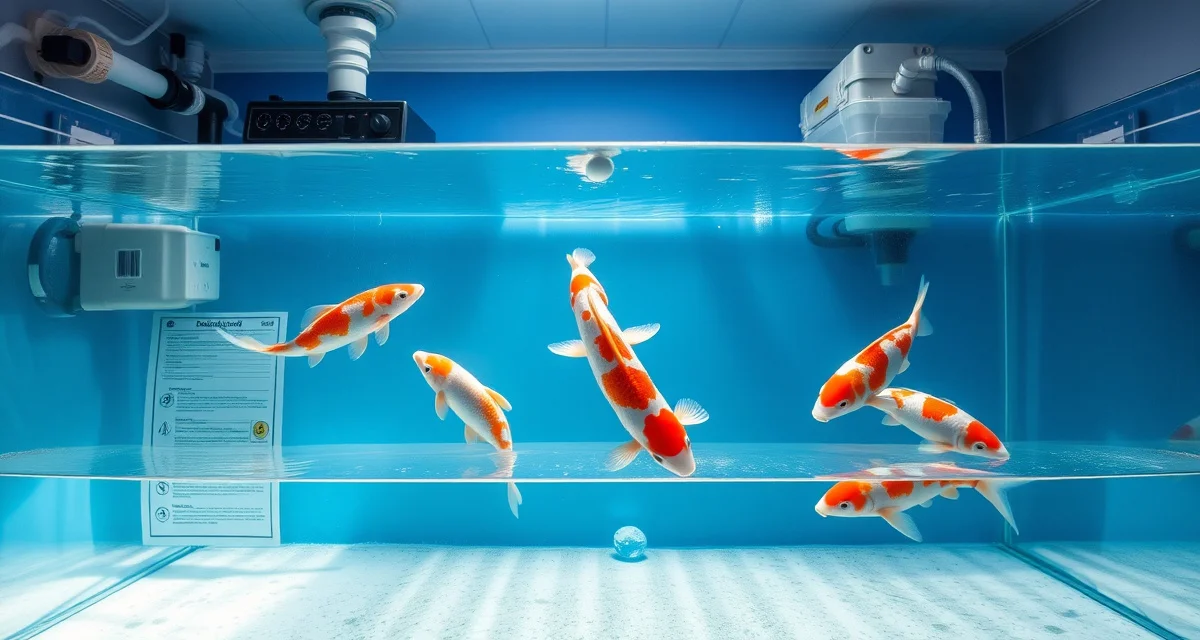
A quarantine tank that causes its own problems defeats the purpose. The most common setup failures:
Uncycled or poorly cycled biofilter: The leading cause of quarantine tank mortality isn't disease -- it's ammonia poisoning from inadequate biological filtration. A quarantine tank where ammonia climbs above 0.5 mg/L because the biofilter isn't established or has been disrupted by antibiotics is actively harmful to the fish you're trying to protect.
Inadequate volume: The minimum is 100 gallons per fish. Smaller volumes make koi pond water quality tracker management nearly impossible and create physical space limitations that increase stress.
Poor aeration: Quarantine tanks need excellent aeration. Sick and stressed fish have elevated oxygen requirements. Any treatment you add also increases the need for oxygen.
Temperature instability: A quarantine tank with temperature swings of 3-4°C over the course of a day creates additional stress. Use an appropriately sized aquarium heater (slightly oversized is better than undersized) and monitor temperature alongside other parameters.
What makes a koi quarantine effective? A cycled biofilter, adequate volume (100+ gallons per fish), strong aeration, stable temperature, and daily testing capability.
2. Protocol Adherence
Having a written protocol you actually follow consistently produces better outcomes than improvising based on how the fish looks each day.
The value of a protocol is that it defines in advance:
- What treatments to give and when
- What observations to make each day
- What parameter thresholds require action
- When quarantine is complete (discharge criteria)
Without defined protocols, decisions are made on mood, time availability, and how the fish happens to look at that moment. Fish that appear healthy on day 10 of a 30-day quarantine get discharged early. Treatments get delayed because you ran out of medication. Observations get skipped on busy days.
KoiQuanta's 30-day quarantine protocol provides the daily structure that prevents these deviations. The protocol tells you what to do each day, sends reminders for treatment days, and tracks whether you're on schedule. How do I improve my koi quarantine success rate? Start by tracking your protocol adherence in KoiQuanta -- seeing where you deviate identifies exactly which habits need changing.
3. Observation Quality
Daily observation for 5-10 minutes per fish is the core of quarantine. The observation habit is what catches disease signs early.
What you're looking for:
- Normal vs. abnormal swimming behavior
- Appetite (does the fish surface for food normally?)
- Fin position (clamped vs. normally extended)
- Skin condition (any new redness, raised scales, spots, or texture changes)
- Gilling rate (rapid gill movement indicates respiratory stress)
- Position in the tank (fish that sit on the bottom or hang near the surface signal problems)
Structured observation vs. casual observation: The difference between saying "fish looked okay today" and logging specific observations (swimming normally, fins extended, appetite good, no visible lesions, gill movement at rest) is the difference between an observation record that can identify subtle trends and one that can't.
Early detection advantage: disease signs observed on day 3-4 of a 30-day quarantine can be treated promptly with high success rates. The same disease recognized on day 12-15 because subtle early signs were missed has had more time to progress, is harder to treat, and has a worse prognosis.
4. Discharge Criteria
A quarantine doesn't end when the calendar says 30 days -- it ends when the fish has met the criteria for safe introduction to your main pond.
Standard discharge criteria:
- Minimum 30 days elapsed from start of quarantine
- No active disease signs present
- All planned prophylactic treatments completed
- Appetite normal and consistent for at least 7 days
- Water quality parameters stable
- No new disease signs observed in the final 7 days of quarantine
The most common quarantine mistake: early discharge. Fish that appear healthy at day 20 get moved to the main pond. This is often how disease introduction happens -- the fish looked fine, but disease signs hadn't yet appeared or were subtle enough to miss in abbreviated observation.
Stick to the 30-day minimum. The cost of an extra 10 days in quarantine is trivial compared to the cost of introducing disease to an established pond.
What percentage of quarantined koi should pass quarantine?
In a well-run quarantine from reputable sources, 90%+ of fish should complete quarantine without health events. Fish from unknown or high-risk sources (post-show fish, farm surplus) may have lower pass rates because they carry higher pathogen loads. If you're regularly losing fish during quarantine, either your quarantine tank conditions are a problem (water quality, setup) or your fish sources carry high pathogen loads that warrant extended or more intensive quarantine.
For the complete quarantine observation protocol, see the koi quarantine observation log guide. For the complete new fish quarantine protocol with day-by-day structure, see the new koi quarantine protocol.
Measuring Your Quarantine Success
Track these metrics for each quarantine batch in KoiQuanta:
- Observation adherence rate (% of days observed)
- Treatment adherence rate (% of scheduled treatments administered on time)
- Discharge rate (% of fish completing the full protocol without early discharge)
- Mortality rate during quarantine
- Disease detection rate (% of batches where disease was caught and treated)
Over multiple batches, these metrics show where your process is strong and where it needs improvement. A low observation adherence rate and high disease detection rate suggests you're catching disease but not early enough. A high early discharge rate predicts disease introduction problems.
Frequently Asked Questions
What makes a koi quarantine effective?
Four factors: a cycled biofilter in an adequately sized tank (100+ gallons per fish) with strong aeration and stable temperature, consistent protocol adherence (following the defined schedule rather than improvising), structured daily observation that looks for specific signs rather than a casual glance, and defined discharge criteria that include a full 30-day minimum plus clinical health standards. The most common quarantine failures result from ammonia toxicity in poorly cycled tanks and early discharge of fish that appeared healthy but hadn't completed the observation window.
How do I improve my koi quarantine success rate?
Track protocol adherence in KoiQuanta and identify where you deviate. Most improvements come from three areas: daily observation habit (build a consistent 5-10 minutes per day observation practice that logs specific findings), treatment adherence (set reminders for treatment days so nothing gets missed), and not discharging early (stick to the 30-day minimum and discharge criteria regardless of how good the fish looks). The early detection advantage from structured daily observation -- catching disease 3+ days earlier -- has the single biggest impact on treatment outcomes.
What percentage of quarantined koi should pass quarantine?
In well-run quarantine with fish from reputable, professionally quarantined sources, 90%+ pass rate is achievable. Fish from less-screened sources (post-show fish, farm surplus, unknown dealers) typically have lower pass rates because they carry more pathogen load. Mortality during quarantine below 5% is good for well-sourced fish; 10-15% may be acceptable for high-risk-source fish where disease is expected. If you're regularly seeing 20%+ mortality during quarantine, investigate whether your tank conditions are contributing alongside any pathogen load in the fish.
What records should I keep during this type of event?
Record the date, water temperature, and full parameter readings (ammonia, nitrite, pH, dissolved oxygen), a description of observed signs in each affected fish, any treatments applied with dose and rationale, and the fish's response at 24, 48, and 72 hours post-treatment. These records in KoiQuanta build the health history that makes future events faster to diagnose and treat.
What is What Determines Koi Quarantine Success??
[FAQ_ANSWER_PLACEHOLDER: This answer needs to be generated by AI with specific data, examples, and actionable advice relevant to What Determines Koi Quarantine Success?. Target 50-150 words.]
How much does What Determines Koi Quarantine Success? cost?
[FAQ_ANSWER_PLACEHOLDER: This answer needs to be generated by AI with specific data, examples, and actionable advice relevant to What Determines Koi Quarantine Success?. Target 50-150 words.]
How does What Determines Koi Quarantine Success? work?
[FAQ_ANSWER_PLACEHOLDER: This answer needs to be generated by AI with specific data, examples, and actionable advice relevant to What Determines Koi Quarantine Success?. Target 50-150 words.]
What are the benefits of What Determines Koi Quarantine Success??
[FAQ_ANSWER_PLACEHOLDER: This answer needs to be generated by AI with specific data, examples, and actionable advice relevant to What Determines Koi Quarantine Success?. Target 50-150 words.]
Who needs What Determines Koi Quarantine Success??
[FAQ_ANSWER_PLACEHOLDER: This answer needs to be generated by AI with specific data, examples, and actionable advice relevant to What Determines Koi Quarantine Success?. Target 50-150 words.]
How long does What Determines Koi Quarantine Success? take?
[FAQ_ANSWER_PLACEHOLDER: This answer needs to be generated by AI with specific data, examples, and actionable advice relevant to What Determines Koi Quarantine Success?. Target 50-150 words.]
What should I look for when choosing What Determines Koi Quarantine Success??
[FAQ_ANSWER_PLACEHOLDER: This answer needs to be generated by AI with specific data, examples, and actionable advice relevant to What Determines Koi Quarantine Success?. Target 50-150 words.]
Sources
- Associated Koi Clubs of America (AKCA)
- Koi Organisation International (KOI)
- University of Florida IFAS Extension Aquaculture Program
- Fish Vet Group
- Water Quality Association
Sources
- Associated Koi Clubs of America (AKCA)
- Koi Organisation International (KOI)
- University of Florida IFAS Extension Aquaculture Program
- Fish Vet Group
- Water Quality Association