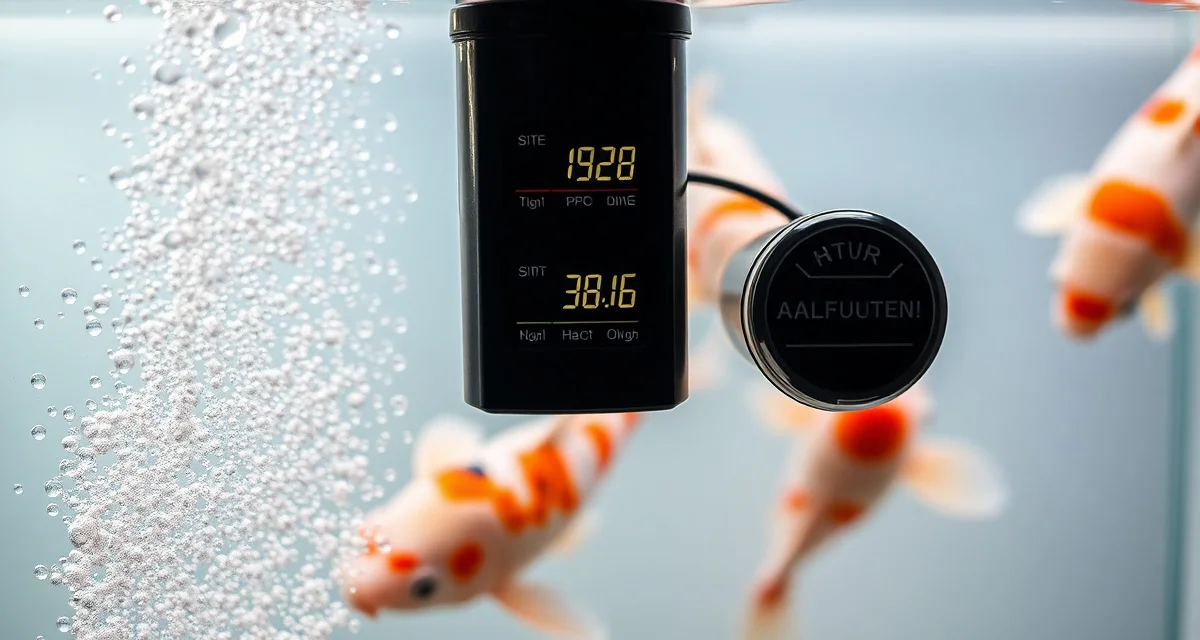
Aeration Requirements for Koi Quarantine Tanks
Dissolved oxygen is the first thing that kills fish and the last thing most keepers think about. In a display pond with a waterfall, a veggie filter, and a skimmer, you probably have adequate aeration without thinking about it. In a quarantine tank - especially one where you're running formalin or potassium permanganate - you can crash oxygen levels to lethal concentrations inside 45 minutes.
I've lost fish to aeration failures during treatment. It happens faster than you'd believe. One morning in mid-summer, the air pump feeding a 250-gallon quarantine tank seized overnight. By the time I checked at 6 a.m., the four Kohaku in that tank were on their sides. Three survived. One didn't. The dissolved oxygen reading when I pulled it was 2.8 mg/L.
Aeration in quarantine isn't optional. It's a life support system.
TL;DR
- In a quarantine tank - especially one where you're running formalin or potassium permanganate - you can crash oxygen levels to lethal concentrations inside 45 minutes.
- One morning in mid-summer, the air pump feeding a 250-gallon quarantine tank seized overnight.
- By the time I checked at 6 a.m., the four Kohaku in that tank were on their sides.
- The dissolved oxygen reading when I pulled it was 2.8 mg/L.
- Koi need a minimum of 6 mg/L dissolved oxygen to maintain normal function.
- Below 6 mg/L, immune function starts dropping.
- Below 5 mg/L, fish show visible stress - surface-gasping, lethargy, behavioral changes.
How Much Dissolved Oxygen Do Koi Need?
Koi need a minimum of 6 mg/L dissolved oxygen to maintain normal function. Below 6 mg/L, immune function starts dropping. Below 5 mg/L, fish show visible stress - surface-gasping, lethargy, behavioral changes. Below 4 mg/L, mortality begins. Below 2 mg/L, you're in mass mortality territory within hours.
The complicating factor: warm water holds less oxygen than cool water. A 300-gallon tank at 75°F has a saturation ceiling of approximately 8.3 mg/L. At 82°F that drops to around 7.6 mg/L. If you're also running treatments that consume oxygen, you've got almost no margin.
The target for quarantine tanks is 7+ mg/L at all times. That buffer matters most when something goes wrong.
Aeration in Quarantine vs. Display Ponds
Your display pond relies on surface agitation, waterfall action, plant photosynthesis during daylight, and the biological oxygen demand of a established, balanced ecosystem.
A quarantine tank has none of that balance. Bare-bottom. No plants. Often cycled quickly with a small biofilter. High fish density relative to volume. Potentially sick fish with compromised gill function. And whatever treatment chemicals you're running.
The aeration requirement per gallon in a quarantine tank is substantially higher than in a mature display pond. Don't carry your display pond assumptions into quarantine.
Types of Aeration for Quarantine Tanks
Air Pumps and Diffusers
The standard and most reliable setup. A quality dual-outlet diaphragm air pump feeding one or two fine-bubble diffuser stones or strips gives consistent, controllable aeration.
For a 200–300 gallon quarantine tank, a pump rated at 6+ LPM is a reasonable starting point. Scale up for larger tanks or if you're running treatments that consume oxygen.
Fine-bubble diffusers produce better oxygen transfer per unit of air than coarse-bubble stones. They also don't disturb the water surface as aggressively, which matters if you're trying to minimize stress for transport-stressed fish.
Venturi Aeration
Some dealers run their quarantine tank return through a venturi injector that pulls air into the water stream. This provides aeration without separate equipment but is harder to quantify or control. For backup redundancy alongside an air pump, it's useful. As a sole aeration source, I wouldn't rely on it.
Waterfalls and Returns
Return from filter to tank creates some surface agitation. Don't rely on this alone. It provides marginal aeration relative to the oxygen demand in a stocked quarantine tank, and it stops the moment the pump fails.
Redundancy Is Not Optional
Every quarantine tank should have backup aeration. This means either:
- Two separate air pumps on independent power, one set to run if the other fails
- A battery backup air pump that activates on power failure
A UPS (uninterruptible power supply) can keep a small air pump running through a brief power outage. For serious operations, a battery-operated backup air pump is standard equipment. They're cheap - $15 to $30 for a unit that runs 8–12 hours on 4 D batteries.
If a power cut happens at 3 a.m. and you don't have a battery backup, you may find dead fish by morning. Dissolved oxygen crashes can be that fast.
Treatment-Specific Aeration Concerns
This is where it gets critical. Several common quarantine treatments destroy dissolved oxygen:
Formalin
Formalin consumes dissolved oxygen by chemical reaction and also damages gill tissue, reducing the fish's ability to extract oxygen from the water. In warm water (above 70°F/21°C), the combination can be lethal without aggressive aeration.
During any formalin treatment:
- Maximum aeration from all available sources
- DO monitoring every 30 minutes for the first 2 hours
- If DO drops below 6 mg/L, immediately increase aeration or abort the treatment with a large water change
Potassium Permanganate
KMnO4 reacts with organic material in the water (including the fish themselves) and can cause significant oxygen depletion. The more organic load in the water, the faster DO drops.
- Run maximum aeration during PP treatments
- Never use PP in tanks with significant ammonia or heavy organic debris
- Water changes before treatment reduce organic load and protect DO
Salt
Salt treatments don't significantly affect dissolved oxygen. Aeration during salt quarantine is standard but not critical in the same way.
Antibiotics
Most antibiotics don't directly affect dissolved oxygen, but they kill nitrifying bacteria in the biofilter, which can lead to ammonia spikes. Elevated ammonia impairs gill function, which reduces effective oxygen uptake even when dissolved oxygen levels are acceptable. Watch both parameters.
Dissolved Oxygen Monitoring in Quarantine
You need a digital DO meter for quarantine work. Test strips are not accurate enough when DO management matters - which it does during treatments.
A reliable handheld DO meter runs $80–$150. It's not optional equipment. Log DO readings daily at minimum, and before and during any treatment involving formalin or potassium permanganate.
KoiQuanta tracks dissolved oxygen readings alongside every treatment event, which means you can look back and see what DO was doing during any past treatment. That kind of record matters when you're trying to figure out why a fish deteriorated during a protocol.
Alert threshold to set: 6.5 mg/L. If DO hits 6.5 mg/L, you need to act - check aeration, run emergency aeration, or perform an emergency water change if treatment is in progress.
Sizing Your Aeration System
As a starting framework:
| Tank Size | Air Pump Rating | Diffuser Type |
|-----------|----------------|--------------|
| 100–150 gallons | 3–4 LPM | Single fine-bubble strip |
| 200–300 gallons | 6–8 LPM | Dual fine-bubble strips or ring diffuser |
| 400–500 gallons | 10–12 LPM | Two strips plus venturi return |
| 600+ gallons | Multiple pumps | Multiple zones, independent circuits |
These are baselines for normal operating conditions. During formalin or PP treatments, supplement with additional aeration or run a submersible pump to increase surface agitation.
Related Articles
- Filtration for Koi Quarantine Tanks
- Should You Prophylactically Treat New Koi During Quarantine?
- Do Show Koi Need Extra Quarantine Precautions?
FAQ
How much aeration does a quarantine tank need?
A quarantine tank needs significantly more aeration per gallon than a display pond - target dissolved oxygen above 7 mg/L at all times. For a 200–300 gallon tank, a 6–8 LPM air pump with fine-bubble diffusers is a baseline. During oxygen-consuming treatments like formalin or potassium permanganate, maximum aeration from all available sources is mandatory.
Can low oxygen kill koi during treatment?
Yes, and it happens faster than most keepers expect. Formalin and potassium permanganate both deplete dissolved oxygen, and warm water already holds less oxygen than cool water. Combined with gill impairment from disease or treatment stress, DO can drop from 7 mg/L to 3 mg/L within an hour. Dissolved oxygen below 4 mg/L causes mortality. This is why DO monitoring every 30 minutes during formalin treatments is standard practice.
What type of aeration is best for quarantine tanks?
Fine-bubble air diffusers fed by a quality diaphragm air pump provide the best oxygen transfer efficiency and are the most reliable for quarantine use. Always run a second pump or battery backup as redundancy. Venturi injectors on the filter return provide useful supplemental aeration but shouldn't be the sole aeration source. During treatment with oxygen-depleting chemicals, run every aeration source simultaneously.
What is Aeration Requirements for Koi Quarantine Tanks?
[FAQ_ANSWER_PLACEHOLDER: This answer needs to be generated by AI with specific data, examples, and actionable advice relevant to Aeration Requirements for Koi Quarantine Tanks. Target 50-150 words.]
How much does Aeration Requirements for Koi Quarantine Tanks cost?
[FAQ_ANSWER_PLACEHOLDER: This answer needs to be generated by AI with specific data, examples, and actionable advice relevant to Aeration Requirements for Koi Quarantine Tanks. Target 50-150 words.]
How does Aeration Requirements for Koi Quarantine Tanks work?
[FAQ_ANSWER_PLACEHOLDER: This answer needs to be generated by AI with specific data, examples, and actionable advice relevant to Aeration Requirements for Koi Quarantine Tanks. Target 50-150 words.]
What are the benefits of Aeration Requirements for Koi Quarantine Tanks?
[FAQ_ANSWER_PLACEHOLDER: This answer needs to be generated by AI with specific data, examples, and actionable advice relevant to Aeration Requirements for Koi Quarantine Tanks. Target 50-150 words.]
Who needs Aeration Requirements for Koi Quarantine Tanks?
[FAQ_ANSWER_PLACEHOLDER: This answer needs to be generated by AI with specific data, examples, and actionable advice relevant to Aeration Requirements for Koi Quarantine Tanks. Target 50-150 words.]
Sources
- Associated Koi Clubs of America (AKCA)
- Koi Organisation International (KOI)
- University of Florida IFAS Extension Aquaculture Program
- Fish Vet Group
- Water Quality Association