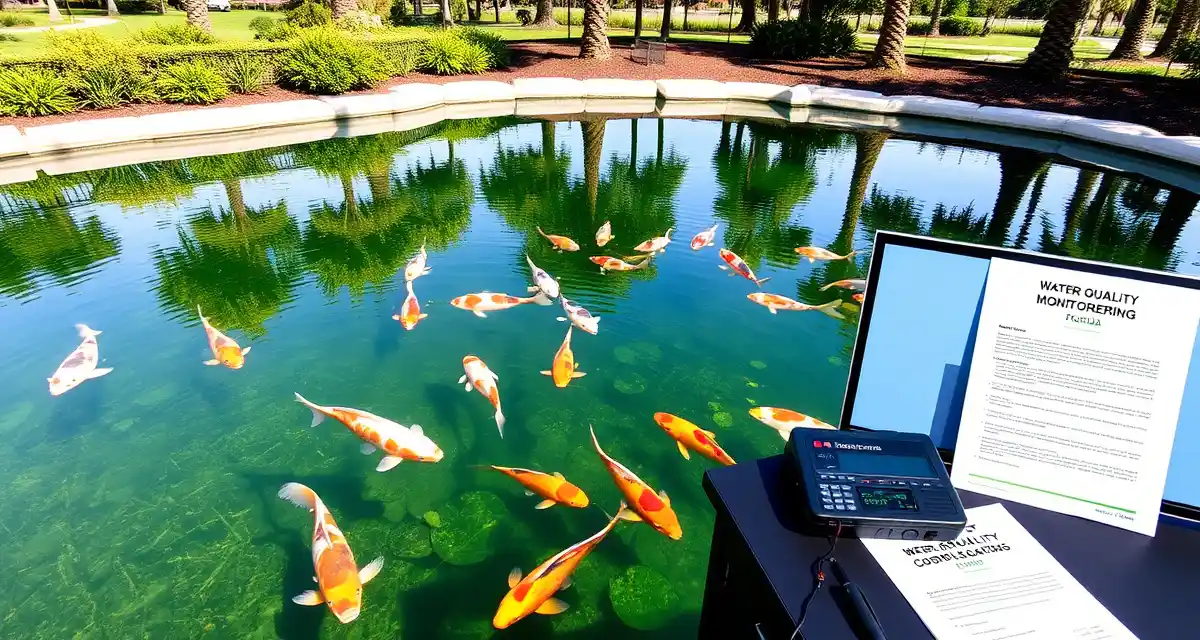
Koi Pond Regulations in Florida: FWC Rules for Hobbyists and Dealers
Florida FWC classifies koi as a conditional species, which puts them in a regulatory category that requires dealers to maintain approved holding facilities and health certifications. That's a more demanding classification than most koi keepers expect, and it catches dealers off guard when they discover it during their first FWC inspection.
The conditional species classification exists because Florida's subtropical climate creates genuine ecological risk. Koi released into Florida's waterways, intentionally or accidentally through pond overflow, can establish feral populations that compete with native species. FWC takes aquatic invasive species seriously, and the regulatory framework reflects that.
TL;DR
- A parasite that takes 7-10 days to complete its life cycle at 18°C completes it in 4-5 days at 26°C.
- Tracking trends over time reveals issues before they become visible in fish behavior.
- KoiQuanta connects observations, water data, and treatment records in one searchable history.
- Early detection based on parameter trends reduces treatment costs and fish stress.
- Seasonal changes require adjusted monitoring schedules; automated reminders help maintain consistency.
What FWC Requires for Koi Dealers
Florida koi dealers must hold a Florida Retail Dealer License or Wholesale Dealer License from FWC, depending on their operation type. The conditional species classification for koi adds additional requirements on top of the basic dealer license:
Approved holding facilities: Dealer holding systems must be designed to prevent escape into Florida's natural waterways. This typically means wastewater treatment or disposal systems that prevent any live fish from entering drainage that could reach natural water bodies.
Health certification: Koi imported into Florida must be accompanied by health certification from the source state's fish health authority or a USDA-accredited veterinarian. FWC inspectors check these documents during facility inspections.
Quarantine documentation: While Florida doesn't specify a mandatory quarantine period for koi in the same explicit terms as some federal programs, documented disease screening and holding records are expected and requested during inspections.
Hobbyist Considerations in Florida
For hobbyists, the FWC regulations mean a few practical things. Koi can be legally kept in private ponds. Releasing any koi into Florida's natural waterways, canals, lakes, rivers, or any water that connects to natural systems is illegal and carries serious penalties.
Florida's warm climate means hobbyists can keep koi outdoors year-round, which is one of the real advantages of Florida koi keeping. But the year-round warmth that makes koi keeping comfortable also means year-round parasite pressure, which requires more consistent disease monitoring than northern hobbyists need.
The water temperature impact guide covers Florida-specific warm-water management challenges in detail.
Seasonal Quarantine Adjustments
Florida's consistently warm water means that quarantine conducted in Florida will involve faster parasite reproductive cycles than quarantine protocols designed for temperate climates. A parasite that takes 7-10 days to complete its life cycle at 18°C completes it in 4-5 days at 26°C. Standard quarantine retreatment intervals need adjustment for Florida's water temperatures.
KoiQuanta's Florida warm-climate quarantine guide adjusts salt and treatment dose recommendations and retreatment timing for Florida's higher ambient water temperatures. The system accounts for water temperature in all retreatment scheduling so your quarantine is appropriately timed for local conditions, not generic national averages.
FWC Compliance Documentation with KoiQuanta
KoiQuanta's dealer onboarding workflow includes an FWC conditional species compliance checklist pre-loaded for Florida dealer accounts. Quarantine records, health certification tracking, treatment documentation, and lot clearance records are all generated through normal use of the platform.
The dealer import compliance guide covers Florida FWC and federal USDA requirements in one place.
Frequently Asked Questions
Do I need a permit to sell koi in Florida?
Yes. Selling koi in Florida requires an FWC Retail Dealer License for retail operations or an FWC Wholesale Dealer License for wholesale operations. The conditional species classification for koi adds requirements for approved holding facilities designed to prevent escape into natural waterways, and health certification documentation for imported fish. Operating without the required license can result in substantial fines and permit revocation.
What does Florida FWC require for koi dealers?
FWC requires licensed dealers to maintain approved koi holding facilities that prevent escape into Florida's waterways, maintain health certification records for all imported fish, and provide quarantine and treatment documentation on request. Dealers importing koi from out of state need health certificates from the source state's fish health authority accompanying each lot. FWC conducts periodic facility inspections to verify compliance.
Are koi illegal in Florida natural waterways?
Yes. Releasing koi or any other non-native fish into Florida's natural waterways, canals, lakes, ponds connected to natural systems, or any water body that drains to natural waters is illegal under FWC regulations. This applies even to small decorative ponds that overflow into street drainage during heavy Florida rain events. Dealers must design holding systems to ensure no live fish can escape into drainage systems. Violations can result in fines, license revocation, and criminal charges.
What is Koi Pond Regulations in Florida: FWC Rules for Hobbyists and Dealers?
[FAQ_ANSWER_PLACEHOLDER: This answer needs to be generated by AI with specific data, examples, and actionable advice relevant to Koi Pond Regulations in Florida: FWC Rules for Hobbyists and Dealers. Target 50-150 words.]
How much does Koi Pond Regulations in Florida: FWC Rules for Hobbyists and Dealers cost?
[FAQ_ANSWER_PLACEHOLDER: This answer needs to be generated by AI with specific data, examples, and actionable advice relevant to Koi Pond Regulations in Florida: FWC Rules for Hobbyists and Dealers. Target 50-150 words.]
How does Koi Pond Regulations in Florida: FWC Rules for Hobbyists and Dealers work?
[FAQ_ANSWER_PLACEHOLDER: This answer needs to be generated by AI with specific data, examples, and actionable advice relevant to Koi Pond Regulations in Florida: FWC Rules for Hobbyists and Dealers. Target 50-150 words.]
What are the benefits of Koi Pond Regulations in Florida: FWC Rules for Hobbyists and Dealers?
[FAQ_ANSWER_PLACEHOLDER: This answer needs to be generated by AI with specific data, examples, and actionable advice relevant to Koi Pond Regulations in Florida: FWC Rules for Hobbyists and Dealers. Target 50-150 words.]
Who needs Koi Pond Regulations in Florida: FWC Rules for Hobbyists and Dealers?
[FAQ_ANSWER_PLACEHOLDER: This answer needs to be generated by AI with specific data, examples, and actionable advice relevant to Koi Pond Regulations in Florida: FWC Rules for Hobbyists and Dealers. Target 50-150 words.]
How long does Koi Pond Regulations in Florida: FWC Rules for Hobbyists and Dealers take?
[FAQ_ANSWER_PLACEHOLDER: This answer needs to be generated by AI with specific data, examples, and actionable advice relevant to Koi Pond Regulations in Florida: FWC Rules for Hobbyists and Dealers. Target 50-150 words.]
What should I look for when choosing Koi Pond Regulations in Florida: FWC Rules for Hobbyists and Dealers?
[FAQ_ANSWER_PLACEHOLDER: This answer needs to be generated by AI with specific data, examples, and actionable advice relevant to Koi Pond Regulations in Florida: FWC Rules for Hobbyists and Dealers. Target 50-150 words.]
Is Koi Pond Regulations in Florida: FWC Rules for Hobbyists and Dealers worth it?
[FAQ_ANSWER_PLACEHOLDER: This answer needs to be generated by AI with specific data, examples, and actionable advice relevant to Koi Pond Regulations in Florida: FWC Rules for Hobbyists and Dealers. Target 50-150 words.]
Related Articles
Sources
- Associated Koi Clubs of America (AKCA)
- Koi Organisation International (KOI)
- University of Florida IFAS Extension Aquaculture Program
- Fish Vet Group
- Water Quality Association