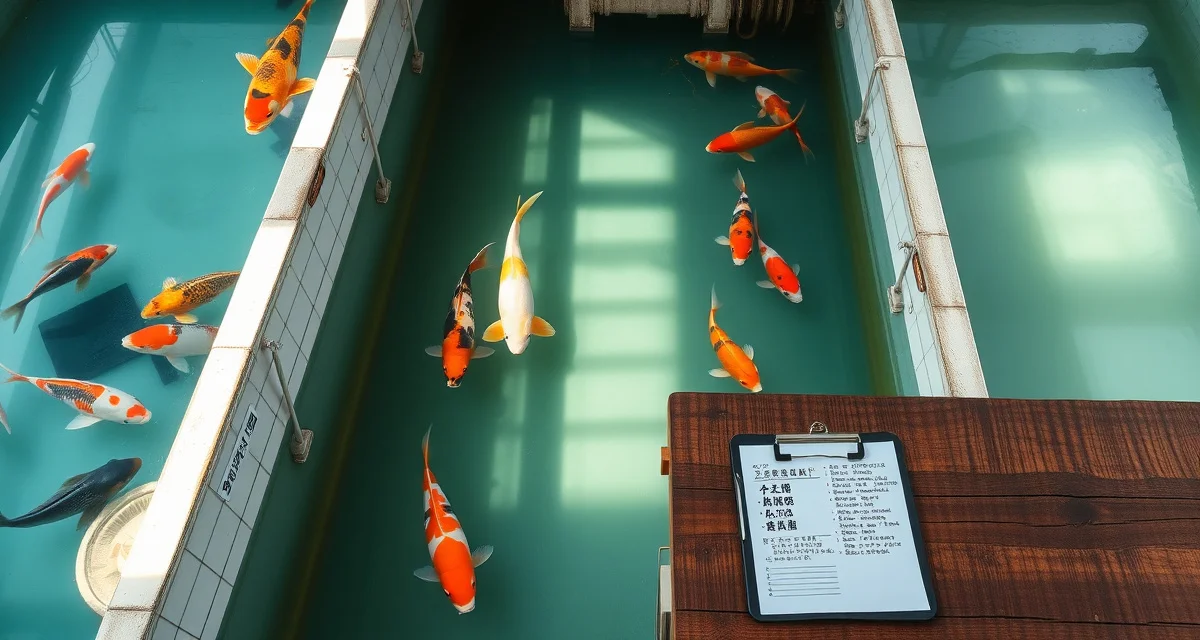
Koi Dealer Japan Buying Trips: Planning and Logistics
Japan buying trips involve visiting 10 to 30 farms over 5 to 10 days. It's a compressed schedule where logistics decisions made months in advance determine whether the trip succeeds or collapses into confusion. Experienced dealers who make this trip annually develop systems for managing the complexity. First-timers often don't realize how much preparation is involved until they're in Niigata with a full purchase list and no clear plan for export paperwork.
This guide covers how to plan a Japan buying trip effectively, from initial relationship building through to import coordination on the other side.
TL;DR
- Import costs (health certificates, import permits, freight, customs) typically add 30-50% to the Japanese purchase price.
- The farm issuing a purchase receipt (often informal initially) 3.
- Fish are held at the farm while export arrangements are made 4.
- Fish are gathered with fish from other farms by an export agent (handling aggregation and export health certification) 5.
- Export health certificate is obtained from Japanese agricultural authorities (Ministry of Agriculture, Forestry and Fisheries MAFF) 6.
- Arrange a minimum of 5 days in Niigata Prefecture, with a rented car for farm-to-farm travel.
- Import costs including agent fees, air freight, and US customs handling typically add 30-50% to the Japanese purchase price.
Understanding the Japanese Koi Industry
Most premium koi are bred in Niigata Prefecture, where the combination of climate, koi pond water quality tracker, and multigenerational breeding expertise produces the fish that set the world standard. The Ojiya, Mushigame, and Yamakoshi regions within Niigata are the epicenters of koi production, though quality farms exist in other regions including Hiroshima and Fukuoka.
The industry is relationship-based. Japanese breeders - called nishikigoi producers or "tategoi producers" for those specializing in grow-out - tend to reserve their best fish for established buyer relationships. A first-time dealer walking in unannounced will see the fish they want to show you, not necessarily the fish you'd most want to see.
This is why building relationships before you make the trip pays enormous dividends. Introductions through existing dealer networks, Japanese koi associations, or an established intermediary (a Japanese agent who can vouch for you and translate the relationship context) give you access that pure transactional shopping doesn't.
Building Relationships Before You Go
Work with an existing importer. Your first trip to Japan is ideally made in connection with an established dealer or importer who can introduce you to the farms they work with. This accelerates relationship building by years and gives you access to farms that might otherwise be unavailable to a first-time buyer.
Learn basic Japanese phrases. Business greetings, expressions of appreciation, and the names of koi varieties in Japanese go a long way. Japanese breeders appreciate the effort even when they have English-speaking staff available.
Bring business cards. Japanese business culture treats business card exchange (meishi) as a formal introduction ritual. Have cards printed with your business name on one side in Japanese on the back - local print shops near the airports in Japan can sometimes provide translation services.
Communicate your buying criteria in advance. If you have a relationship with an agent or established importer contact, share your wish list before arrival: varieties, sizes, approximate price ranges, and total budget. Good farms can prepare fish for your consideration in advance rather than hunting through their ponds on the day.
Planning the Trip Itinerary
A typical Niigata trip starts from Tokyo (Narita or Haneda airport), takes the Joetsu Shinkansen to Niigata or Nagaoka, and uses a rented car to reach individual farm locations.
Realistic farm visit capacity:
- 2-4 farm visits per day is feasible if you're reasonably decisive
- Each farm visit requires travel time between farms, the visit itself (often 1-3 hours per serious relationship), and meal time
- Plan for 3-4 days of farm visiting minimum; 6-8 days for a buying trip
Autumn buying season (typically October through early November) is the primary premium buying season. This is when grow-out fish have completed their outdoor growing season and are at their visual peak before winter. Pond-side viewing of entire fish populations is possible as farms clear their outdoor ponds.
Spring buying happens around May-June when nisai (two-year-old) and sansai selections are made. Less common for international buyers but valuable for specific purchasing objectives.
Outside peak season can yield value opportunities, but farm access and fish selection may be more limited.
What to Prepare for Fish Selection
Budget allocation. Arrive with a clear budget structure: total available, maximum per-fish at various categories, reserve for shipping and import costs. Import costs (health certificates, import permits, freight, customs) typically add 30-50% to the Japanese purchase price.
Photography and notation system. You may view hundreds of fish across many farms. Develop a consistent system for photographing fish you're interested in, noting farm name, pond location within the farm, price discussed, and your assessment. KoiQuanta's import preparation workflow can be initiated at this stage - creating fish records from field notes before purchase is confirmed.
Measurement reference. Having a physical sense of size categories helps when farms present fish verbally in centimeters and you need to quickly translate to your customer size categories.
Bank transfer capability. Most Japanese farm purchases are paid by bank transfer in JPY. Confirm your banking arrangements for international transfers before departure.
Purchasing Decisions and Documentation
When you identify fish you want to purchase, the process typically involves:
- Agreeing on price with the farm
- The farm issuing a purchase receipt (often informal initially)
- Fish are held at the farm while export arrangements are made
- Fish are gathered with fish from other farms by an export agent (handling aggregation and export health certification)
- Export health certificate is obtained from Japanese agricultural authorities (Ministry of Agriculture, Forestry and Fisheries MAFF)
- Air freight is booked and fish are shipped
This process takes weeks to months after your trip. You don't take fish home in your luggage. The export and import infrastructure is managed either by your export agent in Japan and import broker in your country, or by an established importer who handles everything for a fee.
Working with Japanese Export Agents
A competent Japanese export agent is essential for most dealers making their first trips. These agents:
- Aggregate fish purchased from multiple farms
- Coordinate and handle export health certificate applications
- Arrange appropriate packaging and oxygen for air freight
- Book shipping with livestock-experienced air freight carriers
- Communicate with your import broker on the other end
Export agents charge fees for these services, either as a percentage of fish value, a flat per-lot fee, or a combination. This cost should be factored into your purchase economics from the beginning.
Import Logistics on the Receiving End
Import permits are required for commercial koi import into the United States. USDA APHIS Fish and Wildlife permits and, in some cases, state-level permits must be in place before fish arrive. The koi dealer import sourcing and koi import documentation guides cover these requirements in detail.
Quarantine facility registration with USDA may be required depending on your state and import volume. Confirm your facility status is current before fish arrive.
Customs clearance broker with aquatic livestock experience is essential. Fish arriving via air freight clear customs at the airport of entry; your broker handles this process and coordinates transfer to your facility.
Quarantine upon arrival. All imported fish require quarantine regardless of health certification status. KoiQuanta's import quarantine workflow manages the lot-level quarantine tracking and documentation required for both compliance and health management.
Frequently Asked Questions
How do I plan a Japan koi buying trip?
Begin by establishing at least one introduction to a Japanese farm or export agent through your existing dealer network or a Japanese koi association. Plan your trip for the autumn buying season (October-November) when outdoor pond fish are at their peak. Arrange a minimum of 5 days in Niigata Prefecture, with a rented car for farm-to-farm travel. Prepare a clear budget with reserve for import costs, a systematic way to document fish you're considering (photographs, farm notes), and confirmed banking arrangements for international transfer payments.
Which Japanese koi farms accept foreign buyer visits?
Most established Niigata farms accept foreign buyers, but access to their best fish is relationship-dependent. Well-known farms that regularly sell to international buyers include operations in Ojiya, Mushigame, and Yamakoshi areas. The best access comes through introductions from existing buyer relationships or through established Japanese export agents who have long-standing farm relationships. Cold approaches are possible but typically result in seeing a limited selection. Japanese koi magazine directories and the All Japan Nishikigoi Promotion Association can provide farm contact information.
How do I import koi I select on a Japan trip?
Fish purchased in Japan are exported by a Japanese export agent who handles aggregation across multiple farms, obtains MAFF export health certificates, manages packaging and oxygen for air freight, and ships to your country. On the receiving end, your customs broker clears the shipment and a registered import facility receives the fish for required quarantine. You need USDA APHIS import permits in place before the fish arrive. Import costs including agent fees, air freight, and US customs handling typically add 30-50% to the Japanese purchase price. Work with your export agent and import broker well in advance of the trip to have all infrastructure ready.
What is Koi Dealer Japan Buying Trips: Planning and Logistics?
[FAQ_ANSWER_PLACEHOLDER: This answer needs to be generated by AI with specific data, examples, and actionable advice relevant to Koi Dealer Japan Buying Trips: Planning and Logistics. Target 50-150 words.]
How much does Koi Dealer Japan Buying Trips: Planning and Logistics cost?
[FAQ_ANSWER_PLACEHOLDER: This answer needs to be generated by AI with specific data, examples, and actionable advice relevant to Koi Dealer Japan Buying Trips: Planning and Logistics. Target 50-150 words.]
How does Koi Dealer Japan Buying Trips: Planning and Logistics work?
[FAQ_ANSWER_PLACEHOLDER: This answer needs to be generated by AI with specific data, examples, and actionable advice relevant to Koi Dealer Japan Buying Trips: Planning and Logistics. Target 50-150 words.]
What are the benefits of Koi Dealer Japan Buying Trips: Planning and Logistics?
[FAQ_ANSWER_PLACEHOLDER: This answer needs to be generated by AI with specific data, examples, and actionable advice relevant to Koi Dealer Japan Buying Trips: Planning and Logistics. Target 50-150 words.]
Who needs Koi Dealer Japan Buying Trips: Planning and Logistics?
[FAQ_ANSWER_PLACEHOLDER: This answer needs to be generated by AI with specific data, examples, and actionable advice relevant to Koi Dealer Japan Buying Trips: Planning and Logistics. Target 50-150 words.]
How long does Koi Dealer Japan Buying Trips: Planning and Logistics take?
[FAQ_ANSWER_PLACEHOLDER: This answer needs to be generated by AI with specific data, examples, and actionable advice relevant to Koi Dealer Japan Buying Trips: Planning and Logistics. Target 50-150 words.]
What should I look for when choosing Koi Dealer Japan Buying Trips: Planning and Logistics?
[FAQ_ANSWER_PLACEHOLDER: This answer needs to be generated by AI with specific data, examples, and actionable advice relevant to Koi Dealer Japan Buying Trips: Planning and Logistics. Target 50-150 words.]
Is Koi Dealer Japan Buying Trips: Planning and Logistics worth it?
[FAQ_ANSWER_PLACEHOLDER: This answer needs to be generated by AI with specific data, examples, and actionable advice relevant to Koi Dealer Japan Buying Trips: Planning and Logistics. Target 50-150 words.]
Related Articles
Sources
- Associated Koi Clubs of America (AKCA)
- Koi Organisation International (KOI)
- University of Florida IFAS Extension Aquaculture Program
- Fish Vet Group
- Water Quality Association