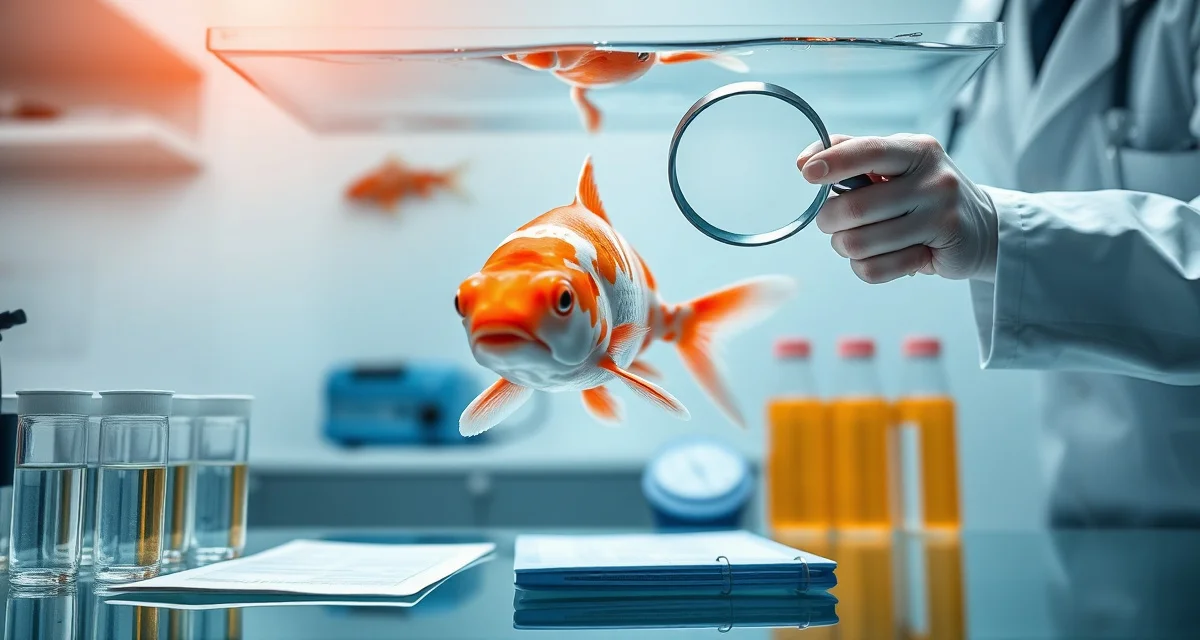
Getting a Second Opinion on Koi Disease Diagnosis
Fish veterinarians report that 60% of cases presented to them were initially misdiagnosed. That figure is striking but makes sense when you consider that koi-implementation) disease-after-pond-treatment) diagnosis without laboratory tools relies heavily on visual symptoms, behavioral observation, and pattern matching against known conditions. That process is prone to confirmation bias, incomplete information, and overlapping symptom sets, which together create significant error rates.
If you've been treating a fish for two weeks without improvement, the most likely explanation is that the diagnosis is wrong. Getting a second opinion is a rational response to diagnostic uncertainty, not an admission of failure.
TL;DR
- Water quality data over the past 6-8 weeks tells the vet whether environmental factors are likely contributing.
- Tracking trends over time reveals issues before they become visible in fish behavior.
- KoiQuanta connects observations, water data, and treatment records in one searchable history.
- Early detection based on parameter trends reduces treatment costs and fish stress.
- Seasonal changes require adjusted monitoring schedules; automated reminders help maintain consistency.
TL;DR
- Water quality data over the past 6-8 weeks tells the vet whether environmental factors are likely contributing.
- Tracking trends over time reveals issues before they become visible in fish behavior.
- KoiQuanta connects observations, water data, and treatment records in one searchable history.
- Early detection based on parameter trends reduces treatment costs and fish stress.
- Seasonal conditions require adjusted monitoring schedules; automated reminders maintain consistency.
When to Seek a Second Opinion
Several scenarios clearly warrant a second opinion:
Treatment has failed. If a fish hasn't shown meaningful improvement after a complete, properly dosed treatment course, the most common reasons are: wrong diagnosis, resistance to the treatment being used, or a concurrent secondary infection not being addressed. None of these becomes clear without re-evaluating the diagnosis.
Symptoms don't fit the diagnosis. If you or someone who advised you settled on a diagnosis but some symptoms don't quite fit, trust that instinct. Koi disease presentations are often atypical, and a diagnosis should account for all the symptoms, not just most of them.
The fish is deteriorating rapidly. Rapid deterioration suggests a more aggressive pathogen than initially suspected, or a concurrent infection that was missed. This is not a time to wait and see.
You're about to use expensive or high-risk treatment. Before treating with prescription antibiotics, surgical intervention, or treatments that carry significant risk, it's worth confirming the diagnosis with a second opinion or laboratory testing.
High-value fish are affected. The threshold for seeking expert opinion should be lower for fish with significant financial or emotional value.
How to Find a Fish Veterinarian
Fish veterinary medicine is a specialty within aquatic animal medicine. Not every vet who sees fish has deep koi-best-medications) expertise - it's worth asking specific questions when you call.
Where to look:
- The World Aquatic Veterinary Medical Association (WAVMA) maintains a practitioner directory
- Veterinary schools with aquatic animal programs often provide clinical services or can refer to specialists
- Koi dealer networks typically know which vets in your region have genuine fish expertise
- Large aquarium facilities and public aquaria sometimes offer consultations
Questions to ask when calling:
- Do you regularly see koi or other cyprinids?
- Do you have access to wet laboratory facilities for microscopy and basic pathology?
- Can you conduct or submit samples for bacterial culture and sensitivity testing?
- Do you offer remote consultations with sample submission?
Remote consultations with video and sample submission have become much more practical in recent years. A vet in a major metro area or affiliated with a university program may be able to review your KoiQuanta-documentation-for-sales) health records, examine submitted samples, and provide a professional second opinion without an in-person visit.
What Information to Prepare
KoiQuanta exports a complete fish health history for veterinary consultation. This is genuinely useful - vets report that a significant portion of consultation time goes to history gathering that a structured record would eliminate entirely.
Prepare the following before any consultation:
Complete health history from KoiQuanta: recent water quality readings (at minimum 4-6 weeks of data), treatment history with products, doses, and dates, feeding records, and any significant pond events (water changes, new fish additions, equipment changes, storms).
Symptom timeline. When did you first notice a problem? What did you observe initially, and how have symptoms progressed? Which symptoms have resolved, and which have worsened?
Current medications. What is the fish being treated with right now, at what dose, and for how long?
Photographs and video. Images of the affected fish showing lesions, posture, behavior, and any obvious physical changes. Video of swimming behavior, surface activity, and respiration is often more informative than photographs.
Sample Collection for Laboratory Testing
Many koi disease diagnoses can be confirmed definitively through laboratory testing. The key samples are:
Skin scrape. A flat scrape from the skin surface or a fin clip collected onto a glass slide. Fresh skin scrapes examined under microscopy reveal most common external parasites - Costia, Trichodina, Chilodonella, flukes - within minutes. Vets can instruct you on how to collect a skin scrape for submission if you can't get the fish to the clinic.
Gill biopsy. A small gill clip reveals gill parasites, fungal gill disease, and gill pathology not visible externally. This requires more expertise to collect safely.
Bacterial swab. From active lesions, ulcers, or wound margins. Bacterial culture identifies the pathogen and sensitivity testing determines which antibiotics are effective - this directly guides antibiotic treatment and is essential if you're concerned about resistance.
Tissue samples for histopathology. For serious or unusual disease presentations, tissue sections examined under microscopy can identify viral diseases, internal parasites, and pathological changes not detectable other ways.
Dead fish for necropsy. If a fish has died, refrigerate (don't freeze) it and contact your vet promptly. A fresh necropsy of a dead koi is often the most informative diagnostic tool available.
The Role of KoiQuanta Health Records
When you bring a complete KoiQuanta health export to a veterinary consultation, you're giving the vet the context to make an informed assessment rather than guessing from a blank slate.
Water quality data over the past 6-8 weeks tells the vet whether environmental factors are likely contributing. Treatment history tells them whether certain antibiotic classes have already been used (guiding selection of alternatives). The timeline of symptom onset relative to water quality or management events often points to the root cause in ways the symptoms alone don't.
Your koi disease identification records and your koi treatment journal together form a case history that experienced fish vets find genuinely useful. Don't arrive at a consultation without them.
Frequently Asked Questions
When should I consult a vet for koi disease?
Consider a vet consultation when treatment has failed to produce improvement after a complete course, when symptoms are severe or deteriorating rapidly, when you're dealing with an outbreak affecting multiple fish, when you need prescription medications like antibiotics, when a high-value or irreplaceable fish is affected, or when you simply cannot determine the cause of a health problem from your own assessment. Early veterinary involvement is almost always better than waiting until a situation becomes critical. Vets can often arrest a disease progression that's already advanced, but it costs more fish and more time the longer you wait.
How do I find a fish veterinarian?
The World Aquatic Veterinary Medical Association maintains a practitioner directory at WAVMA.org. State veterinary associations can provide referrals to aquatic specialists. Koi dealer networks are often the most direct route - dealers who operate professionally typically have established relationships with vets in their region. When calling a potential vet, ask specifically about koi and cyprinid experience, access to microscopy equipment, and whether they offer remote consultation with sample submission. University veterinary schools with aquatic programs are another excellent option.
What information does a koi vet need from me?
A vet needs your complete fish health history: recent water quality readings, treatment history with products and doses, symptom timeline from first observation through current state, and any management events that preceded the health problem. KoiQuanta's health export generates all of this automatically. Bring or send photographs and video of the affected fish. If your vet can't physically examine the fish, the quality and completeness of the history you provide directly determines the quality of the advice they can give.
What records should I keep during this type of event?
Record the date, water temperature, and full parameter readings (ammonia, nitrite, pH, dissolved oxygen), a description of observed signs in each affected fish, any treatments applied with dose and rationale, and the fish's response at 24, 48, and 72 hours post-treatment. These records in KoiQuanta build the health history that makes future events faster to diagnose and treat.
What is Getting a Second Opinion on Koi Disease Diagnosis?
[FAQ_ANSWER_PLACEHOLDER: This answer needs to be generated by AI with specific data, examples, and actionable advice relevant to Getting a Second Opinion on Koi Disease Diagnosis. Target 50-150 words.]
How much does Getting a Second Opinion on Koi Disease Diagnosis cost?
[FAQ_ANSWER_PLACEHOLDER: This answer needs to be generated by AI with specific data, examples, and actionable advice relevant to Getting a Second Opinion on Koi Disease Diagnosis. Target 50-150 words.]
How does Getting a Second Opinion on Koi Disease Diagnosis work?
[FAQ_ANSWER_PLACEHOLDER: This answer needs to be generated by AI with specific data, examples, and actionable advice relevant to Getting a Second Opinion on Koi Disease Diagnosis. Target 50-150 words.]
What are the benefits of Getting a Second Opinion on Koi Disease Diagnosis?
[FAQ_ANSWER_PLACEHOLDER: This answer needs to be generated by AI with specific data, examples, and actionable advice relevant to Getting a Second Opinion on Koi Disease Diagnosis. Target 50-150 words.]
Who needs Getting a Second Opinion on Koi Disease Diagnosis?
[FAQ_ANSWER_PLACEHOLDER: This answer needs to be generated by AI with specific data, examples, and actionable advice relevant to Getting a Second Opinion on Koi Disease Diagnosis. Target 50-150 words.]
How long does Getting a Second Opinion on Koi Disease Diagnosis take?
[FAQ_ANSWER_PLACEHOLDER: This answer needs to be generated by AI with specific data, examples, and actionable advice relevant to Getting a Second Opinion on Koi Disease Diagnosis. Target 50-150 words.]
What should I look for when choosing Getting a Second Opinion on Koi Disease Diagnosis?
[FAQ_ANSWER_PLACEHOLDER: This answer needs to be generated by AI with specific data, examples, and actionable advice relevant to Getting a Second Opinion on Koi Disease Diagnosis. Target 50-150 words.]
Related Articles
- Malachite Green for Koi: Use and Safety Considerations-malachite-green)
Sources
- Associated Koi Clubs of America (AKCA)
- Koi Organisation International (KOI)
- University of Florida IFAS Extension Aquaculture Program
- Fish Vet Group
- Water Quality Association
Sources
- Associated Koi Clubs of America (AKCA)
- Koi Organisation International (KOI)
- University of Florida IFAS Extension Aquaculture Program
- Fish Vet Group
- Water Quality Association