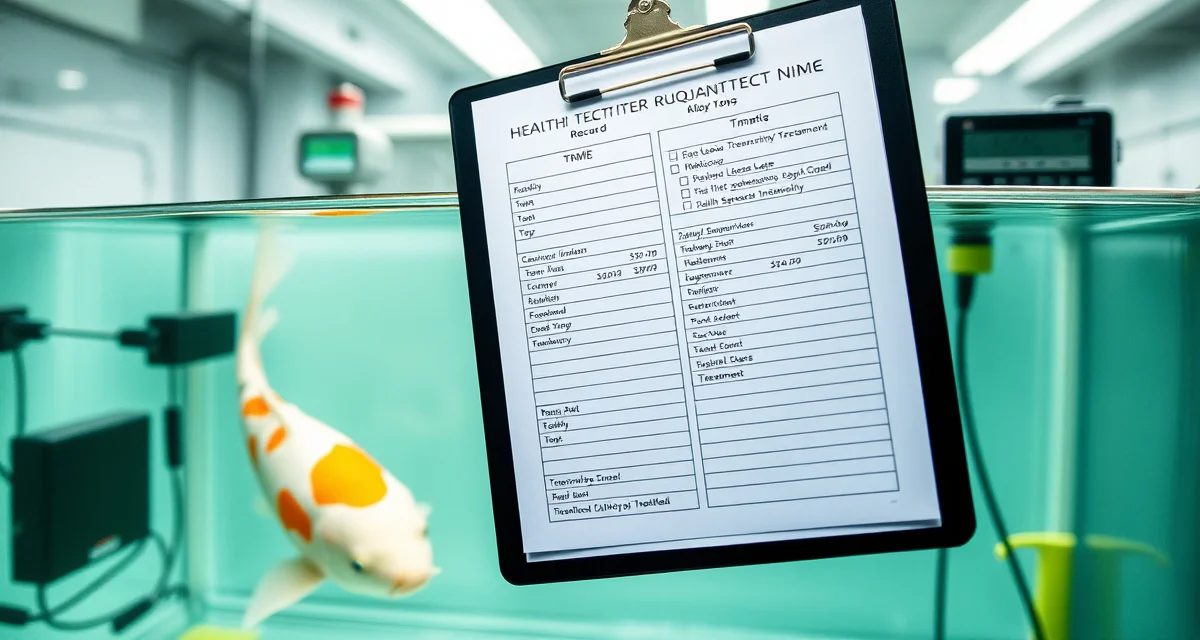
Koi Quarantine Record Keeping for Dealers
A customer called me eight months after purchasing a 24-inch Kohaku. She said it had ulcers and she was convinced it came from me carrying disease. She wanted reimbursement.
I pulled up the quarantine file in KoiQuanta. Forty-two days-record-for-insurance) of observations, all timestamped. Full treatment journal: two praziquantel courses, 0.3% salt for 21 days, discharge parameter check. Discharge sign-off with notes. The fish was clean when it left.
I emailed her the exported PDF. That was the last I heard from her.
Documentation doesn't just protect you legally. It tells you when something went wrong and why. It builds trust with the customers who matter. And when a regulator shows up, it's the difference between a brief audit and a major compliance incident.
TL;DR
- Full treatment journal: two praziquantel courses, 0.3% salt for 21 days, discharge parameter check.
- A paper log that says "ammonia 0.1" with no date or time is worth considerably less than a timestamped digital record.
- For liability purposes - civil litigation timelines - keeping records for 5 years is more protective.
- A dispute over a sale 4 years ago is conceivable.
- An audit request that would take 3 hours to fulfill with paper records takes about 5 minutes.
What Records Dealers Must Keep
Per-Lot Import Documentation
Every fish lot that enters your facility - whether from a Japanese importer, a domestic breeder, or another dealer - needs an intake record:
- Lot identifier: date of arrival + source + sequential lot number
- Source: importer, breeder, country of origin, facility registration number if applicable
- Fish count: number received, varieties, approximate sizes
- Health certificates: Japanese health certificate (for imports), USDA Form VS 17-130 inspection record, any KHV testing results
- Arrival condition: any DOA, visible symptoms at arrival, arrival water temperature and bag condition
- Quarantine tank assignment: which tank the lot went into
This documentation should exist before the first fish enters the tank. For USDA-regulated imports, it must exist - it's part of the compliance record.
Daily Quarantine Observations
For each quarantine tank, each day:
- Date and time of observation
- Water parameters: ammonia, nitrite, pH, temperature, dissolved oxygen (minimum - KH and salinity if relevant)
- Feeding response: scale of enthusiastic / normal / reduced / none
- Behavioral observations: any abnormal swimming, surface-gasping, isolation, flashing, excess mucus
- Visible signs: any lesions, fin changes, color changes, scale irregularities
- Interventions: any water changes performed, salt additions, medication doses
The timestamp matters. Regulators and courts care about when things happened, not just what happened. A paper log that says "ammonia 0.1" with no date or time is worth considerably less than a timestamped digital record.
Treatment Journal
For every treatment administered:
- Product name and active ingredient
- Dose administered (in specific units - mg/L, grams, percentage)
- Volume treated (tank volume at time of treatment, for dose verification)
- Date and time of administration
- Observed response
- Next treatment date if a course
This is where KoiQuanta's treatment journal is most distinct from a spreadsheet. Every entry is automatically timestamped. Dose entries link to tank volume. The journal generates a treatment history that shows the complete course of any disease event.
For antibiotic treatments in particular: incomplete documentation is a regulatory concern. If you're treating with antibiotics - which in commercial operations comes from a licensed veterinarian - the vet's prescription number and the veterinarian's name should be in the treatment record.
Discharge Records
Before any fish leaves quarantine for your display pond, retail area, or customer, there should be a discharge record:
- Date of discharge
- Quarantine duration (arrival date to discharge date)
- Final parameter readings
- Discharge criteria checklist: all items confirmed
- Signoff (your name, or the staff member authorizing release)
If a fish is sold, the lot identifier and discharge record link the fish to its quarantine history. If a customer has a dispute, you can trace which lot that fish came from, what it was treated for, and when it was cleared.
Customer Documentation
For customers purchasing fish from quarantined stock, provide a buyer pack that includes:
- Fish description (variety, approximate size, origin if known)
- Quarantine period and dates
- Treatments administered
- Health status at time of sale
- Care recommendations for receiving the fish
Some dealers include this as a printed one-pager. KoiQuanta generates an exportable buyer pack directly from the fish's quarantine record. This is a customer service differentiator and a liability document simultaneously.
Record Retention Requirements
USDA APHIS requires importers to retain health and quarantine records for a minimum of 2 years from the date of import. Many state regulations require similar retention periods.
For liability purposes - civil litigation timelines - keeping records for 5 years is more protective. Fish live for decades. A dispute over a sale 4 years ago is conceivable.
Digital records in KoiQuanta are stored in the cloud and don't degrade. Paper records need to be stored in a dry, secure location and are vulnerable to loss, fire, or simple disorganization.
What USDA APHIS Auditors Look For
In a koi import compliance audit, inspectors typically review:
- Import permits and accompanying documentation (VS Form 17-130, foreign health certificates)
- Evidence of KHV testing for applicable fish
- Quarantine facility registration (required for certain import volumes)
- Daily quarantine logs showing consistent monitoring during the required hold period
- Treatment records for any disease events during quarantine
- Discharge records confirming fish were held for the required period
The most common documentation failure: no timestamped daily quarantine logs. Dealers who use paper sheets that just say "checked - all fine" with no parameters recorded, no time, and irregular dates are at significant risk in an audit.
Structuring Your Record System
Digital vs. Paper
Paper records are better than nothing. They're worse than digital records in every other way:
- No timestamps (whoever fills in a paper sheet can write any date)
- No trend visualization (you can't chart a week of ammonia readings on paper without manual graphing)
- No searchability (finding a specific lot record in a binder takes time)
- No backup (one flood or fire and the records are gone)
- Can't be emailed to a regulator or customer at midnight before an inspection
KoiQuanta generates compliance-ready PDF exports per lot, per fish, or per time period. An audit request that would take 3 hours to fulfill with paper records takes about 5 minutes.
If You Must Use Paper
Use a consistent form for every tank, every day. The form should have fields for:
- Date and time (filled in at the time of observation, not retrospectively)
- Initials of who performed the observation
- All key parameters with units
- Behavioral observations using standardized descriptors
- Any treatment events with exact doses and product names
Keep completed forms in a binder organized by lot number and date. Scan to PDF weekly as backup.
Spreadsheet Middle Ground
If you're not ready for dedicated software, a spreadsheet with separate sheets per tank and automatic date-stamping on entry is substantially better than paper. Protect the sheets from editing after entry. Back up to cloud storage daily.
The problems with spreadsheets: no alert capability, easy to edit timestamps retrospectively, no automatic dose calculation, no export formatting for regulators.
Related Articles
- Why Koi Hobbyists Should Keep Digital Health Records
- KoiQuanta vs. Paper Logs: What Hobbyists Miss With Manual Record Keeping
- Koi Quarantine: The Complete Hub for Dealers, Breeders, and Serious Collectors
FAQ
What records should a koi dealer keep during quarantine?
Essential records include: per-lot intake documentation with source and fish count, daily observation logs with timestamped parameter readings and behavioral notes, a complete treatment journal for every medication administered with doses and dates, and signed discharge records for every batch leaving quarantine. For Japanese imports, retain all import health certificates and USDA documentation as part of each lot file.
Can I produce a quarantine certificate for a customer?
Yes, and you should. A quarantine certificate summarizes the fish's quarantine period, treatments received, parameters at discharge, and health status at time of sale. KoiQuanta generates this as an exportable PDF from the fish's quarantine record. For customers spending several hundred to several thousand dollars on a koi, this documentation meaningfully builds trust and reduces disputes.
How do I document treatment courses for regulatory compliance?
Every treatment entry should include: product name, active ingredient, dose administered (with units), volume of water treated (for independent dose verification), date and time, and observed response. For prescription antibiotic treatments, include the prescribing veterinarian's name and prescription reference. Antibiotic courses should show the full course from first to final dose - incomplete courses are a red flag in regulatory audits.
What is Koi Quarantine Record Keeping for Dealers?
[FAQ_ANSWER_PLACEHOLDER: This answer needs to be generated by AI with specific data, examples, and actionable advice relevant to Koi Quarantine Record Keeping for Dealers. Target 50-150 words.]
How much does Koi Quarantine Record Keeping for Dealers cost?
[FAQ_ANSWER_PLACEHOLDER: This answer needs to be generated by AI with specific data, examples, and actionable advice relevant to Koi Quarantine Record Keeping for Dealers. Target 50-150 words.]
How does Koi Quarantine Record Keeping for Dealers work?
[FAQ_ANSWER_PLACEHOLDER: This answer needs to be generated by AI with specific data, examples, and actionable advice relevant to Koi Quarantine Record Keeping for Dealers. Target 50-150 words.]
What are the benefits of Koi Quarantine Record Keeping for Dealers?
[FAQ_ANSWER_PLACEHOLDER: This answer needs to be generated by AI with specific data, examples, and actionable advice relevant to Koi Quarantine Record Keeping for Dealers. Target 50-150 words.]
Who needs Koi Quarantine Record Keeping for Dealers?
[FAQ_ANSWER_PLACEHOLDER: This answer needs to be generated by AI with specific data, examples, and actionable advice relevant to Koi Quarantine Record Keeping for Dealers. Target 50-150 words.]
Sources
- Associated Koi Clubs of America (AKCA)
- Koi Organisation International (KOI)
- University of Florida IFAS Extension Aquaculture Program
- Fish Vet Group
- Water Quality Association