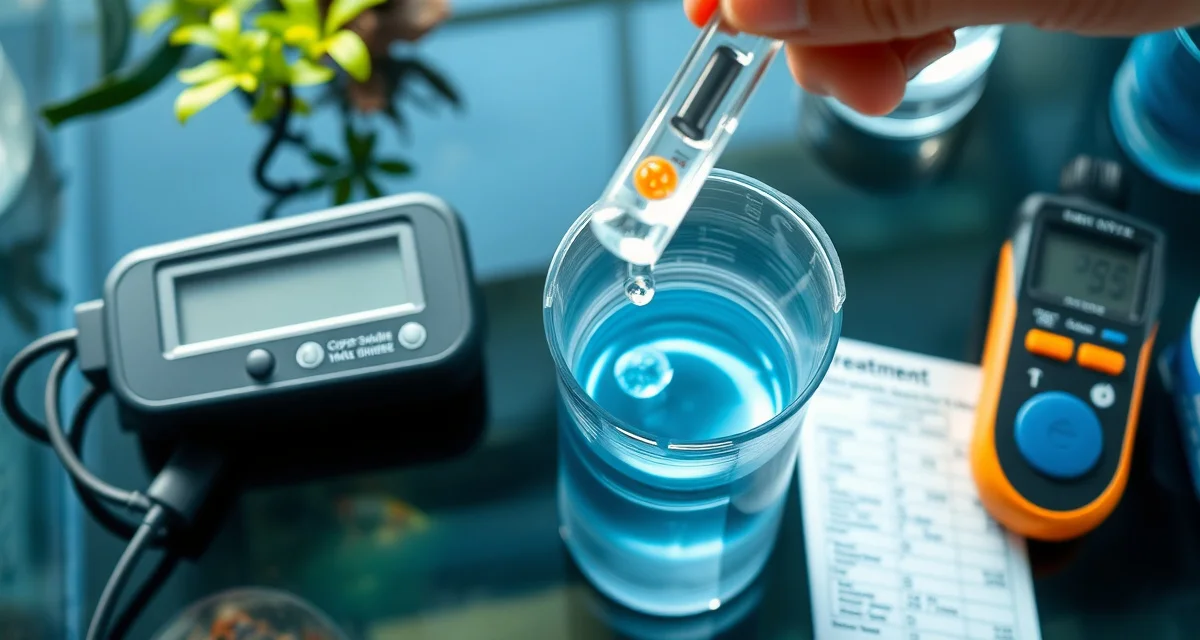
Copper Sulfate Treatment in Koi Quarantine
Copper toxicity is directly tied to water hardness -- soft water makes copper lethal at standard doses. This is the most important safety consideration for copper sulfate use, and it's specific enough that you cannot use a generic dosing recommendation without knowing your water hardness. A dose that's therapeutic and safe in hard water can be lethal in soft water, and a dose adjusted upward for soft water that becomes adequate as a treatment may still be causing gill damage.
KoiQuanta's copper protocol adjusts dose based on entered GH/KH values, automatically calculating the water-hardness-corrected dose for your specific quarantine-after-pond-treatment) tank.
TL;DR
- In soft water, copper ions (Cu2+) are free and bioavailable -- directly toxic to fish gill tissue.
- If you're targeting 0.15 mg/L copper in 1,000 liters, you need 0.6 mg/L of copper sulfate pentahydrate, which is 0.6 grams per 1,000 liters.
- Monitor ammonia daily during and for 1-2 weeks after copper treatment.
- In soft water (GH below 75 ppm), copper treatment is high-risk and generally not recommended without veterinary guidance.
- In moderate to hard water (75-200+ ppm GH), target approximately 0.1-0.25 mg/L free copper, with higher ends for harder water.
What Copper Sulfate Treats in Koi
Copper sulfate (CuSO4) has antiparasitic and algaecidal activity useful in specific situations:
External protozoan parasites: Effective against ich (free-swimming stage), velvet (Oodinium), trichodina, and costia at therapeutic concentrations. A useful alternative to formalin when formalin's oxygen-depleting properties make it less suitable.
Algae control: Copper is effective at controlling many algae species in koi ponds. However, for disease treatment purposes in quarantine tanks, algae control isn't typically the goal.
Gill flukes (limited): Some activity against external parasites at higher concentrations, though Praziquantel is more reliably effective for flukes.
What copper does NOT treat:
- Bacterial infections (no antibacterial activity at safe concentrations)
- Internal parasites
- Viral disease
The Water Hardness and Copper Toxicity Relationship
This is the critical pharmacokinetics of copper in fish treatment that you must understand before using it.
In soft water, copper ions (Cu2+) are free and bioavailable -- directly toxic to fish gill tissue. The effective (and toxic) concentration is reached at a lower total copper dose.
In hard water, calcium, magnesium, and carbonate ions bind copper ions in the water column, reducing the free copper concentration. More total copper can be present before reaching toxic concentrations -- but you also need more total copper to reach therapeutic concentrations.
The practical consequence:
- In soft water (GH below 75 ppm): standard doses can be lethal. Copper treatment requires dramatically lower doses, and the therapeutic window between effective and toxic concentrations is very narrow -- sometimes so narrow that copper isn't safely usable in soft water.
- In moderate hardness (75-150 ppm GH): standard doses approach therapeutic range but must be monitored carefully.
- In hard water (above 150 ppm GH): standard doses work but may need to be on the higher end to achieve therapeutic copper concentrations.
Is copper sulfate safe in koi ponds?
With the water hardness correction and careful monitoring -- yes. Without hardness correction, the toxicity risk is real. Copper is used safely in aquaculture when dosed correctly. The key is that "correctly" requires knowing your water chemistry, not using a generic dose.
How to Dose Copper Sulfate for Koi
Step 1: Test water hardness. Test both GH (general hardness) and KH (carbonate hardness). You need these numbers before calculating dose.
Step 2: Calculate hardness-adjusted dose. KoiQuanta's copper protocol does this calculation. The general framework:
- For GH below 75 ppm: copper treatment is high-risk and generally not recommended without veterinary guidance
- For GH 75-150 ppm: target dose approximately 0.1-0.15 mg/L free copper
- For GH above 150 ppm: target dose 0.15-0.25 mg/L free copper
Step 3: Calculate product dose. Copper sulfate pentahydrate is 25% copper by weight. If you're targeting 0.15 mg/L copper in 1,000 liters, you need 0.6 mg/L of copper sulfate pentahydrate, which is 0.6 grams per 1,000 liters.
Commercial chelated copper products have different calculations -- follow manufacturer guidance and adjust for your water hardness.
Step 4: Dissolve before adding. Never add copper sulfate crystals directly to a pond or tank. Dissolve completely in a separate container of water first, then distribute evenly.
Treatment Duration and Monitoring
Copper treatment typically runs for 7-14 days for external parasites. Unlike formalin treatments that are removed after a few hours, copper maintains its therapeutic concentration in the water column throughout the treatment period.
Test free copper concentration: A copper test kit (designed for aquaculture or aquarium use) allows you to verify actual free copper in the water rather than relying on dose calculations. In hard water, copper is sequestered rapidly -- you may need to redose more frequently than in soft water.
Daily observation during copper treatment: Watch for:
- Excessive mucus (copper irritates gill tissue)
- Rapid gill movement (copper gill irritation)
- Surface congregation (oxygen stress)
- Unusual lethargy
Partial water changes: If fish show distress during copper treatment, a partial water change reduces copper concentration. Have clean, dechlorinated water ready.
Effect on biofilter: Copper inhibits nitrifying bacteria at treatment concentrations. Monitor ammonia daily during and for 1-2 weeks after copper treatment. Be prepared for ammonia spikes as biofilter activity is reduced.
For the GH water hardness background and how to raise hardness if needed, see the koi GH general hardness guide. For treatment dose calculation in general, KoiQuanta's treatment dose calculator handles copper dosing with hardness correction.
Copper vs. Alternatives: When to Choose Copper
Choose copper when:
- Oxygen depletion from formalin is a concern (high temperature, poor aeration capacity)
- You have an established hard-water quarantine system where copper dosing is well-characterized
- You're treating persistent ich or velvet that requires extended treatment duration
Choose formalin instead when:
- Water hardness is soft (copper toxicity risk is high)
- Rapid killing of parasites is needed for severe infestations
- You have excellent aeration capacity to manage formalin's oxygen requirements
Choose Praziquantel instead when:
- Flukes are the primary target (Praziquantel is more reliably effective for flukes than copper)
- You want a treatment with less risk to biological filtration
Frequently Asked Questions
How do I dose copper sulfate for koi?
Test your water hardness (GH) first -- copper toxicity is directly tied to hardness. In soft water (GH below 75 ppm), copper treatment is high-risk and generally not recommended without veterinary guidance. In moderate to hard water (75-200+ ppm GH), target approximately 0.1-0.25 mg/L free copper, with higher ends for harder water. Dissolve copper sulfate in a separate container before adding to the tank. KoiQuanta's copper protocol calculates the hardness-adjusted dose for your specific GH reading and tank volume.
Is copper sulfate safe in koi ponds?
Yes, when dosed correctly for your water hardness. The danger comes from using generic doses without hardness correction -- copper that's therapeutic in hard water is potentially lethal in soft water because soft water has less binding capacity for copper ions, leaving more free toxic copper available. Monitored copper treatment in hard-water systems has a good safety record when dose is water-hardness-corrected, free copper concentration is verified with testing, and fish are observed daily for signs of gill irritation.
How does water hardness affect copper treatment dosing?
Calcium, magnesium, and carbonate ions in hard water bind copper ions, reducing free copper concentration. This means you need more total copper in hard water to achieve therapeutic free copper concentrations. In soft water, more of the copper remains as free ions (toxic form) even at lower total doses. The practical result: hard water allows higher total copper doses safely; soft water requires very low total doses that may still be toxic before reaching therapeutic levels. Always calculate copper dose from water hardness, not from generic pond volume alone.
What is Copper Sulfate Treatment in Koi Quarantine?
[FAQ_ANSWER_PLACEHOLDER: This answer needs to be generated by AI with specific data, examples, and actionable advice relevant to Copper Sulfate Treatment in Koi Quarantine. Target 50-150 words.]
How much does Copper Sulfate Treatment in Koi Quarantine cost?
[FAQ_ANSWER_PLACEHOLDER: This answer needs to be generated by AI with specific data, examples, and actionable advice relevant to Copper Sulfate Treatment in Koi Quarantine. Target 50-150 words.]
How does Copper Sulfate Treatment in Koi Quarantine work?
[FAQ_ANSWER_PLACEHOLDER: This answer needs to be generated by AI with specific data, examples, and actionable advice relevant to Copper Sulfate Treatment in Koi Quarantine. Target 50-150 words.]
What are the benefits of Copper Sulfate Treatment in Koi Quarantine?
[FAQ_ANSWER_PLACEHOLDER: This answer needs to be generated by AI with specific data, examples, and actionable advice relevant to Copper Sulfate Treatment in Koi Quarantine. Target 50-150 words.]
Who needs Copper Sulfate Treatment in Koi Quarantine?
[FAQ_ANSWER_PLACEHOLDER: This answer needs to be generated by AI with specific data, examples, and actionable advice relevant to Copper Sulfate Treatment in Koi Quarantine. Target 50-150 words.]
How long does Copper Sulfate Treatment in Koi Quarantine take?
[FAQ_ANSWER_PLACEHOLDER: This answer needs to be generated by AI with specific data, examples, and actionable advice relevant to Copper Sulfate Treatment in Koi Quarantine. Target 50-150 words.]
What should I look for when choosing Copper Sulfate Treatment in Koi Quarantine?
[FAQ_ANSWER_PLACEHOLDER: This answer needs to be generated by AI with specific data, examples, and actionable advice relevant to Copper Sulfate Treatment in Koi Quarantine. Target 50-150 words.]
Is Copper Sulfate Treatment in Koi Quarantine worth it?
[FAQ_ANSWER_PLACEHOLDER: This answer needs to be generated by AI with specific data, examples, and actionable advice relevant to Copper Sulfate Treatment in Koi Quarantine. Target 50-150 words.]
Related Articles
- Prophylactic Treatment in Koi Quarantine: For and Against-prophylactic-treatment)
Sources
- Associated Koi Clubs of America (AKCA)
- Koi Organisation International (KOI)
- University of Florida IFAS Extension Aquaculture Program
- Fish Vet Group
- Water Quality Association