The Complete Guide to Koi Quarantine: Everything You Need to Know
Disease introduced without quarantine spreads to the display pond in 80% of cases within 14 days. That figure defines the stakes of quarantine management better than any other single data point. A fish that looks perfectly healthy on arrival can be incubating Koi Herpesvirus, carrying Dactylogyrus on every gill arch, or hosting early-stage Aeromonas infection that manifests as ulcers 10 days after it enters your pond.
Quarantine is the management system that intercepts those introductions before they reach your collection. This guide covers every aspect: setup, protocols, disease management within quarantine, record keeping, and discharge criteria.
KoiQuanta is the only tool that manages the complete quarantine workflow described in this guide. No competitor has a single quarantine resource built into a management platform.
TL;DR
- A single 60cm koi needs at minimum a 300-litre quarantine tank.
- Alternatively, seed a new filter with established filter media, bacterial supplement products, and an ammonia source (pure ammonia without surfactants or a piece of raw shrimp) and cycle over 3-4 weeks before first use.
- A heater that can maintain stable temperature within 2-3°C of your display pond is essential.
- Introduce water from your quarantine tank to the transport water gradually over 10 minutes before releasing the fish.
- Feeding should begin on day 2-3, once the fish has settled.
- A fish not eating within 3-5 days of arrival warrants investigation.
- It will naturally break down over 3-5 days.
Part 1: Why Quarantine Matters
The Biology of Disease Introduction
Most koi pathogens don't announce themselves. A fish carrying Trichodina, Gyrodactylus, or Dactylogyrus shows no visible signs at all. A fish in the early stages of bacterial ulceration has skin changes so subtle they're invisible at the surface. A KHV-incubating fish looks and behaves normally for days to weeks before the disease becomes clinically apparent.
This is what makes visual inspection inadequate as a disease prevention measure. You cannot tell by looking at a koi whether it's carrying pathogens that will kill your other fish.
Quarantine works by holding the fish in isolation long enough for:
- Any incubating disease to manifest and be detected
- Prophylactic treatments to eliminate the most common parasites
- The fish to demonstrate sustained health before entering your collection
The Cost of Not Quarantining
A single KHV outbreak in a collection with high-grade Japanese koi valued at £1,000 each and 70% mortality produces losses in the tens of thousands of pounds. A Trichodina introduction from an unquarantined fish can trigger a treatment event and secondary bacterial infections across your entire pond, costing hundreds to thousands depending on collection value.
The annual cost of maintaining a quarantine system - equipment, medications, and software - is predictable and bounded. The cost of a disease introduction is unpredictable and potentially catastrophic.
The insurance logic is straightforward. You don't insure your house because you expect it to burn down; you insure it because the cost of it burning down is catastrophic relative to the cost of the premium. Quarantine is the same principle applied to your koi collection.
Part 2: Setting Up a Quarantine System
Quarantine Tank Requirements
A functional quarantine setup requires:
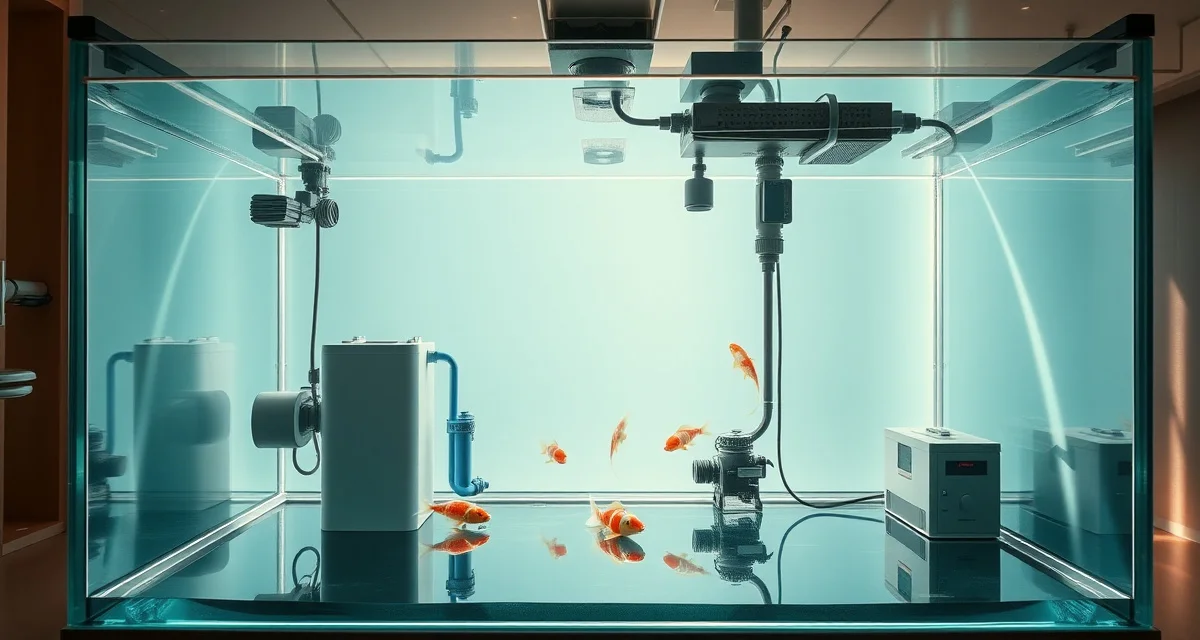
Tank size: 300-1,000 litres is appropriate for most hobbyist quarantine. The tank must be large enough for the fish to swim freely without crowding. A single 60cm koi needs at minimum a 300-litre quarantine tank. Multiple fish or larger fish need proportionally more volume. Overcrowding in quarantine increases stress and disease risk.
Filtration: A biological filter is needed to process ammonia from fish waste. This is the most important consideration in quarantine setup. A sponge filter with an air pump provides both biological filtration and aeration in one unit - the standard recommendation for quarantine tank filtration.
The filter must be cycled before fish arrive. Running an established sponge filter from your main pond in the quarantine tank immediately provides working biological filtration. Alternatively, seed a new filter with established filter media, bacterial supplement products, and an ammonia source (pure ammonia without surfactants or a piece of raw shrimp) and cycle over 3-4 weeks before first use.
Aeration: Separate from the filter, additional aeration is helpful during treatments (some medications reduce dissolved oxygen) and during disease events (stressed fish need high oxygen). An air stone or additional air pump is a small investment with significant value.
Heater: Koi are kept in temperature-controlled quarantine for several reasons. A heater that can maintain stable temperature within 2-3°C of your display pond is essential. Sudden temperature changes stress fish. Stable temperature also controls the quarantine environment for KHV risk assessment - maintaining fish in the KHV-active temperature window (16-25°C) during quarantine helps reveal KHV infection that might be latent outside this range.
Thermometer: Digital thermometers are accurate and affordable. Don't rely on heater dials for precise temperature.
Cover: Koi jump. Quarantine tanks at floor level or filled close to the top must be covered or netted to prevent losses.
Equipment and Supplies
Stock these before fish arrive:
Testing equipment:
- Ammonia test kit (daily testing during quarantine)
- Nitrite test kit
- pH test kit (twice weekly during quarantine)
- KH test kit (weekly)
- GH test kit (weekly)
- Thermometer
Medications:
- Non-iodized salt (10+ kg for a 1,000L quarantine tank at 0.3%)
- Praziquantel (for prophylactic fluke treatment)
- Potassium permanganate (for diagnostic assessment and treatment)
- Basic antibiotic supply (discuss with your fish vet - oxytetracycline or similar)
Other supplies:
- Dedicated net (never shared with display pond)
- Dedicated bucket
- Dechlorinator (sodium thiosulfate or commercial dechlorinator)
- Record keeping system (KoiQuanta or a dedicated notebook)
Isolation From Your Main Collection
Physical separation is not optional. The quarantine system must be isolated from your display pond:
- Separate equipment that never contacts the display pond
- No shared water circuit between quarantine and display
- No splash or spray contact between systems
- Ideally, the quarantine tank is in a separate physical location from the display pond
The most common quarantine system failures involve physical proximity between the quarantine tank and the display pond that allows water contact through splash, spray, or shared equipment.
Part 3: The Standard Quarantine Protocol
Day 1: Fish Arrival
When a new fish arrives:
Acclimate before introduction. Float the bag or container in the quarantine tank for 15-20 minutes to equilibrate temperature. Introduce water from your quarantine tank to the transport water gradually over 10 minutes before releasing the fish. This helps acclimate the fish to your water chemistry.
Don't introduce the bag water to your quarantine tank. The bag water has been in contact with the seller's facility. Release the fish, not the water.
Observe for 30-60 minutes. Normal arrival behaviour is initial exploration and some wariness. Fish hanging at the surface, showing laboured breathing, or swimming erratically need immediate assessment.
Log the arrival in KoiQuanta with the fish details, source, date, and initial observations.
Days 1-7: Observation and Acclimatisation
Test ammonia daily. New fish in a new environment may show elevated ammonia from stress-related metabolism. Nitrite should be zero in an established quarantine filter. pH should be checked every 2-3 days.
Daily observation should be logged. What is the fish doing? Is it eating? Is it swimming normally? Are there any signs - flashing, fin clamping, mucus changes, colour changes?
Feeding should begin on day 2-3, once the fish has settled. Start with small quantities and observe whether the fish eats. A fish not eating within 3-5 days of arrival warrants investigation.
Don't start prophylactic treatment immediately - wait until the fish has settled for 5-7 days. Treatment adds stress on top of transport stress in an already stressed fish.
Days 7-10: First Praziquantel Dose
At approximately day 7 (adjust based on the fish's condition and settling time), administer the first praziquantel treatment.
Dosing: 2 mg/L (2 ppm) of praziquantel in the quarantine tank. Dissolve the praziquantel in a small volume of hot water before adding it to the tank to ensure even distribution.
Praziquantel is specific to monogenean parasites (Dactylogyrus and Gyrodactylus). It won't harm the fish at therapeutic doses and is safe for biological filter bacteria at this concentration.
Leave the praziquantel in the tank - don't perform a water change to remove it. It will naturally break down over 3-5 days.
Continue salt at 0.3% if you've been using it. Salt during quarantine reduces osmotic stress and provides some inhibition of ectoparasites.
Day 21: Second Praziquantel Dose
The second praziquantel dose addresses any Dactylogyrus that were developing during the first dose (flukes have a life cycle that makes a single treatment insufficient).
The timing of day 21 is important - don't skip or significantly delay this dose. A fish that looked healthy after the first dose may have had developing parasites that the first dose didn't kill because they weren't yet in the vulnerable stage.
If you observed any signs of parasite infection after the first dose, the second dose is even more important.
Weeks 1-6: Daily Observation
The most important component of quarantine is observation. The protocol structure (treatments, parameter testing) is the skeleton; observation is the muscle that actually catches disease events.
Daily observation means looking at each fish for 2-3 minutes and assessing:
Behaviour:
- Is the fish swimming normally? Normal koi swim actively, position themselves at comfortable depths, and respond normally to your approach.
- Is the fish eating? Active feeding is the strongest single indicator of fish health.
- Is the fish flashing or rubbing? Even a single flash is worth noting. Multiple flashes in a day warrant closer attention.
- Is the fish isolating? A fish that hides, sits on the bottom, or hangs at the surface without obvious reason is showing a sign.
Physical:
- Fin position (clamped fins are a stress or disease sign)
- Skin and scale condition (new lesions, redness, scale lifting)
- Eye condition (cloudiness, swelling)
- Gill movement (breathing rate and symmetry)
- Mucus coat (excessive mucus suggests irritation)
Log every observation in KoiQuanta. Even "all normal" observations matter - they establish the baseline that makes deviations visible.
Part 4: Managing Disease Events During Quarantine
When a Fish Shows Signs
A fish showing disease signs during quarantine is exactly what quarantine is designed for. You caught it before it reached your display pond.
Don't panic. A fish showing signs in quarantine is in the right place.
Investigate before treating. What signs are present? Is it one fish or all fish in the tank? Did anything change in the past 24-48 hours (water quality, feeding, temperature)?
Test water quality before attributing signs to disease. Many "disease" presentations in quarantine are water quality events.
Consider the likely pathogen. Flashing suggests ectoparasites. Clamped fins suggest systemic stress. Lesions suggest bacterial infection. Match the investigation to the likely cause.
Consult the koi disease reference manual for differential diagnosis. For unusual presentations or rapid deterioration, contact a fish veterinarian.
Extending Quarantine for Disease Events
Any fish that has a disease event during quarantine has its quarantine extended. The quarantine period counts from the resolution of the disease event, not from the original arrival date.
If a fish has a fluke infestation treated at week 3, the 7-day clean observation period resets from the resolution of the treatment. The fish may need a total of 8-9 weeks in quarantine rather than 6.
This is correct and important. A fish that has had a disease event during quarantine has a higher risk profile than a fish with a completely clean quarantine. The extended observation period confirms resolution before discharge.
Part 5: Record Keeping in Quarantine
Why Records Are Essential
Records serve multiple functions in quarantine management:
Disease detection: A record of daily observations creates a baseline. When you look back at a fish that has just shown signs, you can see whether the signs developed gradually (suggesting chronic disease progression) or appeared suddenly (suggesting acute event).
Protocol compliance: Records confirm that scheduled treatment doses were administered, that testing happened on schedule, and that observations were made as required. They make "I think I did the day 21 dose" into "I confirmed the day 21 dose at the correct dose on day 21."
Supplier quality analysis: Linking quarantine outcomes to fish sources over multiple purchase events reveals which suppliers produce higher-risk fish. This analysis is only possible with systematic records.
Insurance and legal documentation: Quarantine records with dates, treatments, and health assessments at discharge are the documentation that supports insurance claims and dealer liability positions.
Quarantine certificates: For dealers and hobbyists who want to document fish health for buyers, the quarantine record is the source document for the certificate.
What to Record
In KoiQuanta, record at each quarantine entry:
- Fish details (variety, size, source, purchase date)
- Parameter readings with dates
- Treatment events (product, dose, date, reason)
- Daily observations (behaviour, feeding response, any signs)
- Any disease events, including investigation and treatment
- Discharge date and health status at discharge
For batch quarantine (multiple fish from the same source), batch-level records are acceptable for shared observations. Individual fish records are needed when a specific fish deviates from the batch.
Part 6: Discharge Criteria and Transfer
The Discharge Decision
The discharge decision is not based solely on elapsed time. A fish that has completed 6 weeks in quarantine has met the time requirement. It still must meet all discharge criteria:
- No disease signs for a minimum of 7 days before proposed discharge date
- Normal feeding response for at least 3-5 days
- Normal behaviour
- All scheduled treatment steps completed
- Water quality stable and within normal range throughout the final observation week
In KoiQuanta, the discharge checklist must be confirmed before the quarantine record can be closed. This prevents the most common quarantine failure - premature discharge.
The Transfer Process
With discharge criteria confirmed:
- Confirm temperature within 2°C between quarantine tank and display pond
- Adjust temperature gradually if needed (never shock transfer)
- Net gently, minimise air exposure
- Float transfer container in display pond for 15-20 minutes
- Release and observe
Post-transfer: elevate observation frequency for 2-3 weeks. Watch for disease signs in both the new fish and the existing collection.
Part 7: KoiQuanta in the Quarantine Workflow
KoiQuanta manages every component described in this guide:
- Protocol scheduling: Day-by-day reminders for treatment doses, parameter tests, and observation windows
- Parameter logging: With trend analysis and alert thresholds
- Observation recording: Structured daily logs with sign-specific fields
- Disease event tracking: Linked to the quarantine record and fish profile
- Discharge criteria checklist: Must pass before quarantine can be closed
- Quarantine certificates: PDF export of the complete quarantine record
- Analytics: Disease rates by supplier, season, and protocol - visible after 3-6 months of data
No other platform provides this complete workflow in a single koi-specific system. The new koi quarantine protocol details the standard 6-week protocol. The koi quarantine hub connects all quarantine-related resources.
Frequently Asked Questions
What is the most complete koi quarantine guide?
A complete koi quarantine guide covers all six components: quarantine setup (tank, filtration, equipment, medications), the arrival protocol (acclimation, initial observation), the standard protocol schedule (observation, treatment timing, parameter testing frequency), disease event management during quarantine, record keeping practices, and discharge criteria before transfer to the display pond. Most quarantine resources cover setup and a basic protocol but don't address disease event management within quarantine, systematic record keeping, or discharge criteria in detail. This guide and the KoiQuanta platform address all six components as an integrated system.
What does a proper koi quarantine involve?
Proper koi quarantine involves a minimum 6-week isolation period in a correctly sized, cycled quarantine tank with its own dedicated equipment. It includes prophylactic praziquantel treatment at days 7 and 21, salt at 0.3% for osmoregulatory support, daily observation with logged results, parameter testing at appropriate frequency (ammonia daily, pH twice weekly, KH weekly), a defined disease event response protocol, and discharge criteria that must be met before transfer. It's not just a waiting period - it's an active management period with scheduled interventions and daily monitoring. The quarantine record, including all observations, parameter readings, and treatment events, is the evidence that the protocol was followed correctly.
What software helps manage koi quarantine?
KoiQuanta is the only purpose-built koi quarantine management software. It provides day-by-day protocol scheduling with automated reminders for treatment doses and observation windows, structured daily observation logging, parameter tracking with trend analysis, disease event logging linked to quarantine records, discharge criteria checklists that must pass before quarantine can be closed, quarantine certificate generation for dealers and hobbyists, and analytics showing disease rates by supplier source and season. No other reviewed app has purpose-built quarantine management functionality at this level - alternatives are either generic parameter loggers or generic aquarium apps that address a fraction of the quarantine management workflow.
What is The Complete Guide to Koi Quarantine: Everything You Need to Know?
The Complete Guide to Koi Quarantine is a comprehensive resource covering every aspect of isolating new koi before introducing them to an established pond. It explains setup requirements, filtration, water parameters, disease identification, treatment protocols, record keeping, and discharge criteria. The guide is designed to help hobbyists prevent catastrophic disease introductions—which occur in 80% of cases within 14 days when quarantine is skipped—by providing a structured, repeatable management system.
How much does The Complete Guide to Koi Quarantine: Everything You Need to Know cost?
The guide is free to read on KoiQuanta. KoiQuanta also offers a quarantine management platform that puts the workflows described in the guide into practice—tracking fish, water quality logs, observation records, and discharge decisions in one place. There is no charge to access the written guide itself, making professional-grade quarantine knowledge available to hobbyists at any level.
How does The Complete Guide to Koi Quarantine: Everything You Need to Know work?
The guide walks you through quarantine in sequential stages: setting up a dedicated tank sized correctly for your fish, cycling the filter before first use, acclimating new arrivals, conducting daily observations, identifying early disease signs, applying treatments where necessary, and finally meeting discharge criteria before moving fish to your display pond. Each stage builds on the last, giving you a clear decision framework rather than disconnected advice.
What are the benefits of The Complete Guide to Koi Quarantine: Everything You Need to Know?
Following this guide protects your existing collection from pathogens like Koi Herpesvirus, Dactylogyrus gill flukes, and Aeromonas bacteria—all of which can incubate invisibly in seemingly healthy fish. Beyond disease prevention, quarantine gives new fish time to recover from transport stress, stabilise their immune systems, and acclimate to your water chemistry before facing the competitive environment of an established pond.
Who needs The Complete Guide to Koi Quarantine: Everything You Need to Know?
Any koi keeper who purchases new fish needs a quarantine protocol. This guide is especially valuable for hobbyists building collections with significant financial or sentimental value, those who buy from multiple sources or shows, and anyone who has previously experienced unexplained disease outbreaks. Even experienced keepers benefit from a structured protocol—disease introduction is a systems failure, not a knowledge gap, and consistent process prevents it.
How long does The Complete Guide to Koi Quarantine: Everything You Need to Know take?
The minimum quarantine period covered in the guide is four to six weeks, though the exact duration depends on what you observe. Fish showing no symptoms and meeting all discharge criteria may clear quarantine in four weeks. Any disease episode restarts the clock—you continue quarantine until the fish has been symptom-free and treatment-free for a full observation window. Rushing this timeline is the single most common cause of introducing disease.
What should I look for when choosing The Complete Guide to Koi Quarantine: Everything You Need to Know?
A sound quarantine setup requires four things: sufficient volume (minimum 300 litres for a 60cm fish), a fully cycled biological filter, stable temperature control within 2–3°C of your display pond, and reliable aeration. Beyond hardware, look for a clear observation and record-keeping system so you can track changes over time. Ad hoc quarantine without documentation misses the slow-developing symptoms that only become visible when compared against a baseline.
Is The Complete Guide to Koi Quarantine: Everything You Need to Know worth it?
Yes. The cost of a disease outbreak—lost fish, emergency treatments, pond teardowns, and the emotional toll—far exceeds the effort of a structured quarantine. Koi Herpesvirus alone has wiped out entire collections overnight. This guide gives you the framework to avoid that outcome with equipment most hobbyists already own or can acquire cheaply. For serious keepers, quarantine is not optional; this guide simply ensures you do it correctly and consistently.
Sources
- Associated Koi Clubs of America (AKCA)
- Koi Organisation International (KOI)
- University of Florida IFAS Extension Aquaculture Program
- Fish Vet Group
- Water Quality Association